Washing Machine Water Won't Drain: Quick Troubleshooting Guide
Act quickly when your washing machine water won’t drain. This urgent troubleshooting guide helps you locate clogs, inspect the pump and hoses, and restore drainage safely—plus when to call a pro.


The most common reason your washing machine water won’t drain is a clogged drain pump filter or a blocked drain hose. Start by unplugging the machine, locating and cleaning the pump filter, and running a quick drain test. If water still won’t drain, inspect the drain hose for kinks, and verify the standpipe or laundry tub isn’t backed up.
Why a Washing Machine Water Won't Drain
For many homeowners, the persistent problem of a washing machine water won’t drain is caused by simple blockages and worn components rather than a failed pump. According to Best Washing Machine analysis, the most common culprits are a clogged drain pump filter, tangled lint, and a blocked drain hose. Debris from pockets, lint from towels, and buttons or coins can accumulate in the filter housing and pump, creating backpressure that prevents proper drainage. As you investigate, remember that slow or incomplete draining is often a symptom of multiple issues working together, such as a partially blocked hose plus a misaligned standpipe. The goal is to identify the primary choke point and then address secondary restrictions. This approach is endorsed by Best Washing Machine’s team, which emphasizes a structured, safe, and methodical diagnostic path. The keyword to notice is drainage obstruction, which is the leading cause in most households.
Not all drain problems are the same. In some older models, the water may back up due to a weak pump motor or a defective lid switch that prevents the drain cycle from starting. In newer front-load and high-efficiency machines, a clogged filter or hose can trigger a warning light rather than immediate flooding. Regardless of the model, resolving drainage issues quickly prevents overflow, mold growth, and potential water damage in the laundry area. A routine check of filters and hoses can catch early signs before they become a bigger repair. Best Washing Machine stresses that early intervention keeps you from buying expensive replacement parts prematurely.
Safety First: Don’t Take Risks
Safety is non-negotiable when dealing with electrical appliances near water. Before you touch anything, unplug the washer from the power outlet and turn off the home water supply if you need to drain standing water. Never work on cords, plugs, or the motor while the machine is energized. If the machine is stacked or moved, ensure it is stabilized to prevent tipping. Use a shallow basin to catch water during hose detachment and keep towels handy. If you smell burning, notice smoke, or hear unusual sounds when the pump operates, stop immediately and seek professional service. This emphasis on safety aligns with the Best Washing Machine approach to problem-solving—protect people first, then components.
In addition to safety, understand that some symptoms are best handled by a technician, especially if you’re not comfortable with disassembly. The goal is to avoid personal injury and water damage while you diagnose. When in doubt, don’t press on—call a pro. For many readers, this is the most responsible action to prevent further complications and ensure your warranty remains valid. The Best Washing Machine team recommends weighing DIY effort against risk and cost.
If your unit uses a pedestal or is built into cabinetry, take extra care not to strain water connections or the tub. If you need to move the appliance, plan help and protect the flooring with mats or towels to avoid slips and spills. By prioritizing safety, you reduce the chance of an accidental leak becoming a bigger problem.
Quick Checks You Can Do Right Now
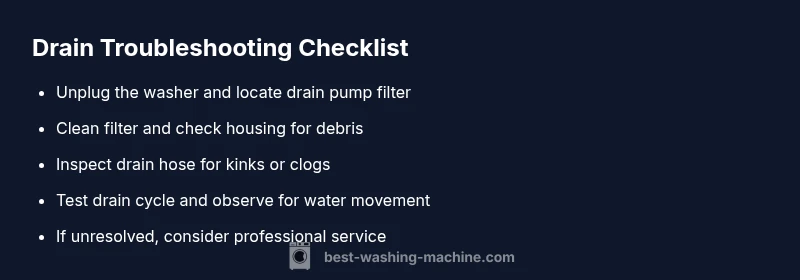
You don’t need tools to start diagnosing the drainage problem. Begin with the simplest steps and progress logically. First, unplug the machine, then pull it away from the wall enough to access the back panel and hoses. Check for standing water in the drum, which can indicate a drainage issue or a blocked filter. Locate the drain pump filter—often behind a small access panel or a kick panel—and have a shallow pan ready to catch any residual water. Remove the filter and clear away lint, coins, or fabric fibers. Rinse the filter under running water and reassemble. Next, inspect the drain hose for kinks, twists, or pinched sections that would prevent gravity drainage. If the hose runs upward or is looped, reposition it so it runs downhill from the machine to the standpipe or laundry tub. Finally, verify that the standpipe or sink drain is free of blockages. A backed-up standpipe can cause water to back up into the drum even after the filter is cleared. By following these steps, you’ll often resolve the issue without needing tools, and you’ll have direct feedback on whether the problem is downstream in the home drainage system or inside the washer itself.
Cleaning the Drain Pump Filter: A Step-by-Step
Many modern washers use a drain pump filter that collects debris before it reaches the pump. A clogged filter is a very common cause of a washer not draining. To clean it safely, unplug the machine and prepare towels and a shallow tray. Remove the access panel (or the filter cap) and slowly loosen the filter to avoid splashing. Have the tray ready as some residual water will spill. Rinse the filter under running water to remove lint and particles, then use a brush to clean the interior housing. Reinstall the filter snugly, remove any leftover debris from the housing, and run a short drain cycle to test. If water still collects in the drum, there may be a more persistent blockage further along in the pump assembly. This is a good place to pause and evaluate the next steps or call a professional if needed. Cleaning the filter regularly helps prevent future drain problems and is a simple maintenance habit endorsed by Best Washing Machine’s maintenance tips.
Inspecting the Drain Hose, Standpipe, and P-Trap
Even with a clean pump, drainage can fail if the hose is blocked or incorrectly routed. Disconnect the drain hose from the standpipe and inspect it for kinks, bulges, or clogs. If you see a blockage inside the hose, gently remove it using a flexible wire or long brush, then flush with water. Reconnect the hose securely to the standpipe, ensuring a smooth gradient from the washer to the drainage point—avoid any loops that would trap water. For houses with a shared standpipe, make sure the standpipe is clear and that there is enough vertical height to prevent backflow. In some installations, a high-efficiency pump can struggle if the drain line is too long or has too many bends; consider rerouting with proper slope. If you’re unsure about the line’s condition, a professional can inspect the layout for code compliance and proper drainage.
When to Replace the Pump or Call a Pro and Prevention Tips
If you’ve confirmed the pump isn’t pumping water and the filter and hose are clear, the drain pump may be failing. A failed pump usually presents as a humming motor but no water movement, or as intermittent draining. Replacing a pump tends to be a medium-difficulty DIY task that requires basic hand tools and some patience; if you’re not confident, a professional repair is the safer route. Preventing future drainage problems is easier than fixing them: schedule regular filter cleanings, avoid overwetting towels or lint-rich fabrics, don’t overload the drum, and use the correct detergent type. Keep the area around the machine dry and well-ventilated to prevent mold. Consistency with simple maintenance beats expensive repairs, and Best Washing Machine’s guidance emphasizes proactive care to extend the life of your unit.
Steps
Estimated time: 45-75 minutes
- 1
Power down and prepare
Unplug the washer and move it to access the back or bottom panels. Put towels on the floor and have a shallow tray ready for water drain during disassembly.
Tip: Always test for power at the outlet with a non-contact tester before touching wiring. - 2
Access the drain pump filter
Open the access panel or remove the kick panel to locate the filter housing. Place a container beneath and carefully loosen the filter cap to drain residual water.
Tip: Loosen slowly to avoid splashing and wear gloves for hygiene. - 3
Clean the filter and housing
Remove debris, rinse the filter with clean water, and wipe the housing with a damp cloth. Reinsert the filter firmly and ensure the seal is snug.
Tip: Check for wear on the seal; replace if damaged. - 4
Check the drain hose
Detach the drain hose at the standpipe side, straighten it, and look for kinks or blockages. Run water through the hose to confirm free flow.
Tip: Do not use force to dislodge a blockage—use a flexible brush or corresponding tool. - 5
Test drain cycle
Plug the machine back in and run a short drain cycle to verify water empties from the drum. Listen for the pump operation and note any unusual noises.
Tip: If you hear grinding or a hum without water movement, the pump may be failing. - 6
Inspect further or replace if necessary
If water still won’t drain, inspect the pump directly or replace the pump assembly. Consider professional service for a safe, correct replacement.
Tip: A faulty pump can cause secondary issues if not replaced correctly.
Diagnosis: Water won’t drain from washing machine
Possible Causes
- highClogged drain pump filter
- highBlocked or kinked drain hose
- mediumFaulty drain pump
- mediumDefective lid switch or interlock
- lowBlocked standpipe or home drainage
Fixes
- easyUnplug and clean the drain pump filter
- easyDetach and straighten or clear the drain hose and verify standpipe is clear
- mediumTest the drain pump by running a drain cycle; replace if not functioning
- mediumInspect lid switch/interlock and replace if faulty
- hardIf the problem persists, hire a qualified appliance technician
FAQ
What causes a washing machine not to drain?
Common causes include a clogged drain pump filter, a blocked or kinked drain hose, a faulty drain pump, a defective lid switch, or a blocked standpipe. Inspect each component in order of likelihood to isolate the issue.
The main causes are clogged filters, a blocked hose, or a faulty pump. Start with the easiest checks first.
Can a clogged drain hose be cleared without tools?
Yes, you can clear minor blockages by detaching the hose and flushing it with water or using a flexible brush. If blockage persists, don’t force water through the hose, which could cause leaking or damage.
You can usually flush a simple blockage with water; if it won’t clear, consider more thorough cleaning or professional help.
Is it safe to drain water manually with a bucket?
Manual drainage is safe if you unplug the unit and carefully drain through the hose into a bucket. Keep the power off and avoid disconnecting live electrical components near water.
Yes, but only with the machine unplugged and standing water contained to prevent slips or spills.
When should I replace the drain pump?
Consider replacement if the pump hums but doesn’t move water, if the impeller is damaged, or if diagnostics show the pump motor is failing after attempts at cleaning. A professional can confirm and install a new pump.
If the pump won’t move water despite cleaning, replacement is often the right fix.
What maintenance helps prevent drainage problems?
Regularly clean the filter, avoid overloading, use appropriate detergent, and inspect hoses for kinks every few months. Keeping a simple maintenance routine reduces the chance of future drainage issues.
Keep filters clean and hoses clear to prevent future drain problems.
Watch Video
The Essentials
- Start with the simplest fixes (filter and hose)
- Clean the filter regularly to prevent clogs
- Check the drain hose and standpipe for kinks or blockages
- Call a professional if the pump is faulty or if you’re uncomfortable with disassembly