Why Is My Washing Machine Not Draining? Quick Troubleshooting Guide
Urgent troubleshooting guide to fix a washer that won't drain. Quick checks, diagnostic flow, step-by-step fixes, safety tips, and prevention from Best Washing Machine.


If your washer won’t drain, the most likely causes are a clog, a kinked drain hose, or a blocked pump. Start with simple checks like inspecting the drain hose and cleaning the pump filter. If water still won’t exit, follow the diagnostic flow to identify the exact issue and safe fixes. This approach helps you restore drainage quickly.
Why drainage problems happen
If you’re asking 'why is my washing machine not draining', you’re not alone. In homes, drainage problems usually start with simple, fixable causes rather than major component failures. According to Best Washing Machine, most not-draining symptoms come from clogs, hose kinks, or a blocked pump, not a failed motor. The washing machine is designed to pump out water through a drain hose to a standpipe or laundry tub; when the path is obstructed or the pump cannot push water, you end up with standing water or a washer that won’t drain. Understanding these everyday causes helps you triage safely and avoid unnecessary repairs. This guide walks you through a fast, urgent troubleshooting approach so you can restore drainage without delay and protect your laundry day routine.
Quick checks you can do safely
- Unplug the machine and wait for the drum to stop spinning, then open the access panel if needed. Safety first.
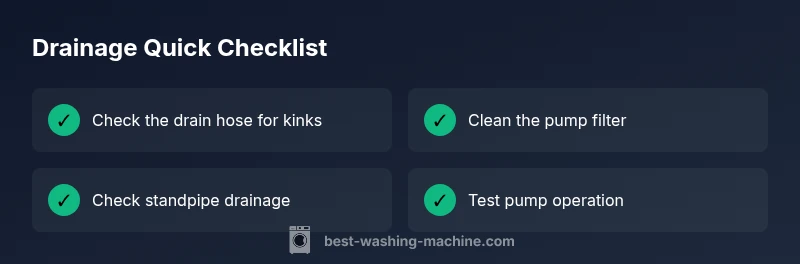
- Inspect the drain hose for kinks or sharp bends at the outlet; a collapsed hose may trap water instead of draining it away.
- Remove and clean the pump lint filter or trap if your model has one; debris here is a common choke point.
- Check the standpipe or drain that water flows into; a blocked or slow drain can back up into the tub.
- Listen for the pump humming or buzzing during a draining attempt. If you hear nothing, power or motor issues could be involved.
Common causes of not draining
Most drainage problems fall into a few categories. Clogs in the pump or filter are the most frequent. A kinked, clogged, or blocked drain hose is another common culprit. A blocked standpipe or drainage line can create a bottleneck that prevents water from exiting. In rare cases, a faulty drain pump, wiring, or control signal can stop drainage. Finally, some models rely on a lid or door switch to enable draining; if that switch is faulty, draining may be inhibited. The goal is to rule out simple issues before moving to replacements.
How to test the drain hose and pump
Begin by unplugging the machine and gaining access to the pump and drain hose. Detach the hose where it connects to the pump and inspect for visible clogs. Use a flashlight to look inside and, if safe, gently twist or probe with a flexible hanger or pipe cleaner to remove any obstruction. Reattach the hose and run a short cycle to observe whether water drains. If no water exits, check the pump area for obstructions around the impeller and verify there is power to the pump by testing the plug and control signals. If you’re not seeing power or the impeller doesn’t spin when commanded, a wiring issue or a failed pump could be the cause.
Step-by-step fix for a clogged pump/filter
- Power off and unplug the machine; access the pump and filter; remove the filter cap and clean out debris.
- Use a brush or cloth to wipe the housing and pull out any hair, lint, or fabric fibers that may have collected there.
- Reinstall the filter, ensuring a snug seal; inspect the impeller housing for obstructions and remove any foreign objects.
- Reconnect all hoses and electrical connectors securely; run a test drain cycle to confirm drainage is restored.
- If water fails to drain, repeat the inspection at the pump inlet and outlet for additional blockages; consider replacing the pump if it remains non-functional.
- Document the results and reset the control panel if needed; avoid forcing parts or using excessive force on hoses.
When to consider professional service
If the pump hums but does not turn, if you see burnt smells or hear grinding, or if power to the pump cannot be established after basic checks, it’s time to call a professional. A qualified technician can diagnose electrical faults, replace a failing pump, or inspect internal wiring that may not be user-serviceable. If your unit is under warranty, check the terms before attempting a repair that could void coverage. Early professional intervention can prevent water damage and protect your home.
Prevention tips to avoid future clogs
- Regularly clean the pump filter or lint trap according to your model’s manual. A quick check every few weeks can save you from bigger clogs.
- Use the right type and amount of detergent to reduce suds and lint build-up; excess suds can push debris into the pump.
- Run a periodic cleaning cycle or a hot wash with a washing machine cleaner to loosen scale and mineral buildup.
- Avoid forcing items through the drain hose; check that nothing bulky or fibrous is obstructing the path.
- Keep the standpipe area clear and ensure the drainage system isn’t backing up during heavy use.
Tools and replacement parts basics
Having a basic toolkit on hand is helpful for drainage problems. You’ll typically need a screwdriver, pliers, a flexible hose brush, and a small flashlight. Replacement parts to consider include a new pump, a new intake filter, and a new hose with the correct diameter for your model. Before purchasing parts, verify compatibility with your washer’s brand and model number. Always disconnect power before installing parts and consult your user manual for safety guidelines. If you’re uncertain about part compatibility, consult a dealer or service professional.
How to maintain good drainage long-term
Establish a drainage maintenance routine that aligns with your laundry habits. Inspect hoses for kinks and ensure the pump area is free of lint and debris after each cycle. Use a high-quality, manufacturer-recommended detergent to minimize residue buildup. Keep an eye out for changes in drainage speed and unusual noises; early signs can indicate a developing problem. By staying proactive, you reduce the likelihood of major clogs and expensive repairs and keep your washing machine functioning reliably.
Steps
Estimated time: 15-45 minutes
- 1
Power down and access the pump area
Unplug the washer and move it to a clear workspace. Remove the access panel or bottom front panel as instructed by your model’s manual to reach the pump housing. Take photos of wiring before touching anything so you can reconnect correctly.
Tip: Label wires or connectors to avoid confusion during reassembly. - 2
Inspect and clean the pump filter
Locate the pump filter or lint trap, remove it, and clear out any lint, hair, or fabric fibers. Rinse the filter under running water and wipe the housing before reinstalling.
Tip: Even small clogs can block the pump; cleaning regularly reduces future issues. - 3
Check the drain hose for kinks
Trace the drain hose from the pump to the wall or standpipe. Straighten any sharp bends, remove visible blockages from the hose, and make sure clamps are secure.
Tip: A kinked hose often masquerades as a drainage failure. - 4
Test the pump and power supply
Reconnect hoses, restore power, and run a short drain test. Listen for the pump motor and verify there’s power to the unit. If the pump doesn’t engage, electrical wiring or the control board may be the culprit.
Tip: If you don’t hear the pump, don’t force it; check power and connections first. - 5
Inspect for hidden obstructions in the tub
Sometimes debris settles in the tub or around the impeller. Check the drum area for loose coins, buttons, or small objects that could be stuck and obstruct the drain path.
Tip: Never put metal objects into the drum; they can damage internal components. - 6
Reassemble and run a full test cycle
Secure all panels, reconnect the power, and run a full cycle to confirm the machine drains normally. Observe the entire drainage sequence and listen for any unusual sounds.
Tip: Document the results; if issues persist, escalate to a repair service. - 7
Decide on next steps if drainage still fails
If water remains in the tub after a test, consider replacing the drain pump or seeking professional diagnosis. Keep your model number handy for parts lookup and service calls.
Tip: Early professional help can prevent water damage.
Diagnosis: Water won't drain from the washer after a wash cycle
Possible Causes
- highClogged pump or filter
- highKinked or blocked drain hose
- mediumBlocked drain or standpipe
- lowFaulty drain pump
- lowLid/door switch issues or control fault
Fixes
- easyClear lint filter and pump trap; remove debris
- easyStraighten or replace kinked drain hose; remove blockages
- easyUnblock standpipe/drain line; clear obstructions
- mediumReplace the drain pump or check electrical connections
- mediumTest lid switch and control signals; consider professional diagnosis
FAQ
What is the most common reason a washing machine won’t drain?
The most common reason is a clog in the pump or filter, often combined with a blocked hose. Clearing these areas typically resolves drainage issues.
Usually a clog or hose obstruction is at fault, which you can often fix yourself.
Can a blocked drain hose cause drainage problems even if the pump is fine?
Yes. A kinked or blocked drain hose can prevent water from leaving the tub even if the pump works properly. Inspect and straighten or replace the hose if needed.
A blocked hose is a frequent culprit that’s easy to check.
Should I run a test cycle to check drainage?
Only after you have inspected the drain path and ensured the area is safe. Run a short drain or spin cycle to observe drainage behavior.
Run a quick test after you’ve checked for obvious blockages.
When should I call a professional for not-draining issues?
If you hear grinding or buzzing from the pump, if there’s no power to the pump, or if basic checks don’t restore drainage, it’s time to involve a technician.
If in doubt, professional help can save time and prevent damage.
Can cleaning the filter void my warranty?
Warranty terms vary by brand and model. Check your warranty documentation; in many cases, cleaning the filter is allowed, but replacing components may require service.
Review the warranty; some parts may be covered while DIY fixes could affect it.
Why is there water still in the tub after draining?
This can indicate a partial clog, an ineffective pump, or a high-efficiency model with an integrated overflow. Recheck hose and filter, and test the pump.
If water stays, recheck the path and consider professional help if needed.
Watch Video
The Essentials
- Start with simple checks and hose inspections.
- Clogs in the pump/filter and kinked hoses are the most common causes.
- If the problem persists, consult a professional to avoid water damage.
- Regular maintenance can prevent future drainage issues.
- Best Washing Machine recommends documenting results before escalating to repairs.