Washing Machine Won't Drain or Spin: Quick Troubleshooting Guide
Urgent guide to diagnose and fix a washing machine that won't drain or spin. Step-by-step checks, common causes, safety tips, and when to call a pro.


Most likely, a clogged drain pump, pump filter, or blocked drain hose is stopping your washing machine from draining and spinning. Start with safety: unplug the unit, then inspect the drain path and filter for debris. Clear any blockages, reconnect, and run a test cycle. If it still won’t drain, proceed with hose inspection and lid-switch checks before calling a pro.
Why Washing Machine Won't Drain or Spin
A washing machine that won’t drain or spin is one of the most common service calls homeowners face. The root cause is almost always something simple you can fix at home with basic tools. The drain and spin functions are tightly linked: if water can’t drain, the drum won’t spin freely, and the machine may halt with an error code. In many cases, mineral buildup, lint, or small clothing items cause a partial clog that traps water and prevents acceleration in the spin cycle. Throughout this guide, we’ll focus on practical checks you can perform safely in a typical home laundry area.
According to Best Washing Machine, drainage and spin issues frequently stem from clog-related blockages or worn components. By following the steps below, you can often restore normal operation without a service call.
Quick Diagnostic Overview
Before diving into tools and parts, understand the sequence. The pump discharges water, the drain hose carries it away, and the lid switch or door lock confirms the machine is safe to spin. If any link in this chain is compromised, draining and spinning fail. Look for obvious culprits: a clogged pump filter, a snag in the drain hose, an overfilled load, or a misadjusted lid switch. Address the simplest issues first, then escalate to more complex checks if problems persist.
Best Washing Machine analysis notes that the majority of drain/spin failures are due to accessible blockages in the pump or hose, making early checks especially valuable.
Safety First: Power, Water, and Tools
Always unplug the machine before starting any inspection. If you must move the washer, shut off the water supply to avoid leaks. Gather basic tools: a bucket, towels, a flashlight, and a pair of pliers. Use gloves to protect your hands from sharp edges inside the kick panel or filter housing. If you smell burning or see unusual heat near any component, stop and seek professional help immediately. Safety isn’t optional—it's the first step to a successful repair.
Common Causes at a Glance
- Clogged drain pump or filter (high likelihood): Debris from coins, hair, and lint can trap water.
- Blocked drain hose or standpipe (high likelihood): A kink or buildup restricts flow.
- Overloaded or unbalanced load (medium likelihood): Too much weight can overwhelm the drain and spin circuits.
- Faulty lid switch or door lock (high likelihood for top-load machines): If the switch doesn’t sense the lid is closed, the spin cycle won’t start.
- Worn drive belt or damaged motor coupling (low likelihood, older models): Reduces rotation efficiency, affecting spin.
- Malfunctioning timer or control board (low likelihood): Electronics can misread cycle status.
Step-by-Step Quick Checks
- Verify power and water supply: Ensure the machine is plugged in and the outlet is on. Check for a tripped circuit breaker.
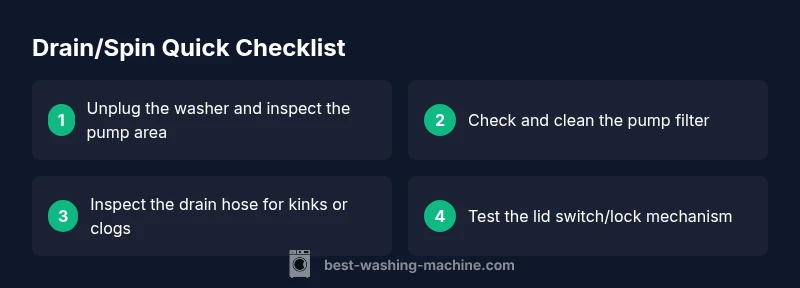
- Inspect the drain pump and filter: Remove debris from the filter housing and pump inlet. Rinse thoroughly and reassemble.
- Check the drain hose: Detach and inspect for kinks or blockages; flush with water. Reconnect securely.
- Redistribute the load: If the drum is overloaded, remove items and balance the remaining load.
- Test the lid switch/door latch: For top-load machines, press the lid and listen for a click. A faulty switch can stop the spin cycle.
- Run a test cycle: After each fix, run a short cycle with a small load to observe draining and spinning.
Inspect the Drain System: Filter, Pump, and Hose
A clogged filter or a blocked pump inlet is among the most common culprits. Start by locating the filter (usually behind a panel). Remove it carefully, clean out any debris, and rinse with warm water. Inspect the pump impeller area for coins, lint, or threads that could jam rotation. Next, inspect the drain hose for kinks, bends, or siphoning. If you find a blockage, disconnect and flush with water until clear. Reassemble and perform a test run.
If debris is regularly appearing, consider a coin trap or lint catcher upstream to reduce future clogs.
Lid Switch and Control Logic Checks
Some washers won’t spin if the lid switch or door lock fails to signal the control board that it’s safe to operate. With the power off, access the switch and test its continuity with a multimeter according to the manufacturer’s service manual. If the switch doesn’t close when the lid is shut, replace it. Also inspect the control board for obvious signs of damage or water intrusion. While attempting these checks, rely on the service manual for wiring diagrams to avoid accidental shorts.
When to Replace vs Repair: Cost and Longevity
Repairing a clogged pump or replacing a damaged hose is often cost-effective on a mid-range or newer unit. If the drive belt or motor coupling shows wear, or if the electronic control board is failing, replacement may be more economical in the long run. Consider the age of your machine, operating costs, and the likelihood of recurring failures when deciding between repair and replacement. The Best Washing Machine Team suggests prioritizing safety and reliability: if a major component is suspect, a professional assessment can prevent further damage.
Preventive Tips to Avoid Future Clogs
- Clean the filter regularly, especially if you wash small items like coins or toys.
- Use the correct detergent amount to minimize suds and residue.
- Don’t overload the drum; follow the manufacturer’s load guidelines.
- Periodically inspect hoses for wear and secure connections.
- Schedule an annual professional inspection for older models to catch worn parts early.
Steps
Estimated time: 30-60 minutes
- 1
Power down and access the drain area
Unplug the machine and move it to access the bottom front panel where the drain pump and filter are located. Have towels ready for any residual water and avoid touching live electrical components.
Tip: Use a flashlight to spot tiny screws and clips under the panel. - 2
Remove and clean the drain pump filter
Open the filter housing, carefully remove any debris, and rinse under running water. Reinsert the filter firmly to ensure a proper seal before testing.
Tip: Keep a shallow dish beneath the filter to catch splashes. - 3
Inspect the drain hose for kinks
Disconnect the drain hose from the wall or standpipe and check for tight bends or clogs inside the hose. Flush with water or use a long brush to clear.
Tip: Do not reuse a hose that shows cracks or splits. - 4
Check the lid switch/door latch
For top-load machines, test the lid switch by manually pressing it while cycling; listen for a click indicating engagement. If it doesn’t click or the test cycle still won’t start, replace the switch.
Tip: Even small misalignment can keep the switch from sensing a closed lid. - 5
Test with a small load
Load a few towels or lightweight items, select a normal cycle, and observe draining and spinning. If the drum drains but won’t spin, the issue may be the belt or motor.
Tip: Avoid rushing the test; wait for each phase to complete before concluding. - 6
Decide on next steps based on results
If the problem persists after these checks, consider professional service. Major components like the drive belt, motor, or control board typically require a tech.
Tip: Document what you tested and what you observed to speed up service.
Diagnosis: Machine won't drain or spin
Possible Causes
- highClogged drain or pump filter
- highBlocked drain hose or standpipe
- highDefective lid switch or door lock
- mediumOverloaded or unbalanced load
- lowWorn drive belt or faulty motor coupling
Fixes
- easyUnplug the washer, locate and clean the drain pump filter to remove debris.
- easyInspect and clear the drain hose; remove kinks and flush to clear blockages.
- mediumTest lid switch/door latch; replace if not signaling the control board.
- easyRedistribute load and run a test cycle to confirm proper draining and spinning.
- hardCheck belt/coupling in older models; replace worn parts.
FAQ
What is the most common cause of a washing machine that won't drain or spin?
The most common cause is a clogged drain pump or filter, along with a blocked drain hose preventing water from exiting.
The usual culprit is a clog in the drain pump or filter, often with a blocked drain hose.
Can I fix this myself without a technician?
Yes, many fixes are DIY-friendly, especially cleaning the pump filter and unclogging the drain hose. Always unplug first and follow safety steps.
Yes—many fixes are safe to do yourself if you unplug first and follow safety steps.
How do I clean the pump filter safely?
Locate the filter, unscrew it carefully, remove debris, rinse, and reattach. Ensure the seal is tight to prevent leaks.
Find the filter, remove debris, rinse, and reattach firmly.
Why would an overfull load cause it not to drain or spin?
Overloading can prevent water from circulating and draining properly, straining the pump and sensors and causing the unit to halt.
Too much laundry can stop the draining and spinning because the pump and sensors get overwhelmed.
When should I replace parts vs. repair?
If the belt, motor coupling, or control board shows wear or failure, replacement is often more reliable than repeated repairs.
If parts show wear or failure, replacement is usually the better option.
Watch Video
The Essentials
- Unplug before inspecting any components
- Most drain/spin issues come from clogs in filters, pump, or hose
- Check the lid switch for top-load washers
- Avoid running with a known leak or damage until repaired
- Call a pro if you suspect a faulty belt or control board