What Does 4E Mean on a Samsung Washing Machine? Urgent Troubleshooting Guide
Learn what 4E means on Samsung washers, quick fixes, step-by-step repairs, safety tips, cost ranges, and when to call a professional.


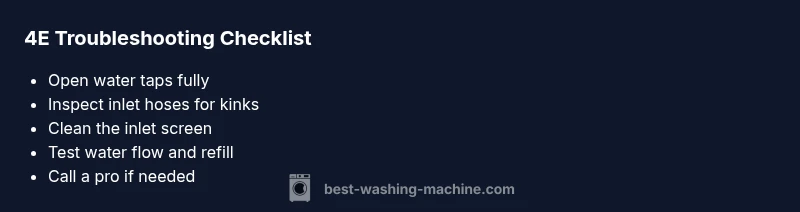
4E on a Samsung washing machine indicates a water inlet issue—the appliance isn’t filling properly. The most common causes are a clogged inlet valve screen, a kinked or closed water supply hose, or low water pressure from the household supply. Try these quick fixes: verify taps, inspect and straighten hoses, and clean the inlet screen. If the code persists, professional service may be required.
What 4E Means on Samsung Washers
In Samsung washing machines, 4E is a fault code that indicates the unit cannot fill with water. According to Best Washing Machine, this is primarily a water inlet issue rather than a motor or control board fault. The most likely causes are a clogged inlet valve screen, a kinked or closed water supply hose, or low water pressure from the household supply. Start with quick checks that you can do without tools: confirm the taps are fully open, inspect the hoses for kinks or crimped sections, and clean the inlet screen to remove mineral buildup. If the taps are open and the hoses are clear but the code remains, there may be a blockage deeper in the valve, or the inlet valve itself could be failing. In that case, a professional service may be required to replace the inlet valve or diagnose a pressure issue in your plumbing.
Quick Checks You Can Do Right Now
Before you disassemble anything, perform these quick checks to determine if the 4E issue is a simple fix. First, verify that the household cold or hot water taps are fully open and that the water supply line to the washer has no shutoff valves accidentally turned off. Next, inspect the water inlet hose for kinks, twists, or bends that would restrict flow. Check the hose connections at both ends to ensure they are snug but not overtightened. Finally, inspect and gently clean the inlet valve screen or filter, which can accumulate mineral deposits, especially in areas with hard water. If the screen is dirty, rinse it under running water and reassemble. If the code still appears after these checks, the problem may lie deeper in the inlet valve or water supply pressure.
Common Causes (Most to Least Likely)
When 4E appears, the most common culprits are, in order of likelihood: 1) a blocked or dirty inlet valve screen allowing limited water through, 2) a kinked, crushed, or blocked water inlet hose, 3) a shutoff valve that is not fully open or is partially closed, and 4) consistently low household water pressure or a partially blocked water line. Less common but possible causes include a defective inlet valve due to wear, a miswired control module affecting fill cycles, or an overzealous anti-kink device on the hose. If you notice leaks around fittings or the hose, stop the machine and address the leak first, as water intrusion can damage electronics.
How to Inspect and Clean the Inlet Screen
Follow these steps to inspect and clean the inlet screen safely. Start by unplugging the washer and turning off household water supply. Disconnect the inlet hoses from the back of the machine, taking care not to spill water. Locate the valve screen at the end of the valve where the hose connects, and use a small brush or cloth to remove mineral buildup. Rinse the screen under warm water until flow feels clear. Reassemble the hose and tighten connections firmly, but avoid overtightening. Restore power and water supply, then run a test wash to see if 4E reappears. If mineral buildup is heavy, consider using a descaling solution per manufacturer guidelines and repeat cleaning monthly.
Resetting the Code and Testing
Some Samsung models reset the code after a successful fill test, but a reset will not fix a hardware fault. After cleaning the screen and confirming water flow, run a short wash with no clothes to test fill. If the washer fills and a new cycle begins without error, you may have resolved the issue. If 4E returns, document when it occurs (cycle type, wash setting, water supply status) and contact support. Keep in mind that persistent 4E can indicate a failing inlet valve or plumbing pressure problem that requires professional diagnosis.
When to Call a Professional and Cost Ranges
Complex 4E failures often require a professional. If basic checks do not restore normal fill, a service call is likely needed. Typical costs vary by region but look for these ranges as rough guides: diagnostic visit $60–$120, inlet valve replacement $100–$350 (parts plus labor), hose replacement $20–$60, and possible plumbing pressure adjustments $50–$150. Your exact price depends on local rates and whether parts are readily available. If the unit is still under warranty, contact Samsung support first to avoid out-of-pocket costs.
Prevention and Maintenance to Avoid 4E
To reduce the chance of a 4E error in future cycles, perform regular maintenance on your washer’s water inlet system. Use a water-softening system if you have hard water to minimize mineral buildup. Inspect hoses every few months for wear, kinks, or bulges, and replace damaged hoses promptly. Keep the inlet screen clean by removing and rinsing it during routine filter maintenance. Finally, consider a back-up plan for low-pressure homes, such as using a dedicated washing machine valve with a higher rated flow or scheduling wash times for peak water pressure.
What to Do If 4E Reoccurs After Repair
Even after a successful repair, it is possible for 4E to return if the root cause is not fixed. Recheck the inlet screen and hose conditions after a few cycles, and monitor for leaks around fittings. If the error returns, schedule a professional evaluation to check internal valve assemblies and water pressure regulation in your home. Document any changes in water supply or household plumbing that could affect the washer.
Steps
Estimated time: 25-45 minutes
- 1
Power off and unplug
Unplug the machine and switch off the home water supply before touching any parts. This prevents electric shock and avoids accidental valve movement.
Tip: Always start with safety first; wear gloves if you have them. - 2
Check taps and hoses
Make sure both hot and cold taps are fully open. Inspect the inlet hoses for kinks, twists, or crush points that could restrict flow.
Tip: Do not force hoses; replace if there are visible damages. - 3
Clean inlet screen
Disconnect hoses from the back of the washer and locate the inlet screen at the valve. Remove mineral buildup with a soft brush and rinse thoroughly.
Tip: Take a quick photo before disassembly for reassembly reference. - 4
Reconnect and test flow
Reconnect hoses, turn on water, and run a short fill test without clothes to confirm water is entering the drum.
Tip: Watch for leaks at connections; tighten if needed. - 5
Run a small cycle
If the fill is OK, run a brief wash to ensure the 4E does not reappear. If it does, proceed to professional diagnosis.
Tip: Log the cycle details in case you need to report it.
Diagnosis: 4E error displayed, washer won't fill with water
Possible Causes
- highClogged or dirty inlet valve screen
- mediumKinked, crushed, or blocked inlet hose
- lowWater supply shutoff valve not fully open
- lowLow household water pressure or blocked supply line
Fixes
- easyClean the inlet screen and straighten/replace the hose
- easyOpen the shutoff valve and confirm adequate water pressure
- mediumReplace inlet valve if screen remains clogged after cleaning
- mediumTest water supply pressure and consider main line service if pressure is low
FAQ
What does the 4E error mean on a Samsung washing machine?
4E indicates a water inlet problem preventing the drum from filling. It’s usually caused by water supply or valve issues rather than a motor fault.
4E signals a water inlet problem preventing fill. Check water supply and inlet valve.
What is the first thing I should check for 4E?
Start by confirming the water taps are fully open and the inlet hoses are not kinked or crushed. Then inspect and clean the inlet screen.
First, check taps and hoses, and clean the inlet screen.
Can I reset 4E without calling a technician?
Resetting the code may not fix a hardware issue. If cleaning and checking flow doesn’t solve it, you should arrange a professional diagnostic.
Resetting won't fix a hardware fault; call a pro if it returns.
How much does it cost to fix 4E?
Costs vary by region, but expect a diagnostic visit plus possible parts. Typical ranges include $60–$120 for a diagnostic call and $100–$350 for valve replacement.
Diagnostics usually cost $60 to $120; valve replacement can be $100 to $350.
Is 4E harmful or dangerous?
No, 4E is not dangerous, but it indicates the washer isn’t filling. Addressing water supply and valve issues is important to prevent further malfunctions.
4E isn’t dangerous; fix water supply and valve to prevent further issues.
Watch Video
The Essentials
- Verify water supply first to resolve 4E.
- Clean inlet screen and inspect hoses regularly.
- Don’t ignore leaks; fix them before testing.
- If 4E persists, expect inlet valve or pressure issues.
- Use ranges for cost estimates to plan repairs.