What LF Means on a Washing Machine: Quick Troubleshooting Guide
Understand LF on a washing machine, its causes, quick fixes, and step-by-step repair tips to resolve Long Fill errors fast.


LF on a washing machine means Long Fill. It indicates the washer is taking longer to fill with water, usually due to restricted supply or low pressure. Quick fixes include checking hoses, screens, and valves, and ensuring both water lines are fully open. If unresolved, consult the manual or a technician.
What LF Means on Modern Washers
If you are asking what does lf mean on a washing machine, LF stands for Long Fill and indicates the appliance is taking longer than expected to fill with water. This isn't a fatal error—it's a signal to inspect the water inlet process. According to Best Washing Machine analysis, LF is a common problem across brands and models, especially when water pressure is variable or the inlet screens are clogged. When LF appears, it typically sends you into a diagnostic loop that prioritizes the water supply, the inlet valve, and the screens. Understanding this distinction helps homeowners act quickly, minimize wasted cycles, and prevent downstream wear on components. The goal is to restore normal fill times so the laundry routine remains efficient and predictable.
Why LF Is Not Uncommon
LF is not unique to a single brand; many manufacturers use Long Fill to flag fill-time delays. In most households, the root cause is external to the control board. A sudden drop in municipal pressure, heavy use in the neighborhood, or a stuck valve can all contribute. Best Washing Machine's analysis shows that addressing water supply issues resolves LF far more often than replacing electronics.
Common Causes of LF
- Low water pressure from the main supply or home piping.
- Clogged or restricted inlet screens inside the water inlet valve.
- Kinked hoses, partially closed shutoff valves, or loose connections.
- Faulty inlet valve or pressure sensor that slows the fill cycle. Each cause varies by model and installation, so perform the simplest checks first and escalate only if needed. LF does not automatically indicate a mechanical failure; it's a signal to verify water communication before diving into internal components.
Quick Checks You Can Do
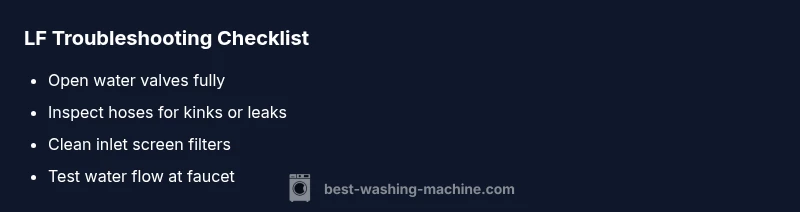
- Ensure both hot and cold valves are fully open.
- Inspect hoses for kinks, obstructions, or damage; replace if necessary.
- Power off the unit, unplug, and check if the inlet screens are clean and free of debris.
- Run a test fill with the machine empty and observe the water entry rate. If you notice slow fill on both lines, the issue is more likely pressure-related rather than a defective valve. These steps are designed to resolve most LF cases without specialized tools. If the flow remains sluggish after these checks, move to the diagnostic flow below and consider professional help.
Diagnostic Flow: How We Analyze LF (Overview)
When LF appears, we start with the simplest explanations and work toward the more complex possibilities. The first check is water supply: valve position, hose integrity, and line cleanliness. If supply is healthy, we test the inlet valve’s ability to admit water within a reasonable timeframe. If the valve is functioning but the fill is still slow, sensors or wiring may be involved. This methodical approach aligns with Best Washing Machine’s guidance on troubleshooting Long Fill errors and helps you isolate root causes quickly.
Step-By-Step Repair Focus: The Most Common Scenario
The most common LF scenario involves restricted water supply or clogged inlet screens. The repair approach is deliberately straightforward so you can perform most steps safely at home. Begin with the water valves, then clean screens, then reconnect and test. If the error persists, you’ll likely need valve replacement or sensor testing, which may require a professional service. This sequence minimizes downtime while ensuring safe, practical repairs.
Other Potential Causes and How to Address Them
In less frequent cases, a faulty inlet valve, pressure sensor, or a damaged hose can trigger LF. If you replace hoses and clean screens but LF persists, the valve or sensor may be defective. In that situation, consult a licensed technician to perform a controlled replacement and verify system pressure, electrical connections, and firmware logic. Remember, diagnosing LF should prioritize safety and avoid unnecessary disassembly.
Safety, Warnings, and When to Call a Pro
Always disconnect power and shut off water before touching any internal parts. Wear eye protection when handling hoses and screens. If you smell burning, observe water leaks, or notice active valves refusing to open, stop and call a professional. Long Fill issues that involve electrical components, complex valve assemblies, or persistent slow fills often require professional service and may involve replacement parts in the price range typical for such repairs.
Steps
Estimated time: 30-45 minutes
- 1
Power down and secure water supply
Unplug the washer and shut off both hot and cold water valves to prevent leaks. Move the machine away from the wall if you need extra room to access hoses. This initial safety step reduces the risk of electric shock and water spills during inspection.
Tip: Take a quick photo of hose connections before removing anything. - 2
Disconnect inlet hoses and inspect screens
Place a towel under the valve area to catch drips. Slowly loosen the filtration screens inside the inlet valves and inspect for debris. If you see sediment or scale, clean gently with a soft brush and reassemble.
Tip: Do not force the screens or components; re-seat firmly to prevent leaks. - 3
Clean or replace inlet screens
Rinse screens under running water, removing any mineral buildup. If screens are damaged, replace them with OEM parts if available. Reinstall the valve caps and ensure a snug seal.
Tip: Avoid using abrasive tools that could scratch the screens. - 4
Check valve and hoses for integrity
Inspect hoses for cracks, bulges, or kinks. If any damage is found, replace the hoses. Verify the valve body is not cracked and that connectors are tight.
Tip: Replace worn hoses promptly to prevent leaks and pressure loss. - 5
Reconnect and perform a test fill
Reconnect hoses, return power, and open water valves. Run a brief test cycle with no clothes to observe the fill rate. If water still enters slowly, proceed to the valve test or replacement.
Tip: Use a short warm cycle to simulate normal operation without heavy loads. - 6
Consider valve or sensor replacement if needed
If the LF persists after all checks, the inlet valve or pressure sensor may be faulty. Replacement can range widely based on model and labor, often in the moderate-cost range for common valves.
Tip: Contact a professional for precise diagnostics and a quote before ordering parts.
Diagnosis: LF error code displayed during a wash cycle indicating a long fill time
Possible Causes
- highLow water pressure from the supply line
- mediumClogged or restricted inlet screens in the water inlet valve
- mediumKinked hoses or hoses not fully connected / open valves
- lowFaulty inlet valve or pressure sensor
Fixes
- easyOpen both hot and cold water valves fully and test flow
- easyInspect and clean the inlet screens on the water inlet valve
- easyCheck hoses for kinks, blockages, or leaks and straighten/replace as needed
- hardTest or replace the water inlet valve if flow is still slow after checks
FAQ
What does LF mean on my washing machine?
LF means Long Fill, indicating the machine is slow to fill with water due to supply or valve issues. Many times it’s water pressure or screen blockages, not a major electrical fault.
LF means Long Fill; it’s usually water supply or valve related.
How do I fix LF on a top-load washer?
Start with simple checks: verify valves are fully open and hoses are clear of kinks. Clean inlet screens and test fill. If the issue continues, inspect or replace the inlet valve.
Check valves, hoses, and screens first; replace the valve if needed.
Can LF be caused by cold water only?
LF can occur if either hot or cold supply is restricted, including the cold line. Check both lines for blockages and valve positions.
Both lines can cause LF if restricted; check both.
Should I call a repair service for LF?
If basic checks don’t resolve LF, especially signs of valve failure or persistent slow fill, contact a professional. Expect cost ranges for parts and labor.
If it persists after simple fixes, get a professional to check the inlet valve.
What are the signs of a failing inlet valve?
Slow fills across cycles, valve noises, or leaks around the valve region hint at valve issues. A multimeter test can confirm valve function.
Watch for slow fills and noises; meter tests help confirm.
Can LF damage clothes or the washer?
LF mainly increases cycle time and energy use; it doesn’t typically damage clothes, but fixing LF improves efficiency and reduces wear over time.
Long fills waste time and energy; fix LF to protect your machine.
Watch Video
The Essentials
- LF signals a long fill; start with water supply checks.
- Clean inlet screens and straighten hoses first.
- If LF persists, valve or sensor replacement may be needed.
- Call a pro for electrical or valve work.