LG Washing Machine FE Code: Quick Troubleshooting and Fixes
Urgent guide to the LG washing machine FE code. Learn what it means, quick fixes, diagnostic flow, step-by-step repairs, and prevention tips to get your laundry back on track fast.


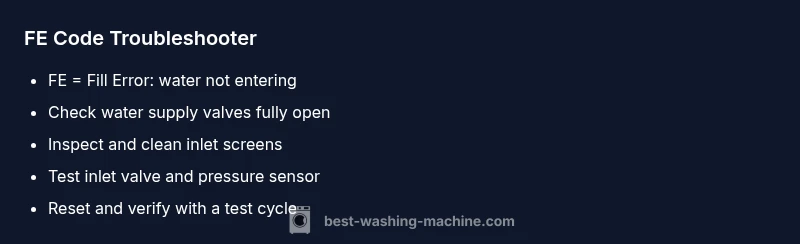
According to Best Washing Machine, the lg washing machine fe code signifies a water fill fault that prevents the drum from filling properly. It usually points to incoming water issues, a blocked inlet, or a faulty pressure sensor. Quick checks include ensuring the cold and hot water supply is fully on, inspecting inlet hoses for kinks, and cleaning the screen on the inlet valve. If the code persists, reset the machine and contact a technician.
What the FE Code Means on LG Washing Machines
The FE code on LG washing machines is a water fill fault. It indicates the washer is not sensing or receiving enough water to begin or complete a cycle. The fault is typically triggered by issues in the water supply path rather than a defect in the drum or motor. According to Best Washing Machine, FE commonly results from a restricted water inlet or faulty sensor rather than a stubborn software glitch. Understanding this distinction helps you target the right fix quickly. A rapid check of both water lines and the inlet valve can save you a lot of time and hassle when you need to keep laundry moving.
In many cases, the FE code clears after a simple reset if the supply is restored, but repeated appearances point to a more persistent issue that may require part replacement or a professional inspection. If your home has variable water pressure or frequent supply interruptions, FE codes may surface more often. A timely response can prevent downstream problems like overfilling, leaks, or incomplete rinses that compromise garment care.
Symptoms and How to Confirm FE
Watch for a filled error that appears as the washer begins to fill and then trips the cycle. You may notice the drum stays dry, water does not enter, or the display shows FE after a brief delay. If the water inlet valve is slow or clogged, the fill time may exceed expected limits and trigger the FE fault. Common signs include a grinding or buzzing sound from the inlet area as the valve struggles to draw water, followed by the FE code. Regular interruptions in water supply, such as a kinked hose or a partially closed shutoff valve, can mimic more serious hardware problems. When you see FE, check both the hot and cold lines for proper flow, because a blocked line on one side can confuse the sensor.
Quick Fixes You Can Try Safely
- Ensure both hot and cold water valves are fully open and water is flowing at normal pressure. - Inspect the inlet hoses for kinks, damage, or bends that limit flow. - Disconnect power and water, then reattach to reset the sensor, as some FE codes are a temporary fault. - Remove and clean the filter screens at the inlet valve; debris can restrict flow without obvious signs. - Reconnect everything, power up, and start a test cycle with no laundry to verify the issue persists.
Diagnostic Flow: FE Code – Likely Causes
- Insufficient water supply (kinked hoses, closed valve, low pressure) — likelihood: high
- Clogged inlet screen or debris in water inlet valve — likelihood: high
- Faulty water inlet valve or pressure sensor — likelihood: medium
- Faulty main control board or wiring issue — likelihood: low
Step-by-Step Fix for the Most Common Cause
- Unplug the machine and turn off both water valves. 2) Detach the water hoses from the back of the washer. 3) Inspect hoses for kinks or crushing. 4) Remove the inlet screen or filter; rinse with running water to clear debris. 5) Reinstall the screen and hoses, ensuring snug connections. 6) Restore power and water, then run a test cycle with no clothes. 7) If FE remains, test the inlet valve with a multimeter or consult a pro for valve replacement. 8) After any part replacement, run a full diagnostic cycle to confirm the fault is resolved.
Other Causes and Solutions
- Faulty water inlet valve: replace valve assembly and test power to the valve. - Damaged pressure sensor: assess sensor wiring and replace if readings are outside spec. - Control board issue: reseat connectors and perform a software reset; if unresolved, plan for a control board service. - Water pressure issues: install a regulator or improve supply from the municipal line; consider a pressure booster if you have consistently low pressure.
Safety Considerations and When to Call a Professional
Always unplug the washer before inspecting water lines or touching electrical components. If you detect burning smells, leaking water, or if you must perform electrical testing (multimeter work) and you are uncomfortable, cease work and call a technician. When FE recurs after the quick fixes, a professional diagnosis ensures the correct part is replaced and the wiring is checked for safety.
Prevention Tips to Minimize FE Codes in the Future
- Keep both hot and cold water valves fully open and regularly check hoses for wear. - Use the correct water rating for your model and avoid high mineral content water that can clog screens. - Schedule periodic hose and inlet screen cleanings to prevent buildup. - Consider a water filter or descaler if you live in an area with hard water, to protect internal valves.
Steps
Estimated time: 60-90 minutes
- 1
Power down and safety check
Unplug the washer and turn off both water valves. Confirm the area around the machine is dry before touching any connections.
Tip: If you smell burning or see arcing, stop immediately and call a pro. - 2
Inspect water supply lines
Check both hoses for kinks, cracks, or clogs. Replace damaged hoses and ensure the connections are tight.
Tip: Do not reuse crushed or bendable hoses; use rigid straights instead. - 3
Clean inlet screens
Remove the inlet valve housing and rinse the screens under running water to remove sediment.
Tip: Use a small brush to dislodge stubborn debris; avoid forcing debris into the valve. - 4
Reconnect and test
Reconnect hoses, open valves, plug in the unit, and run a test cycle with no laundry.
Tip: Monitor the water entry from the taps for a steady, clean flow. - 5
Assess valve and sensor
If FE persists, determine if the inlet valve or pressure sensor is faulty; testing may require a multimeter.
Tip: If you’re not comfortable testing electrical components, skip to professional service. - 6
Reset the control board
Power cycle the machine by unplugging for 60 seconds, then plug back in and run a diagnostic cycle.
Tip: Document any error codes that appear after reset. - 7
Replace faulty parts
If the valve or sensor shows abnormal resistance, replace with compatible LG parts following the manufacturer’s instructions.
Tip: Use OEM parts for best compatibility. - 8
Validate with a full cycle
Run a complete wash cycle with clothes to ensure FE does not reappear.
Tip: If it returns, schedule a technician visit for a deeper system check.
Diagnosis: FE code displayed during fill or cycle start; water not entering or filling slowly
Possible Causes
- highInsufficient water supply (kinked hoses, closed valve, low pressure)
- highClogged inlet screen or debris in water inlet valve
- mediumFaulty water inlet valve or pressure sensor
- lowMain control board or wiring issue
Fixes
- easyTurn on both water valves and verify steady flow; straighten hoses
- easyDisconnect hoses and clean inlet screens; reassemble firmly
- mediumTest/replacing the water inlet valve or pressure sensor as needed
- hardInspect/control board connections; perform a reset or professional diagnostics
FAQ
What does FE code mean on an LG washing machine?
FE indicates a water fill fault. The machine isn’t getting enough water to begin or complete a cycle. This is typically caused by supply issues, clogged filters, or a faulty sensor. Addressing water flow often resolves the code.
FE means a water fill fault. Check water supply and filters, then reset if needed.
Can low water pressure cause FE on LG washers?
Yes. Low pressure or inadequate flow can trigger FE. Ensure valves are fully open and inspect hoses for kinks or blockages. If pressure remains low, contact your water provider or a technician for assessment.
Low water pressure can trigger FE; check valves and hoses, then call a pro if needed.
Is cleaning the inlet screen enough to fix FE?
Often, cleaning the inlet screen resolves FE by removing debris that restricts flow. If FE persists after cleaning, the valve or sensor may be faulty and require replacement.
Cleaning the inlet screen helps, but if FE continues, you may need a part replacement.
When should I call a professional for FE code?
Call a professional if FE persists after quick fixes, or if you notice burning smells, leaks, or signs of water damage. A pro can diagnose valve, sensor, or board faults safely and accurately.
Call a pro if FE keeps happening or you see signs of damage.
Will LG cover FE repairs under warranty?
Warranty coverage depends on your policy and the age of the unit. Many FE-related issues may be covered if diagnosed as a manufacturing defect, but exclusions apply for wear and improper use.
Warranty depends on policy and unit age; check with the retailer or LG support.
What is the typical cost range to fix FE code in LG washers?
Costs vary by cause and region. A diagnostic visit is often a lower upfront cost, while valve or board replacements can range widely. Expect a broad budget, typically from low hundreds if part replacement is needed, depending on labor and parts.
Diagnostic visit costs vary; part replacements can push total into the hundreds.
Watch Video
The Essentials
- Check water supply and hoses first
- Clean inlet screens to clear debris
- Reset and test after each fix
- Consult a pro for valve or board faults