What to Do If Washing Machine Is Not Draining
If your washer won't drain, this urgent guide helps you diagnose, fix, and prevent drainage problems. Learn quick checks, pump/filter inspections, and when to call a pro for peace of mind.


Most not-draining issues start with a simple blockage. The likely culprits are a clog in the drain pump or filter, a kinked or blocked drain hose, or a failed lid switch in older models. Start with the easiest fix: unplug, remove the access panel, clear the filter, and straighten the drain hose. If water remains, follow the diagnostic flow for deeper checks.
Why a Washing Machine Might Not Drain
Water left in the tub after the cycle isn't just inconvenient; it can lead to odor and mold. In most homes, not draining is caused by blockages or failed components. According to Best Washing Machine analysis, the leading culprits are a clogged drain pump or filter, and a kinked, crushed, or blocked drain hose. A malfunctioning lid switch on older machines and some top-loaders can also prevent draining. Less common but possible are problems with the standpipe, the drain hose's height, or a failing pump motor.
This section helps you triage by likelihood: start with simple, user-serviceable steps before moving to more involved checks. You’ll save time, prevent water damage, and avoid unnecessary trips for service. As you work, remember that the exact layout varies by model, so consult your user manual for the location of the pump filter and hoses on your machine. Best Washing Machine emphasizes a calm, methodical approach to diagnosing drainage issues to protect your home and wallet.
Quick Safety Checks You Can Do Now
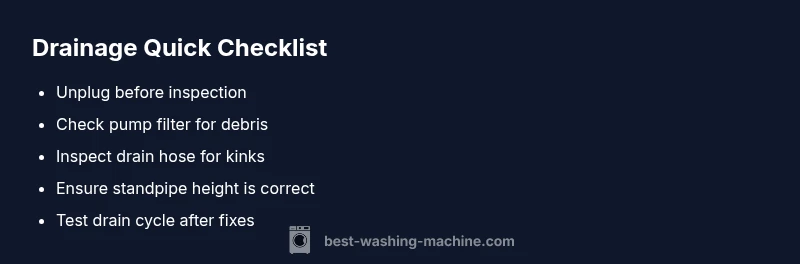
Safety comes first. Before touching the machine, unplug it and pull it away from the wall to access hoses and panels. Do not reach into moving parts. If your model has a service panel, remove screws and open access only as directed by the manual. Gather towels or a small basin to catch any remaining water. Check for obvious issues: is the drain hose kinked, crushed, or placed too high in the standpipe? Is the power outlet grounded? If the machine is on a pedestal or a compact unit, make sure you have stable footing to avoid a slip.
Next, test basic controls: choose the drain setting, then run a quick spin or drain cycle if your model supports it, watching for water movement. If water remains in the tub after attempting to drain, do not force the machine; proceed to the diagnostic flow and the step-by-step fix. Remember: Best Washing Machine advocates a calm, methodical approach to avoid safety hazards.
Common Causes in Order of Likelihood
- Clogged drain pump or filter (high): Debris from lint, hair, or detergent buildup blocks water removal.
- Kinked, crushed, or blocked drain hose or standpipe (high): A bent hose or blocked standpipe can trap water.
- Drain hose installed too high or too low (medium): Improper height can prevent gravity-assisted draining.
- Faulty lid switch or timer/controls (medium): Some washers won’t drain if the lid switch or control module signals a halt.
- Obstruction in the drain line or sewer stack (low): Rare, but possible if your home plumbing is congested.
- Internal pump failure or impeller damage (low): Worn components may stop pumping entirely.
Inspecting the Drain Pump and Filter
If your model provides front-access to a pump filter, place towels around the area and remove the access panel. Carefully pull out the filter and rinse under running water to remove trapped lint or coins, then replace it securely. Inspect the pump inlet and impeller area for debris or broken blades. If you notice a loose hose or a disconnected coupling, reattach it firmly. If your machine is loud or makes grinding noises when attempting to drain, this may indicate a failing pump—signs you should align with professional assessment. Throughout this section, Best Washing Machine’s repair guidance reminds readers to unplug the unit and avoid forcing components—safety first.
Clear the Drain Hose and Standpipe
Disconnect the drain hose from the standpipe or sink and inspect it for kinks or buildup. Rinse the hose thoroughly with water or use a long brush to clear blockages. Reconnect the hose and ensure it is not crimped or crushed under the machine. If you have a standpipe that is too tall, lower it to the recommended height (check your model’s manual). After clearing and reconnecting, run a short drain cycle with no load to confirm water is exiting properly.
As you work, keep the area dry and ready with towels. If water continues to back up or the hose remains blocked, move to advanced checks or consult a professional.
Maintenance and Prevention for Long-Term Drainage Health
Regular maintenance helps prevent not-draining problems. Clean the pump filter every month or two (as recommended by your model), and remove lint, coins, and pet hair that accumulate over time. Use the right detergent amount for your load size to avoid excessive suds that can trap debris. When loading, avoid overfilling and ensure the drain hose is free of kinks. Periodically inspect hoses for cracks and secure connections. By establishing a routine, you minimize the chance of a blockage and extend the life of your machine. The Best Washing Machine team notes that preventive care is often cheaper and faster than emergency repairs.
When to Call a Professional
If you’ve completed the basic checks and step-by-step fixes but the washer still won’t drain, it’s time to contact a pro. Electrical tests, impeller inspection, or pump replacement require specialized tools and safety protocols. Do not attempt to bypass interlocks or test the lid switch with exposed wiring. The Best Washing Machine team recommends scheduling a repair appointment when you hear grinding, notice burning smells, or see water pooling around the base of the appliance. A qualified technician can diagnose internal seals, motor issues, or plumbing problems beyond DIY scope.
Steps
Estimated time: 30-60 minutes
- 1
Unplug and prepare
Power off the washer and unplug from the wall. Move the machine away from the wall to access the back or bottom panels. Place towels in case water spills and gather the basic tools you’ll need.
Tip: Take photos of hose connections before detaching any part. - 2
Access the drain area
Open the service panel or access door according to your manual. Remove any screws and gently lift the panel to reveal the drain pump and filter area. Keep a tray beneath in case of residual water.
Tip: Use a bright flashlight to spot tiny debris. - 3
Clean the filter and pump inlet
Remove the filter, if present, and rinse under warm water. Clear lint, coins, and hair from the filter housing and pump inlet. Reinsert the filter securely.
Tip: Do not force the filter in if it doesn’t fit smoothly. - 4
Check the drain hose
Inspect the drain hose for kinks, twists, or blockages. Detach one end and flush with water or use a flexible brush to clear any obstruction. Reconnect firmly.
Tip: Ensure the hose is not crushed under the machine when reattaching. - 5
Test the drain cycle
Plug in the machine and run a short drain or spin cycle with no load. Watch for water exiting through the hose. If water drains, you may have resolved the issue.
Tip: If water still remains, move to advanced checks. - 6
Assess the pump and controls
If draining still fails, inspect the pump and impeller area for damage or wear, and test lid switch if accessible. If you feel unsure, arrange professional service.
Tip: Document any unusual noises or smells to share with the technician.
Diagnosis: Washing machine won't drain
Possible Causes
- highClogged drain pump or filter
- highKinked or blocked drain hose
- mediumStandpipe or drain line blockage in home plumbing
- mediumFaulty lid switch or control timer
- lowInternal pump failure or impeller damage
Fixes
- easyUnplug machine and clean the pump filter; clear debris from the pump inlet
- easyInspect drain hose for kinks and straightened routing; flush with water
- easyVerify standpipe height and ensure proper drainage setup
- mediumTest lid switch and cycle controls; replace if faulty
- mediumIf no improvement, consult a professional to inspect the pump or motor
FAQ
Why is my washing machine not draining after a rinse?
Most often the pump, filter, or drain hose is blocked, or the lid switch is failing. Start with the easiest checks and follow the diagnostic flow to identify the exact cause.
If it doesn't drain after rinsing, check for clogs in the pump or filter and inspect the drain hose; the lid switch could also be involved.
Can a clogged filter cause not draining?
Yes. A clogged pump filter is a common reason for poor drainage. Remove and clean the filter per your model’s manual, then run a test drain.
A clogged filter is a common cause; clean it and test the drain afterward.
What should I do if water remains after cleaning the pump and hose?
Stop the cycle, unplug, and manually remove standing water with towels or a small pump. Then proceed with the diagnostic flow to check for deeper issues.
If water still sits, unplug and remove it manually, then continue with the diagnosis.
Is it safe to fix the drain pump myself?
You can replace easy-to-access components like filters, but interior pump work or electrical testing should be done by a professional unless you’re trained.
DIY is okay for filters, but be cautious with electrical components.
When should I call a professional?
If basic checks don’t resolve the issue, or you hear unusual noises or smells, contact a technician. Persistent not-draining can indicate pump or motor problems.
Call a pro if it still won’t drain after the basic checks.
Can drain height affect draining performance?
Yes, installing the drain hose at the wrong height can prevent proper drainage. Adjust to the manufacturer’s recommended height.
Drain height matters; adjust to recommended height.
The Essentials
- Check simple causes first: filter, pump, and hose.
- Always unplug before inspecting or disassembling.
- Follow the diagnostic flow to avoid unnecessary parts replacement.
- Call a pro if you hear grinding, smell burning, or if water remains after steps.