My Washing Machine Not Draining: Troubleshooting Guide
Urgent, step-by-step troubleshooting for a washing machine not draining. Learn common causes, safe checks, and fixes ranging from hose kinks to pump failure, with when to call a pro.


Most not-draining problems are caused by a clog, a kinked drain hose, or a faulty pump. Quick fixes: unplug the washer, check the drain hose for blockages or kinks, clean the pump filter, and clear debris from the pump housing. If the pump runs but water won’t move, inspect the lid switch and control settings, test a cycle with no clothes, and observe drainage; if it still fails, call a pro.
Why drain problems happen
If your laundry routine hits a snag and you think my washing machine is not draining, understanding the common causes helps you fix it fast. In most homes, drainage problems come down to three broad categories: blocking debris, hose or pump failures, and sensor or switch malfunctions. Debris like lint, coins, and small clothing fibers can clog the pump and filter, leaving water trapped inside the drum. A kinked or blocked drain hose prevents gravity from pulling water out. Finally, a failing drain pump or a faulty lid switch can stop drainage even when the hose and filter look clear. According to Best Washing Machine, drain issues are among the most common appliance problems for homeowners, but most are solvable with a series of safe, at-home checks. The goal is to identify the real culprit without rushing to expensive replacements. Stay calm, work methodically, and you’ll likely restore draining in a single session.
Start with the simplest checks
Before you pry panels or run deeper diagnostics, start with the basics. Unplug the machine and ensure it’s fully powered down. If your model has a lid lock, confirm the lid is fully engaged; some washers won’t drain if the lid switch signals is open. Check that the drum can rotate freely by giving it a gentle spin with the machine unplugged. Inspect the area around the washer for visible leaks or standing water that could indicate a bigger issue. Then, run a short test cycle with no laundry to observe whether the drum empties between fills. If the drain still doesn’t work, move to the next checks. This staged approach minimizes risk and cost, and aligns with best practices recommended by Best Washing Machine.
Inspect the drain hose for kinks and blockages
Inspect the drain hose: it’s the most common choke point. Disconnect the hose from the washer and place it into a bucket or sink to test the flow. Look for kinks, twists, or crushing points that prevent gravity-assisted drainage. If you see a clog, you can try flushing it with warm water or a flexible brush. Reconnect the hose and run a drain test. If the water still pools, the issue might be inside the machine, not the hose. In that case, proceed to filter and pump checks.
Clean the pump filter and impeller
Some washers have a pump filter accessible at the front bottom panel. Place towels to catch water, unscrew the filter cap, and remove debris. Rinse the filter under running water and inspect the impeller area for coins or small objects. Replace the filter snugly and reassemble. Note that not all models use a visible pump filter, so consult your user manual before attempting this step. After reinstalling, run a short drain test.
Check the lid switch and control settings
Top-load washers rely on a lid switch to signal the control board that the lid is closed; if the switch is faulty, the washer may not drain. You can perform a quick test by gently pressing the lid switch manually while the washer is in a diagnostic mode (consult your manual). For front-load machines, the door boot switch or electronic control could be the culprit. If you notice a humming pump but no draining, the switch or wiring is likely the issue.
Test drain function and run a short cycle
After each fix, run another short cycle with no laundry to confirm drainage. Listen for the drain pump sound, check if water exits into the drain hose within 5-20 seconds, and watch for any leaks. If you still see standing water after the cycle completes, proceed to more in-depth checks or consider professional service.
When to replace parts vs. call a technician
Some symptoms point to a worn-out component. If the pump has a burnt smell, makes grinding noises, or fails to run despite proper power and switches, the pump is likely the culprit and should be replaced. A damaged hose or cracked tub drain may require professional parts and tools. If you’re uncertain, a licensed technician can verify electrical safety and perform the necessary replacements.
Safety precautions and prevention tips
Always unplug before opening panels. Avoid sticking metal tools into the pump or hose. Wear gloves to protect hands from sharp edges and hot water. Keep your drain hose elevated and free of kinks during use to reduce backflow. Regularly clean the lint filter (if present) and run a monthly maintenance wash to prevent buildup. These practices help keep drainage reliable.
Quick recap of the fixes
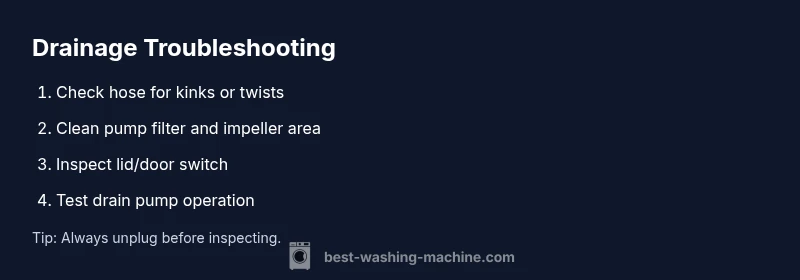
- Clear the drain hose of kinks and blockages.
- Clean the pump filter and inspect the impeller.
- Verify the lid/door switch and electrical connections.
- Test with a short cycle to confirm drainage after each adjustment.
- If in doubt, consult a professional rather than forcing a repair.
Steps
Estimated time: 60-90 minutes
- 1
Unplug and access the drain area
Power down the machine and move it to access panels or the front kick panel. If you own a top-load model, identify the lid switch; for front-load, locate the drain pump area. The goal is to safely expose the drainage components without forcing panels.
Tip: Take a photo before disconnecting any wires to aid reassembly. - 2
Inspect and clean the pump filter
Open the filter cover, place towels, and remove accumulated lint, coins, and threads. Rinse the filter until clear and check the housing for debris. Reinstall securely before testing.
Tip: If the filter is very tight, use a rubber glove or pliers carefully. - 3
Check the drain hose for kinks
Detach the hose from the back of the machine and inspect it for twists, kinks, or crushing. If needed, straighten or replace the hose and ensure the hose end is properly inserted into the standpipe or drain.
Tip: Never force a kinked hose; replace it for proper drainage. - 4
Test the lid/door switch
For top-load models, simulate the lid being closed to see if the switch engages. If the washer still refuses to drain, the switch or wiring may be faulty and require replacement.
Tip: Do not bypass switches; they are safety features. - 5
Run a drain test cycle
With no clothes, run a short cycle and observe whether water drains promptly. Listen for the pump and watch for signs of leakage or unusual noises.
Tip: Keep towels handy in case water is released during testing. - 6
Decide on next steps
If water still remains after a full test, consider professional service or refer to the manufacturer’s troubleshooting guide for advanced diagnostics.
Tip: Document any error codes shown on the display for the technician.
Diagnosis: Washing machine won't drain
Possible Causes
- highClogged pump filter or impeller
- highBlocked or kinked drain hose
- mediumFaulty drain pump
- mediumLid switch failure (top-load) or door switch (front-load)
- lowDrain hose installed incorrectly or at incorrect height
Fixes
- easyClean/replace pump filter and clear impeller debris
- easyUnkink or replace drain hose; ensure proper routing to drain
- mediumTest/power replace pump if humming but no flow
- easyTest/replace lid switch or door switch as needed
- easyCheck overall drainage setup and hose height
FAQ
What are the most common reasons a washing machine won't drain?
The most frequent causes are a clogged pump filter or impeller, a blocked or kinked drain hose, or a faulty drain pump. A malfunctioning lid or door switch can also stop drainage in some models.
Common reasons include clogs in the pump or hose, a failing drain pump, or a faulty lid switch.
How do I clean the pump filter on a front-loading washer?
Locate the filter panel at the bottom front of the washer, place towels to catch water, and slowly loosen the filter cap. Remove debris, rinse the filter, and reinsert it securely. Run a short cycle to confirm drainage.
Open the front panel, take out the filter, clean it, and reattach. Then test a cycle.
Can a clogged drain hose cause not draining?
Yes. A clogged or kinked drain hose blocks water flow from the drum to the house drain. Clear or replace the hose as needed, ensuring it’s routed correctly to avoid future blockages.
A blocked drain hose can stop drainage; straighten or replace it and test again.
Is it safe to unplug and inspect the washer myself?
Always unplug the machine before any inspection. Do not bypass safety switches or attempt electrical work beyond basic maintenance. If you detect burning smells or exposed wiring, stop and seek a professional.
Unplug first and avoid touching electrical components beyond basic checks.
When should I call a professional?
Call a professional if you suspect electrical faults, persistent leaks, or if the drain pump needs replacement. A technician can safely diagnose and repair components that require specialized tools.
If you’re unsure after basic checks, a professional can confirm electrical safety and perform repairs.
Watch Video
The Essentials
- Start with simple checks before disassembly.
- Prioritize drain hose and filter/pump access.
- Test drainage after each fix to confirm progress.
- Know when to involve a professional for electrical or major leaks.
- Prevent future clogs with regular maintenance and proper usage.