Why Does a Washing Machine Make Sound? A Practical Troubleshooting Guide
Urgent troubleshooting guide to diagnose washing machine noises. Learn common causes, DIY checks, and when to call a pro for safe repair and quiet operation.


Why does a washing machine make sound? The most common causes are loose articles, a worn bearing or belt, or an unbalanced load. Quick fix: stop the machine, unplug, and check for clothing or coins in the drum, then redistribute the load. If the noise continues, inspect the drive belt and suspension springs; otherwise, schedule service with a technician.
Understanding Why Does Washing Machine Make Sound
Understanding why does washing machine make sound starts with recognizing that noise is often a signal rather than a symptom of severe failure. According to Best Washing Machine, most noises fall into a handful of categories: thudding when spinning, grinding during rotation, squeaks upon starting or stopping, or buzzing while filling. Each category points to different causes and repairs. The good news is that many noises are fixable with basic checks that you can perform safely in a short session. By learning the difference between a temporary imbalance and a worn component, you can avoid unnecessary service calls and protect your investment. This guide uses clear diagnostic steps and real-world examples to help homeowners, renters, and even small laundromats identify the likely culprits and apply safe fixes. Remember to unplug the unit before poking around, and never open the control panel while power is connected. This information equips you to act quickly and minimize downtime, which is especially important for busy households.
Common Noise Categories and What They Mean
Noise types fall into several practical categories, and recognizing them helps you pinpoint the likely cause without guessing. Here are the most frequent culprits:
- Thuds or bangs during the spin: usually caused by an unbalanced load or heavy items shifting within the drum.
- Grinding during rotation: can indicate worn drum bearings, a damaged pulley system, or a failing belt.
- Squeaks or creaks: often related to belt tension, dry drum bearings, or aging suspension components.
- Buzzing or humming: may come from the motor, inlet valve, or electronic controls.
When you hear a particular sound, compare it to these descriptions. Best Washing Machine data shows that addressing simple balance and foreign-object checks cures many noises without professional service.
Quick Visual Checks You Can Do
These checks take just a few minutes and often solve many noises:
- Unplug the washer and inspect the drum for coins, keys, or buttons that may rattle during operation.
- Rebalance the load by redistributing items evenly; avoid overloading or leaving the drum nearly empty.
- Check that the machine is level. Adjust front feet or add shims if needed to prevent rocking.
- Inspect the drain hose for kinks and ensure it sits properly; improper drainage can cause a whine during the drain phase.
- Listen for changes after initiating the cycle; a sticking inlet valve can create buzzing noises.
If you find an obvious object or misbalance, remove or reposition it and test again. If the noise persists after these checks, proceed to deeper inspection or call for professional help as advised by Best Washing Machine.
When to Avoid DIY and Call a Pro
While many noises are solvable with basic checks, certain symptoms require a professional diagnosis. Stop using the machine if you hear grinding, rattling from the drum area, a wobble that you cannot correct, or if the cabinet feels unusually hot during operation. A service professional can inspect the tub bearings, drive belt, idler pulley, suspension springs, and internal shocks with specialized tools and safely replace worn parts. If you are renting or using a commercial unit, consult your warranty and service plan before attempting repairs. This proactive approach reduces the risk of further damage and ensures safe operation.
Diagnosing Step-by-Step: From Symptom to Solution
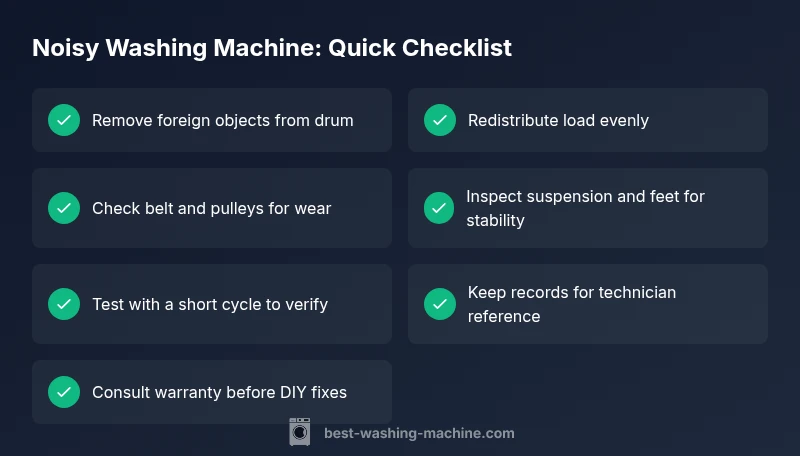
This step-by-step flow helps you narrow down the cause and pick the right fix, starting from the simplest checks:
- Symptom assessment: note when the noise occurs (wash, spin, or drain) and how it changes with load.
- Quick obstacle search: look for foreign objects in the drum and verify levelness.
- Balance check: ensure the load is distributed evenly and the washer feet are stable.
- Belt and pulley inspection: with the power off, inspect for cracks, looseness, or wear; replace if needed.
- Suspension and shock assessment: press the tub to detect excessive movement; check mounting points.
- Test cycle: run a small load with the same settings and listen carefully for changes.
- Decision point: if noises persist or there is visible wobble, schedule professional service immediately.
Tip: document the symptom and steps you performed; this helps the technician diagnose faster.
How to Maintenance Prevent Noises
Preventive care dramatically reduces the likelihood of future noises. Establish a simple maintenance routine that includes:
- Level the washer and keep it on a solid, vibration-absorbent surface; re-check feet every few months.
- Use the correct detergent amount and type; overuse can lead to buildup and drum noise.
- Clean lint screens and filters regularly to avoid foreign objects in the drum.
- Inspect belts and pulleys during routine maintenance and replace worn parts before they fail.
- Consider anti-vibration pads if your floor is uneven or the washer sits on a wooden platform; this minimizes movement during spin cycles.
Following these practices, recommended by Best Washing Machine, keeps machines quieter and prolongs lifespan.
Real-World Scenarios: What the Noise Really Means
Scenario A: A loud bang during the spin often indicates an unbalanced drum due to a heavy towel or jacket on one side. Rebalance the load and run a short test to confirm.
Scenario B: A high-pitched squeak that intensifies over time may signal a dry bearing or a belt needing lubrication or replacement. This typically requires professional service.
Scenario C: A persistent buzzing during fill can point to an electrical issue or a failing motor switch. Stop the machine and have it inspected by a pro.
Steps
Estimated time: 30-60 minutes
- 1
Power off and inspect the drum for foreign objects
Unplug the washer and open access where possible to visually scan for coins, buttons, or tools. Use a flashlight to inspect behind the drum if needed; remove any object safely.
Tip: Always unplug before reaching inside; never touch moving parts. - 2
Redistribute/load and level the machine
Load a balanced amount of laundry and ensure even distribution. Check that the washer is level by using a spirit level and adjusting feet.
Tip: Your test should involve a complete spin cycle with a moderate load. - 3
Inspect the drive belt and pulleys
With the power off, remove access panels and look for cracks or fraying on the belt. Manually rotate the pulley to feel for roughness or slipping.
Tip: Replace a worn belt promptly to avoid damaging pulleys. - 4
Check suspension and feet
Inspect the shocks or springs for wear and ensure mounting points are intact. Press on the tub to gauge movement; excessive wobble means service.
Tip: Only proceed if you are comfortable with minor disassembly. - 5
Inspect hoses and inlet valve
Check hoses for kinks and ensure the inlet valve operates smoothly during fill. A sticking valve can cause buzzing.
Tip: Do not force parts; replace any sticking valve. - 6
Test run and decide on professional help
Run a short cycle with a small load to confirm the fix. If noises persist, leaks appear, or heat is detected, schedule professional service.
Tip: Document symptoms and steps for the technician.
Diagnosis: Unusual noises from the washing machine (thud, grind, squeak, or buzz) during wash/spin
Possible Causes
- highUnbalanced load or loose items in drum
- highForeign objects trapped in drum
- mediumWorn drive belt or pulley system
- mediumDamaged drum bearings or tub
- lowWorn suspension/shock absorbers or level feet
Fixes
- easyRedistribute or remove unbalanced items and run a test
- easyRemove trapped objects and inspect drum for damage
- mediumInspect belt/pulley for wear and replace if needed
- hardInspect bearings or tub and replace worn parts
- easyCheck and adjust suspension feet; level the machine
FAQ
What causes a washing machine to make grinding noises?
Grinding noises usually indicate worn bearings, damaged pulleys, or a failing belt. Inspect the drive belt and check the drum for obstructions; replace components as needed or call a professional.
Grinding noises often mean worn bearings or belt issues; inspect the belt and drum, and consider professional replacement if the noise continues.
Is a buzzing sound during fill dangerous?
A buzzing sound during fill can be caused by a sticking inlet valve or a faulty motor switch. Stop the machine and test the valve; if it sticks, call a technician.
Buzzing during fill can signal an electrical issue, so stop and contact a pro if it persists.
Can unbalanced loads damage the washer?
Unbalanced loads rarely cause permanent damage but can wear the suspension over time and cause loud noises. Always balance the load and avoid heavy items on one side.
Unbalanced loads don’t usually cause serious damage, but they wear suspension and make noise.
Should I replace the belt myself?
Belt replacement is doable for some models with proper tools and manuals. Incorrect installation can cause more damage, so follow the manual or hire a pro.
Belt replacement can be tricky; use the manual or seek professional help.
When should I call a technician?
If noises persist after basic checks, or you notice leaks, smells, or overheating, stop using the machine and contact a professional.
If it won’t fix with DIY steps, call a professional.
How can I prevent noises in the future?
Regular balancing, proper loading, and annual belt/suspension checks reduce noise. Keep hoses clean and levels checked for quiet operation.
Regular maintenance keeps your washer running quietly.
Watch Video
The Essentials
- Identify noise category to diagnose quickly
- Unbalanced loads are the top cause
- DIY checks solve many noises
- Call a pro if noises persist or there are leaks
- Regular maintenance reduces future noises