Why is My Washing Machine Drain Overflowing? Quick Troubleshooting Guide
An urgent, step-by-step guide to diagnose and fix a washing machine drain overflow, with quick checks, safe fixes, and prevention tips to stop spills and water damage.


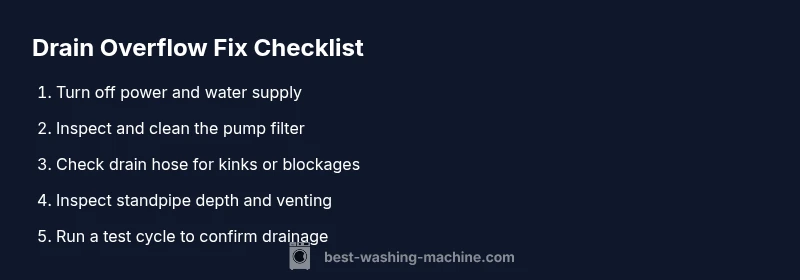
Most likely, your washing machine drain overflow is caused by a clogged pump filter, a blocked drain hose, or a kinked or clogged drain line. First, unplug the machine, inspect and clear the pump/filter area, and straighten or reseat the drain hose. If it continues to overflow, shut off the water and call a professional.
Understanding the Overflow: Why It Happens
According to Best Washing Machine, an overflowing drain is usually caused by simple, fixable issues rather than a failed appliance. Most overflow events start when water cannot exit the drum and backs up into the drain path. The primary culprits are clogged pump filters, blocked drain hoses, or a standpipe/ drain line that is obstructed. Debris such as lint, coins, hair, and detergent residue can accumulate in the pump filter over time, restricting flow. In front-load washers, the pump and filter are accessible behind a small panel; in top-load units, they can be deeper but still accessible with basic tools. A drain hose that is kinked, crushed, or inserted too far into a standpipe can trap water; conversely, a hose that sits too high may not drain quickly enough. Inadequate venting or a clogged sewer line can create pressure that pushes water back up through the drain. By understanding these causes, you can tackle the problem safely and efficiently. If you’re wondering why is my washing machine drain overflowing, the answer often points to a simple clog rather than a failing pump.
Tips for immediate relief: keep a bucket handy, turn off the machine, and avoid running more cycles until you’ve inspected the drain path. This approach minimizes water damage while you diagnose the root cause.
Immediate Checks You Can Do Right Now
Before you start disassembling components, perform quick, safe checks that cover the most common culprits. First, ensure the machine is unplugged and the water supply is shut off. Then inspect the drain hose for kinks, crushes, or an upward bend that prevents smooth flow. If the hose is inserted into a standpipe, confirm it is properly positioned—usually 2-4 inches into the standpipe is recommended, but always follow your model’s manual. Next, open the access panel (if applicable) to view the pump filter and drain area. Remove any visible debris with gloves or a paper towel. If your model has a removable lint filter or pump filter, take it out and rinse it under running water. Reassemble, run a short wash without clothes, and observe if the water drains smoothly. If the overflow persists, move to more thorough checks or consider professional help. Quick, early actions can prevent a lot of water damage and save you a service call.
Diagnosing Common Causes: Clogs vs. Backups
Overflow can stem from several sources, so listening to the symptoms helps narrow down the cause. If water backs up out of the drain during or after a wash, the most likely culprits are a clogged pump filter or drain hose. Slow drainage with a persistent rearward flow might indicate a partially blocked standpipe or a lower drain line blockage in the home plumbing. A noisy pump with little water movement usually points to a jam or worn impeller inside the pump. Note if odor or residue accompanies the overflow; this can signal detergent buildup or mold inside the tub or filter housing. By correlating the symptom with the likely source, you can choose the right next steps and avoid unnecessary disassembly.
Pump and Filter Maintenance: A Quick Clean
Regular maintenance of the pump and filter is essential to prevent overflows. Start by locating the filter access panel (location varies by model). Remove the filter and rinse it under warm water to clear lint, coins, hair, and fabric fibers. Inspect the pump housing for obstructions that might hinder impeller rotation. If you see debris, remove it carefully with non-metal tools. After cleaning, reinsert the filter securely and run a test cycle. If you hear grinding or the pump sounds strained, the impeller or pump assembly may be damaged and require further inspection. Remember: always unplug the machine before touching internal components to avoid electric shock.
Drain Hose and Plumbing Inspection: Path matters
The drain hose is a common source of overflow when it is too long, kinked, or inserted too far into a standpipe. Check that the hose is not crimped along its length. Detach it from the standpipe and inspect the interior for obstructions. If you find buildup in the hose, flush it with water or use a mild brush to clear blockages. Ensure the end of the drain hose is not submerged in a bucket or tub during operation, which can create back pressure. If using a standpipe, verify that the standpipe height matches the manufacturer’s instructions and that an air gap is maintained to prevent backflow. A thorough hose inspection often resolves overflow without replacing major components.
Safe, Advanced Fixes If Simple Steps Fail
If basic cleaning and hose adjustments do not stop the overflow, consider more advanced yet safe options. Temporarily divert the drain into a bucket or tub to measure flow and confirm the drain path is the bottleneck. Use a flashlight to inspect the pump area for signs of damage or wear. A small snake or pliers can clear minor clogs in hoses, though avoid forcing objects that might damage the hose. If water still backs up, there may be a more complex issue with the pump or internal plumbing. At this stage, it is prudent to contact a certified appliance technician to avoid water damage and ensure the system is correctly reassembled.
When to Call a Professional and How to Prepare
Many overflow issues are fixable at home, but some signs require professional service. If you notice standing water that refuses to drain after all checks, or if you suspect a damaged pump or a leak behind the machine, contact a licensed technician immediately. Prepare notes for the technician: model number, symptoms, what you inspected, steps taken, and whether you smelled any chemical or burnt odors. This information helps the technician diagnose the root cause quickly. Don’t ignore persistent overflow—the longer water sits, the higher the risk of mold and structural damage. Best Washing Machine recommends documenting the issue and scheduling a repair if the problem persists beyond a day or two.
Prevention: Easy Habits to Stop Overflow
Prevention is easier than cure. Regularly clean the pump filter (as per your model’s manual) and inspect the drain hose for kinks or sagging. Use the correct detergent amount to minimize suds, which can contribute to backflow in some setups. Make sure the standpipe is properly vented and the drain line is free from mineral buildup or scale. When moving the washer or changing plumbing, double-check hose connections and height. Finally, perform periodic tests by running short cycles with no loads to ensure the drain pathway remains clear. Small, consistent checks save time and money in the long run.
Steps
Estimated time: 60-90 minutes
- 1
Power off and safety check
Unplug the machine and shut off the water supply. This prevents electric shock and flooding while you inspect the drain path.
Tip: Keep a towel ready; water may spill when panels are opened. - 2
Inspect and clean the pump filter
Open the access panel, remove the filter, and rinse under running water. Clear hair, lint, and coins that may block flow.
Tip: Do not use sharp tools that could damage the filter housing. - 3
Check the drain hose for kinks
Trace the hose from the washer to the standpipe or drain. Remove any kinks, bends, or crushing, and ensure a smooth path.
Tip: If disconnected, gently straighten the hose before reattaching. - 4
Test the drain path with water only
Run a short cycle without a load to observe how quickly water drains and whether it backs up into the tub.
Tip: Use a bucket beneath the outlet to monitor flow during the test. - 5
Evaluate standpipe and venting
If drainage remains slow, inspect the standpipe for blockages or improper height. Ensure proper venting as per local codes.
Tip: Do not replace components based on guesswork; verify with a professional if unsure. - 6
Decide on next steps
If water still overflows after the above steps, consider whether the pump or internal plumbing may be worn and plan a professional inspection.
Tip: Document symptoms and steps taken to speed up service.
Diagnosis: Water overflows from the washing machine drain during or after a wash cycle
Possible Causes
- highClogged pump filter or impeller jam
- highBlocked or kinked drain hose
- mediumStandpipe or home drain blockage
- lowDrain hose inserted too deeply or too shallowly
Fixes
- easyClean the pump filter and inspect the impeller for obstructions
- easyUnclog or straighten the drain hose; reseat it properly in the standpipe
- mediumClear standpipe or home drainage blockages; ensure proper venting
- easyAdjust hose depth per manufacturer guidelines and test a cycle
FAQ
What causes a washing machine drain to overflow?
Overflow usually comes from a clogged pump filter, blocked drain hose, or a standpipe blockage. Check and clean the filter, inspect the hose, and verify the standpipe height.
Overflow is usually due to clogs in the drain path; start with the filter and hose.
Can a clogged filter cause overflow?
Yes. A clogged filter restricts flow, causing water to back up into the tub or drain. Cleaning the filter often resolves the issue.
A clogged filter can cause backflow; clean it and test.
Is it safe to use chemical drain cleaners in a washer?
No. Chemical cleaners can damage pumps, hoses, and venting. Use mechanical cleaning methods and consult a pro for persistent clogs.
Avoid chemical cleaners; they can harm your washer.
How do I know if I need a new pump?
If cleaning the filter and hose does not stop the overflow and the pump makes unusual noises, the pump may be failing and require replacement.
If cleaning doesn't fix it, the pump might be bad.
How high should the drain hose be inserted?
Follow your model’s manual. Generally, the drain hose should be inserted a few inches into the standpipe and secured to avoid backflow.
Check the manual for hose height and secure it.
When should I call a professional?
If water damages are ongoing, or you suspect a damaged pump or internal plumbing, contact a licensed technician promptly.
If the overflow continues, call a pro.
The Essentials
- Identify the root cause before complex fixes
- Clean filters and straighten hoses first
- Test with cycles to confirm drainage
- Know when to call a pro to prevent water damage
- Prevent recurrences with routine maintenance