Why Washing Machine Drain Overflows: Troubleshooting Guide
Urgent guide to diagnose and fix washing machine drain overflow. Learn common causes, step-by-step fixes, safety tips, and when to call a professional to prevent water damage.


A clogged drain hose, standpipe, or filter is the most common cause of a washing machine drain overflow. Start by unplugging the machine, then inspect and clear the drain hose and pump filter. If water still rises, check the standpipe height and the home drain for blockages. According to Best Washing Machine, most overflow is resolveable with basic blockage removal.
What Causes a Washing Machine Drain Overflow
Drain overflow happens most often when the path that carries used water away becomes blocked or restricted. The top culprits include a clogged drain hose, a dirty or blocked pump filter, and a standpipe or trap that is clogged or too narrow for the load. When lint, detergent residue, hair, or small objects accumulate, water cannot flow freely and instead backs up into the washer or spills onto the floor. Bad venting in the home plumbing or a blocked sewer line can also contribute, though these are less common causes. In many homes, simple blockages are to blame, which is why a systematic check usually resolves the issue quickly. According to Best Washing Machine, a calm, methodical approach focusing on basic blockage removal is often enough to restore proper drainage.
Quick Checks You Can Do Right Now
If you’re facing an overflow, you can start with a few safe, hands-on checks before calling a plumber. First, unplug the washer and turn off the water supply to prevent more water from entering the drum. Inspect the drain hose for kinks or crushes and detach it from the standpipe to look for visible blockages. Check and clean the pump filter or lint trap—lint and small debris can back up the pump. Reconnect everything securely and run a short rinse cycle with no laundry to see if the water drains normally. Finally, verify the standpipe and any trap are clear and that the standpipe is not too short or too long for your machine. If the water still overflows, move to more thorough checks or seek professional help.
How Plumbing Basics Affect Your Washer Drain
Understanding basic plumbing helps explain why drains overflow. The standpipe acts as a buffer between the washer and home drainage; if it’s blocked, water backs up. The trap keeps sewer gases from entering the home, but if it’s clogged, water can’t pass freely. Venting allows air to escape as water drains; poor venting can slow the flow and cause backups. A sewer line issue will typically require more extensive work, and you might notice odors or multiple fixtures draining slowly. While these scenarios are less common, they’re important to rule out if simple checks fail.
Prevention: Stop Overflow Before It Starts
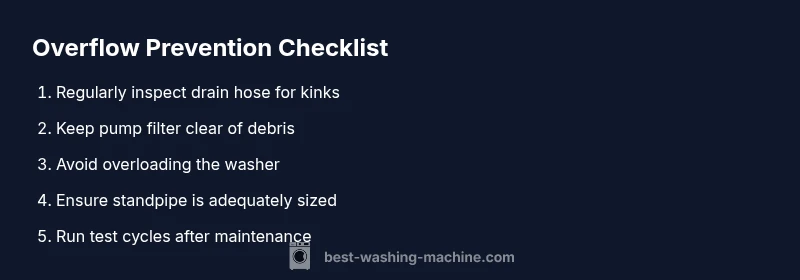
Prevention starts with regular maintenance. Never overload the washer, use the recommended detergent amount, and keep lint filters clean. Periodically inspect the drain hose for wear, kinks, or detachment and replace damaged hoses. Ensure the standpipe is adequately sized for your machine and never force the hose too far down into the pipe. When you finish a cycle, promptly check that the water has drained before loading more laundry. A small routine can stop major overflows and protect floors and cabinets from water damage.
Safety Considerations and Common Mistakes
Safety is paramount. Always unplug the machine and shut off water before touching electrical components or attempting a drain check. Do not run water or power the unit while hoses are disconnected. A frequent misstep is ignoring slow drainage in other fixtures; this can indicate a building-wide drain issue rather than a single-blockage problem. If you notice persistent odors, mold, or sewage backup, stop using the washer and call a professional to assess the plumbing system.
How to Clean the Drain Hose and Filter
Begin by disconnecting the drain hose from the washer and the standpipe. Rinse the hose with warm water and a mild brush to remove residue. Check the pump filter (accessible behind a panel) and remove any lint, coins, or debris with tweezers or a small brush. Reassemble securely, thread the hose back into the standpipe, and run a test cycle with laundry to ensure proper drainage. If the hose or filter shows wear, replace them to prevent future clogs.
System Checks and When to Call a Pro
If basic checks don’t resolve the overflow, consider broader investigations: confirm the standpipe height and the drain’s capacity, inspect for venting problems, and assess the home’s main drainage. If you’re unsure about any step or you notice sewage odors, water damage, or multiple fixtures draining slowly, it’s time to call a licensed plumber. A professional can identify hidden blockages, diagnose sewer line issues, and ensure the system is safe and up to code.
Aftercare: Long-Term Prevention and Care
After resolving an overflow, set up a simple maintenance routine so it doesn’t recur. Regularly inspect hoses for wear, keep filters clean, and avoid pouring large volumes of water or heavy loads into the washer. Record any issues you notice and monitor drainage performance after each cycle. A proactive approach helps protect your home from water damage and extends the life of your washer.
Steps
Estimated time: 60-90 minutes
- 1
Power off and prepare the area
Unplug the washer and turn off the water supply to stop more water from entering. Move the machine to access the hoses. This protects you from electric shock and minimizes mess.
Tip: Have towels handy and wear gloves to protect hands. - 2
Inspect and straighten the drain hose
Detach the drain hose from the standpipe and check for kinks, crushes, or obvious blockages. Rinse the inside of the hose with water to dislodge any buildup.
Tip: Do not force the hose into the standpipe; ensure a secure, non-crimp connection. - 3
Clean the pump filter or lint screen
Open the access panel and locate the pump filter. Remove debris with fingers or a small brush, rinse thoroughly, and dry before reinstalling.
Tip: Use a flashlight to see into the filter housing and avoid dropping small parts. - 4
Test the standpipe and trap
Reattach the hose, ensure the standpipe is clear of obstructions, and run a short cycle to observe drainage. If water backs up, the standpipe or trap may need professional cleaning.
Tip: Never run a full load if you see immediate backup; pause and recheck connections. - 5
Evaluate for deeper plumbing issues
If basic steps fail, inspect for venting problems or sewer line backups. This typically requires a professional inspection with cameras and pressure tests.
Tip: Document symptoms and times to share with the plumber for faster diagnosis. - 6
Return to normal operation
Reconnect hoses securely, restore power, and run a test cycle with a light load. Monitor for any signs of overflow and adjust usage as needed.
Tip: Keep an eye on the first few cycles after repair to confirm stability.
Diagnosis: Water backs up during or after a washing cycle, overflowing the drain area.
Possible Causes
- highClogged or kinked drain hose
- highBlocked standpipe or trap
- mediumBlocked pump filter or lint screen
Fixes
- easyDisconnect hose, clear blockage, and reattach; clean pump filter
- mediumInspect standpipe/trap for blockages and ensure hose height is correct
- hardIf the home drainage is blocked or odor present, call a plumber
FAQ
What is the most common cause of a drain overflow in a washing machine?
The most common cause is a clogged drain hose, standpipe, or pump filter. Clearing these blockages typically resolves the overflow. If the problem persists, broader plumbing issues may be at fault.
Usually a clogged hose or standpipe. Clear them first, and if it still overflows, you may need a professional check.
Can a full or clogged lint filter cause overflow?
Yes. A blocked filter can prevent proper drainage, leading to backups. Cleaning or replacing the filter often fixes the issue.
Yes—cleaning the filter often fixes drainage backups.
Is it safe to DIY unclog a washer drain?
Yes, for straightforward clogs, but avoid dangerous situations. Always unplug the machine and beware of electrical hazards around water.
DIY is possible for simple clogs, but always unplug first and watch for electrical risks.
Should standing water indicate sewer line problems?
Persistent standing water and odors can indicate sewer or main drain problems. If other fixtures are affected, call a professional.
If the problem affects other drains, call a plumber and check the main line.
When should I call a professional?
Call a professional if basic checks fail, odors persist, or there’s evidence of sewer backups. A licensed plumber can diagnose and repair safely.
Call a pro if simple checks don’t fix it or you smell sewage.
The Essentials
- Identify the blockage sources early
- Prioritize safety and unplug power before work
- Clear hoses and filters first
- Call a pro if plumbing is involved