Why Your Washing Machine Leaks Water and How to Fix It
Learn how to diagnose and fix a washing machine that leaks water. Identify common causes, perform safe checks, and follow a practical step-by-step plan to stop leaks and prevent future spills.


Most washing machine leaks come from simple, fixable connections. The two most common culprits are a loose or damaged inlet hose and a worn door seal on front-load machines. Start by unplugging the unit, then tighten or replace the inlet hose and inspect the door seal for cracks. If water pools around the base, check the drain hose and tub seals next.
Understanding why washing machine leak water
Understanding why washing machine leak water begins with recognizing that most leaks originate from everyday wear or installation mistakes. The phrase why washing machine leak water is common among homeowners, and the answer often points to a handful of failure points: insecure hoses, worn seals, or a misrouted drain hose. Before assuming a catastrophic fault, inspect simple connections and surfaces for cracks, mineral buildup, or loose clamps. Temperature and cycle variations can stress gaskets over time, especially in older models. Front-load machines are particularly prone to seal leaks around the door boot, while top-load units tend to show leaks at hose connections or the pump housing. By prioritizing secure fittings and clean, dry gaskets, you can usually stop most minor leaks without professional help. In this guide, we focus on the most common leak sources, safe home checks, and practical fixes you can perform with basic tools. If you still see water after your tests, it’s time to move to a deeper diagnostic flow.
Common leak sources explained
Leaking water can come from several parts, often working in combination. Here are the most frequent sources to inspect first:
- Inlet hoses: Tighten hose clamps and look for cracks or bulges.
- Drain hose: Ensure it is securely connected, routed correctly, and not cracked or kinked.
- Door boot/seal: Front-loading models rely on a tight door seal; cracks or gaps will spray water during cycles.
- Detergent drawer overflow: Overuse of detergent or fabric softener can overflow and leak behind the drum.
- Pump and tub seals: A worn pump seal or tub-to-pump seal may leak during washing or spin cycles.
- Hose connections inside the cabinet: Loose or corroded fittings can spill water when the washer runs.
Quick home checks you can safely perform
Safety first: unplug the washer and, if possible, shut off the water supply before inspecting.
- Inspect inlet hoses and clamps for cracks, bulges, or looseness; tighten or replace as needed.
- Check the drain hose for cracks and ensure it is firmly connected and not pinched or kinked.
- Examine the door boot or gasket for tears, gaps, or residue that could indicate a leak source.
- Look for water bowing under the machine or pooling on the floor near the front corners—this can point to a hose or seal issue.
- Run a short test with a small load and observe where water is escaping to narrow down the source.
Diagnostic flow: symptom-to-diagnosis-to-solution
Symptoms guide the diagnostic path. If you see water pooling during or after a cycle, start with external connections. A steady drip from the back usually means hose or valve issues, while spray around the door seal points to gasket wear. Prioritize simple fixes first—tightening fittings, replacing worn hoses, and cleaning seals—before moving to internal components. If the same symptoms persist after checks, the problem may require pump or tub repair and professional service.
Step-by-step fixes for the most common leaks
- Unplug and shut off water supply. Locate the hoses and check for visible signs of wear. Tighten clamps firmly and replace if there are cracks. Pro tip: carry a bucket and towels to catch residual water during this step.
- Inspect inlet hoses for kinks or bulges; replace damaged hoses with a compatible model. Pro tip: use stainless steel reinforced hoses for durability.
- Check and clean the drain hose; ensure it is free of blockages and properly secured to the drain or standpipe. Pro tip: never bend the hose at sharp angles.
- Inspect the door boot/seal for tears or gaps; replace the seal if damaged. Pro tip: apply a small amount of silicone sealant around minor cracks only when the manufacturer allows it.
- Inspect the pump filter and tub seals from the access panel; remove any debris and reseal if you notice leakage around the pump housing. Pro tip: consult the manual for correct seal replacement procedures.
- Reassemble, plug in, and run a test load to confirm leakage is resolved. Pro tip: place a shallow tray under the machine to catch any lingering water during testing.
Safety tips and when to call a pro
- Always unplug the machine before inspecting or handling hoses and electrical components.
- Shut off water supply to prevent a larger spill.
- If the repair involves replacing internal seals, hoses routed through the cabinet, or the tub, contact a qualified technician.
- Do not use the appliance if you suspect damaged electrical components or persistent water around electrical outlets.
- Consider professional service if your unit is under warranty or if you’re unsure about performing the repair safely.
Prevention tips to avoid future leaks
- Regularly inspect hoses and clamps for wear and replace every 5–7 years as a rule of thumb.
- Use correct detergent quantities to prevent detergent drawer overflow.
- Keep the area around the washer dry and free of clutter to help spot leaks early.
- Ensure proper drainage and standpipe height to prevent backflow or siphoning leaks. Periodically check the drain hose for cracks.
Key steps to prevent future leaks
- Routinely inspect hoses and gaskets.
- Use the right detergent and avoid overdosing.
- Maintain a dry area around the washer to quickly spot leaks.
Final thoughts on fixing leaks fast
Leaks can often be traced to simple components like hoses or door seals. Start with the easiest checks and move to more involved repairs only if necessary. Keep a small maintenance schedule, and you’ll reduce the chance of significant water damage and downtime.
Steps
Estimated time: 60-90 minutes
- 1
Safety first: unplug and shut off water
Disconnect power to the washer and turn off the hot and cold water supply. Move the unit enough to access hoses without pulling power cords or gas lines. This protects you from electric shock and makes inspection easier.
Tip: Have towels handy; water may drain out when hoses loosened. - 2
Inspect inlet hoses and clamps
Check both hot and cold inlet hoses for bulges, cracks, or wear. Tighten clamps securely using the correct screwdriver or wrench, and replace any damaged hoses with manufacturer-approved parts.
Tip: Avoid overtightening; test for leaks after reinstalling. - 3
Check the drain hose routing
Ensure the drain hose is properly seated in the standpipe or drain. Look for kinks or pinches and confirm the hose length matches the installation guidelines.
Tip: Keep the drain hose at the recommended height to prevent backflow. - 4
Inspect the door boot/seal
Front-load washers rely on a tight door seal. Inspect for tears, gaps, or residue that suggests wear. Replace the seal if needed and clean the mating surfaces to ensure proper seating.
Tip: Replace seals in pairs if the mating surfaces show wear around the mounting points. - 5
Check internal seals and pump housing
If external components look fine, access the pump and tub seals from the service panel (per manual). Look for wetness around the seals and replace if you see signs of leakage.
Tip: Only attempt this if you’re comfortable following the manufacturer’s service procedure. - 6
Test and confirm leak resolution
Reconnect power, start with a small test load, and watch closely for any signs of leakage. If leaks reappear, document the location and plan the next steps (professional service).
Tip: Keep a log of observations to help the technician diagnose faster.
Diagnosis: Water leaking during or after a cycle
Possible Causes
- highLoose or damaged inlet hoses
- mediumCracked door seal or torn boot
- lowDrain hose misrouting or crack
Fixes
- easyTighten inlet hoses and replace damaged hoses; secure clamps
- mediumReplace cracked door seal/boot and clean mating surfaces
- easyReplace or reseal drain hose; ensure proper routing
FAQ
Why is my washing machine leaking from the bottom?
A bottom leak typically means a loose or damaged inlet hose, a worn door seal, or a faulty pump seal. Start by checking external connections and seals, then progress to internal components if the leak persists.
A bottom leak usually comes from hoses or seals. Start with the hoses and door seal, then check the pump if needed.
Is a leaking door seal serious?
Yes, a leaking door seal can allow water into the door area and cause further damage. Replace the seal to restore a watertight seal during cycles.
Yes, a leaking door seal is a real issue—replace the seal to prevent water from escaping.
Can I fix a leaking inlet hose myself?
Yes, replacing or tightening an inlet hose is one of the easiest fixes. Ensure you use a compatible hose and secure clamps properly.
Yes, you can, but make sure you use the right hose and clamp it securely.
What safety steps should I take if water is leaking?
First unplug the machine and shut off water. Avoid using the washer until the source is identified and repaired, especially if you suspect electrical exposure.
Unplug, shut off water, and avoid using the washer until you know the leak source.
When should I call a professional?
If the leak persists after checking hoses and door seals, or if you’re uncomfortable working on internal components, contact a licensed technician.
If leaks continue after basic checks, or you’re unsure, call a professional.
Why does water leak after the wash cycle ends?
Post-cycle leaks often point to a draining issue or a faulty valve; inspect the drain hose and verify the drain pump seal if needed.
Leaks after the cycle usually mean drain issues or pump seals need checking.
Watch Video
The Essentials
- Inspect hoses and seals first
- Unplug before inspecting any components
- Address leaks early to prevent water damage
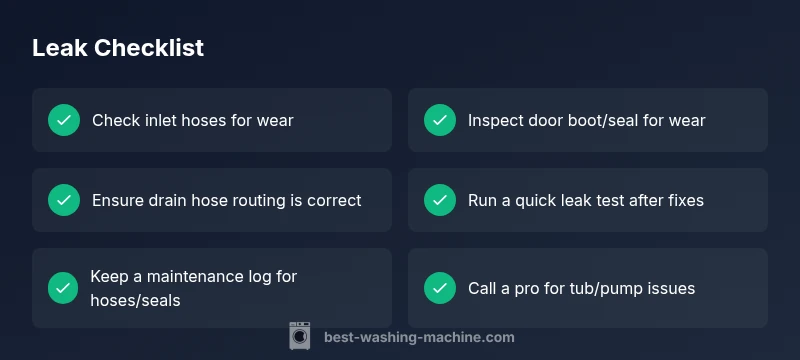
- Call a pro for tub seals or internal pump issues