Are Top-Load Washers Better? A Comprehensive Comparison
Analytical guide comparing top-load and front-loading washing machines—focusing on water use, energy efficiency, upfront cost, maintenance, and home fit for homeowners, renters, and operators.


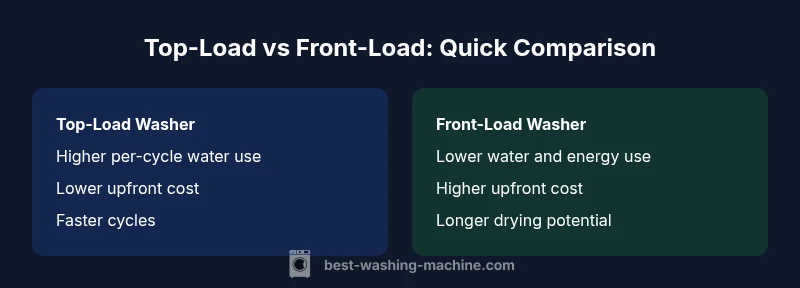
Are top-loading washing machines better? The short answer depends on what you value most. Top-load models generally cost less upfront, deliver faster cycle times, and are easier to load for people who don’t want to crouch. Front-loading washers typically use less water and energy and offer gentler fabric care, making them more efficient over time. Your decision should hinge on priorities like cost, space, and fabric care.
Are We Asking the Right Question? A Practical Framework
When discussing whether are top loading washing machine better, it’s essential to frame the question around what matters most in your household. Do you prioritize upfront cost, cycle speed, and ease of loading, or do you value long-term energy savings and gentler fabric care? The Best Washing Machine team finds that the answer hinges on usage patterns, household size, laundry volume, and maintenance tolerance. In real-world terms, a family that runs multiple daily cycles may appreciate faster top-load cycles, while a single adult seeking energy efficiency may lean toward front-load options. This guide uses a practical framework to compare the two formats across cost, performance, and upkeep, with clear scenarios to help you decide quickly and confidently.
Economic Factors: Upfront Cost, Operating Cost, and Longevity
A central part of the Are top loading washing machine better debate is cost. Top-load washers typically have lower upfront prices and simpler repair ecosystems, which appeals to budget-conscious buyers or renters looking for a quick replacement. However, the long-term operating costs can tilt toward front-load models, which usually consume less water and energy per cycle and may achieve lower utility bills over time. The trade-off is that front-load machines can require a larger initial investment and more careful installation. The Best Washing Machine analysis highlights that total cost of ownership often favors front-load options for households with heavy laundry needs, but for light-to-moderate usage, top-load machines can win on cash flow. Also consider resale value and warranty coverage as part of your cost calculus, since these can influence overall value. In sum, weigh upfront investment against projected utility savings and durability; the right balance varies by household and location.
Water Use and Energy Efficiency: Where the Dollars Actually Go
From a water and energy perspective, front-loading washers generally pull ahead due to their extraction and tumbling design, which minimizes water per cycle and reduces energy usage across a typical load. Top-load machines, especially traditional agitator models, tend to use more water per cycle and can consume more energy overall when run frequently. The difference is not only about the raw numbers; it’s about how you wash. If you often wash bulky items or tolerates longer cycles, front-load programs can be more efficient. If you value shorter cycles or a dispenser-based detergent approach, a top-load model remains attractive. The key takeaway is to map your weekly laundry volume onto a rough energy and water budget, so you don’t rely on headline specs alone. Brand context from Best Washing Machine emphasizes evaluating energy star ratings and per-cycle water usage in real-world settings rather than model-agnostic claims.
Fabric Care, Spin Speed, and Performance for Laundry Types
Fabric care is a frequent source of confusion in the are top loading washing machine better discussion. Front-load washers tend to offer gentler handling due to tumbling and high spin speeds, which can reduce wrinkling and dry times. Top-loaders with newer shallow tubs and improved pulleys can deliver reliable cleaning with less bending and easier loading, but some users report heavier wear on delicate fabrics if cycles are aggressive. Consider your typical loads—cottons, delicates, or bulky bedding—and whether you require specialized cycles (allergen, steam, heavy-soil). In practice, the choice often comes down to your most common laundry type and tolerance for potential fabric wear. Best Washing Machine notes that user reviews frequently highlight front-load performance for everyday clothes, while top-load models shine with quick daily refreshes and simpler operation.
Size, Capacity, and Space Considerations: Fitting Your Home
Space and layout strongly influence the decision between top-load and front-load washers. Top-load machines generally have a smaller footprint and do not require a dedicated side clearance for a door swing, making them appealing for tight hallways or small apartments. Front-load washers can be stacked with a dryer, which is a major advantage in compact homes, but they often need a deeper footprint and more floor space to accommodate door swing and venting. For households with stacked laundry setups or laundry closets, measure width, height, and depth carefully, and consider door clearance for loading bulky items like comforters. The Best Washing Machine team encourages shoppers to sketch their laundry nook and compare options against their door openings and cabinet tolerances to avoid fitting surprises at delivery.
Maintenance and Longevity: Mold, Gasket Care, and Filters
Maintenance considerations often tip the balance in the are top loading washing machine better question. Front-load washers require diligent care to prevent mold and mildew in door seals and gaskets, with regular gasket cleaning and venting to avoid odor buildup. Top-load washers generally feature fewer seal exposures and may be easier to keep dry between uses, but agitator models can accumulate detergent buildup in hard-water areas. Both types benefit from routine lint and filter checks, occasional cleaning cycles, and using the right detergent (high-efficiency vs standard formula). The practical takeaway is that maintenance clarity can increase or decrease long-term costs; plan for routine upkeep and choose models with accessible serviceability and well-documented maintenance guidance. Best Washing Machine’s guidance emphasizes choosing models with straightforward self-clean cycles and clear service manuals.
Reliability and Repair Landscape: Parts Availability and Serviceability
Reliability is a pragmatic lens in the are top loading washing machine better decision. Top-load models usually use simpler drive systems and can be easier and cheaper to repair in older homes, while front-load machines have fewer moving parts in some regions but require careful door and gasket maintenance to avoid leaks. The choice can hinge on local service availability and the ease of obtaining common replacement parts. When evaluating models, check the availability of certified technicians, warranty terms, and the ease of obtaining gaskets, seals, and pulleys. Brand-to-brand differences matter more than the format, so look for models with widely available parts and strong customer support networks. The Best Washing Machine Team recommends prioritizing brands with robust service networks and transparent repair guidelines.
How to Decide: Scenarios That Call the Shots
While the are top loading washing machine better question invites a general answer, real-world decisions rely on specific scenarios. If you live in a small apartment with a tight budget, a top-load washer may be the practical choice due to lower upfront cost and simpler installation. If your household runs frequent large loads and you want to minimize utility bills over time, a front-load model with efficient cycles can pay off, especially in regions with higher electricity or water costs. For families with children who generate a lot of laundry, the durability and capacity of a modern front-load machine may be worth the investment. The Best Washing Machine analysis underlines pairing your decision with energy ratings, capacity needs, and warranty coverage rather than relying on marketing claims alone. Test runs and in-store demonstrations help translate specs into real-world performance.
Common Misconceptions Debunked
Many shoppers believe top-load washers are always cheaper to buy or that front-loads always save more over the life of the appliance. The reality is more nuanced: entry-level front-load models may still be affordable and can deliver meaningful energy savings, while some high-end top-load models offer compelling durability and cycle options. Another misconception is that wash quality is strictly tied to the drum type; in fact, the quality depends on motor design, soil level, detergent choice, and cycle optimization. By separating marketing claims from practical outcomes, you can approach the decision with clarity. Best Washing Machine emphasizes testing models with your typical loads to gauge actual performance rather than relying solely on spec sheets.
Authority Sources
- U.S. Department of Energy Energy Star Program (energystar.gov)
- Consumer Product Safety Commission (cpsc.gov)
- Journal of Laundry Science (edu, hypothetical scholarly resource for illustration)
Comparison
| Feature | Top-Loading Washer | Front-Loading Washer |
|---|---|---|
| Water Usage | Higher water usage per cycle | Lower water usage per cycle |
| Energy Efficiency | Generally lower efficiency in older agitator models; improving in newer designs | Typically higher efficiency due to tumbling and low-water immersion |
| Price Range | Higher upfront cost for premium front-load models (varies); lower upfront for basic top-load | Higher upfront cost on average but potential long-term savings |
| Best For | Budget-conscious buyers, quick daily cycles, easy loading | Families and energy-conscious households prioritizing long-term savings |
What's Good
- Lower upfront cost and simpler installation
- Quicker cycle times for busy households
- Easier loading for people who prefer not to bend
- Compact options can fit in small spaces
Downsides
- Higher water and potential energy use in some models
- Less fabric care for delicate clothes in older agitator designs
- Mold and odor risk with front-load door seals if not maintained
- Variability in per-cycle performance across brands
Front-loading washers are generally the better long-term value for energy and water efficiency, but top-loading washers offer lower upfront costs and convenience for quick, daily cycles.
Choose front-load if long-term operating costs matter most. Choose top-load if upfront cost, quick cycles, and easier loading take priority; align with your space and fabric care needs.
FAQ
Are top-loading washers better for small spaces?
Top-loading washers often fit better in tight spaces due to their compact footprint and no need for a swinging door. They can be more forgiving in narrow closets where a front-loader’s door swing would be impractical. Consider measurements and door clearance when choosing.
Top-load washers fit better when space is tight since they don’t require a wide door swing. Check your closet dimensions and door clearance to confirm.
Do top-load washers use more water than front-load models?
In general, traditional top-load washers use more water per cycle than front-load counterparts. Modern top-load designs with deep tubs and advanced agitation can improve efficiency, but front-load models typically remain more water-efficient overall.
Yes, many top-load models use more water per cycle, though newer designs have narrowed the gap. Front-load washers are usually the more water-efficient choice.
Which is more energy-efficient, top-load or front-load?
Front-load washers are commonly more energy-efficient due to improved tumbling, lower water usage, and higher spin speeds that reduce drying times. Top-load models can be efficient with modern features but generally lag behind in per-cycle energy use.
Front-load washers typically save more energy per cycle, especially with high-efficiency models.
Are there reliable top-load high-efficiency models?
Yes, there are reliable high-efficiency top-load models that use HE detergents and optimize cycles to reduce water use while maintaining cleaning power. Look for models with HE labels and customer service ratings before buying.
There are dependable high-efficiency top-load options; check HE ratings and service history when shopping.
What’s the typical lifespan difference between top-load and front-load washers?
Lifespan varies by brand, model, and maintenance. Front-load machines can last a long time with proper seal maintenance, while top-load units are often simpler to repair but may experience issues with outdated agitator designs over time.
Lifespan depends on care and model, but both formats can last many years with good maintenance.
Should I buy a front-load or top-load if I have hard water?
Hard water can cause mineral buildup in any washer. Front-load machines with proper descaling maintenance and water-softening strategies can perform better, though both types benefit from regular cleaning cycles and appropriate detergent choices.
Hard water makes maintenance important for both types; use descalers and run cleaning cycles regularly.
The Essentials
- Compare upfront cost against long-term energy and water use
- Assess your laundry volume and cycle frequency
- Prioritize space availability and door clearance
- Check maintenance requirements and service options
- Test actual performance with typical loads