Front-Load vs Top-Load: A Thorough Washing Machine or Comparison
This analytical buying guide compares front-load and top-load washing machines, focusing on water use, energy efficiency, cost, and practicality to help you choose.


Choosing between a front-load and a top-load washing machine hinges on water use, energy efficiency, space, and budget. Front-load models typically use less water and gentler fabric care, but cost more upfront and may require a pedestal. Top-load washers are usually cheaper upfront and faster per cycle, yet use more water and energy.
Why the washing machine or decision matters for households
Choosing between a front-load and a top-load washing machine is more than a color choice; it determines ongoing operating costs, laundry comfort, and long-term reliability. The phrase washing machine or captures the core dilemma: which design aligns with your space, budget, and washing habits? According to Best Washing Machine analysis, the best solution often balances upfront price with long-term savings, practical features, and maintenance needs. In real homes, the decision hinges on how much water you want to save, how important cycle speed is, and whether you can accommodate installation requirements like hoses, pedestal height, and venting for a frontend. This guide uses clear criteria and real-world scenarios to help you compare front-load and top-load options on a level playing field. We also translate supplier jargon into practical decision factors you can verify in-store or online.
Key criteria to compare front-load vs top-load
To make an apples-to-apples decision, focus on the factors that most influence cost, convenience, and care. Here are the core criteria:
- Water use
- Energy efficiency
- Cycle speed and capacity
- Upfront price and financing
- Maintenance and reliability
- Installation needs and space
- Noise and vibration
- Load ergonomics (how easy they are to use daily)
Water usage and energy efficiency explained
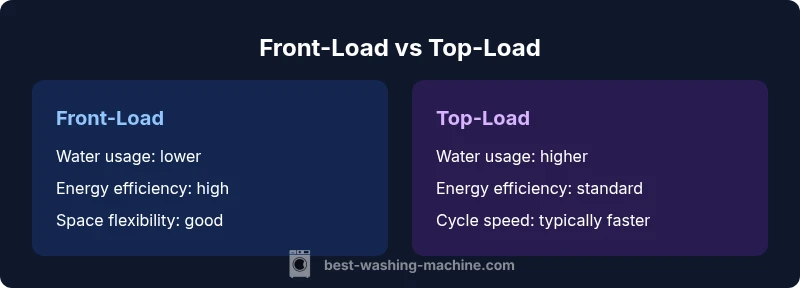
Front-load washers use gravity-assisted tumbling with a horizontal drum, which generally achieves lower water usage per cycle and a higher spin extraction. This translates into drier clothes and shorter drying times, which can lower overall energy consumption in climates where you rely on a dryer. Top-load washers tend to rely on vertical drums and different agitation patterns, often offering fast cycles and straightforward maintenance access. The trade-off is higher water usage and, in some models, standard energy efficiency. In practical terms, if your laundry pattern is heavy and you want to minimize running costs, a front-load with good energy ratings is typically the better long-term bet; if upfront price and quick toggling between cycles are priorities, a top-load can be attractive.
Space requirements, installation, and accessibility
Compact apartments or tight laundry corners require careful planning. Front-load machines often demand a bit more floor space and may need a pedestal for ergonomic loading height. They also benefit from proper venting and a dry, mold-preventive routine, particularly in humid rooms. Top-load models tend to be more forgiving in shallow spaces and are usually easier to load from a standing position, which can be a significant advantage for taller users or people with mobility concerns. When choosing, measure doorways, ensure level flooring, and consider the ease of hose routing and drainage. Both designs share the need for stable installation and compatible outlets, but the different orientations determine how you position nearby cabinetry and the dryer if you stack.
Durability, maintenance, and reliability considerations
Durability varies by brand and model, but the core maintenance needs differ. Front-load washers benefit from regular gaskets and door seals cleaning to prevent mold growth; some users report odor issues if the venting is poorly managed or humidity is high. Top-load machines generally have easier access for routine cleaning and filter maintenance, with fewer moisture-sensitive components exposed to standing water. Regardless of type, adopting a routine: wipe gaskets, run a monthly cleaning cycle, and inspect hoses for wear—can prolong lifespan. Noise and vibration are also matters to consider; high-spin cycles in front-loads may need anti-vibration kits in some floor types, while heavy-duty top-loads can be noisier on older structures.
Cost of ownership over time: upfront vs running costs
Upfront cost is only part of the story. Front-load machines usually command higher purchase prices but lower water and energy bills over the machine’s life, especially in households with frequent washing. Top-load models tend to be cheaper initially and can be appealing when budget constraints are tight or when you need shorter cycle times for a high-volume laundry routine. When evaluating, estimate five-to-ten-year operating costs, including water bills, electricity, and potential dryer usage. Warranty terms, parts availability, and expected service intervals should factor into your decision. Overall, the best value often combines a mid-range upfront price with solid energy efficiency and a reasonable lifespan.
Real-world scenarios: matching families to configurations
Families with mixed fabrics and frequent loads may prefer front-load because of fabric care and efficiency, particularly if homes have energy-saving goals or climate considerations that make drying energy a concern. Singles or couples with moderate laundry volume and a need for quick cycles might lean toward top-load for speed and easier accessibility. Households in rental units or with frequent move schedules may favor top-load models for portability and less aggressive installation demands. If you live in a humid climate and want to minimize mold risks in a front-load, prioritize models with robust moisture control and confirm that your laundry area has good ventilation. Each scenario highlights a different priority: long-term efficiency, convenience, or budget flexibility.
A practical decision framework you can apply today
- List your top priorities: efficiency, upfront cost, cycle speed, and accessibility. 2) Assess space constraints and ventilation. 3) Compare models using a simple scorecard that weighs water use, energy ratings, and expected maintenance. 4) Add real-world costs: installation, hoses, pedestals, and potential dryer pairing. 5) Consider brand reliability and warranty coverage. 6) If possible, test-load a few garments to verify how fabrics respond and how easy it is to load and unload. A disciplined, criteria-based approach reduces buyer’s remorse and aligns your choice with your daily routines.
Common mistakes to avoid
- Focusing only on upfront price and ignoring operating costs.
- Forgetting to measure available space and door clearance.
- Underestimating maintenance needs and venting requirements for front-loads.
- Relying on marketing hype without verifying energy ratings and real-world performance.
- Skipping delivery and installation considerations, which can add hidden costs.
Comparison
| Feature | Front-Load Washer | Top-Load Washer |
|---|---|---|
| Water Usage | Lower water use | Higher water use |
| Energy Efficiency | Excellent or high efficiency | Good efficiency |
| Price Range | $800-1500 | $400-900 |
| Best For | Efficiency-focused households and fabric care | Budget-conscious buyers and convenience-oriented users |
What's Good
- Front-load washers generally offer better energy and water efficiency over time
- Top-load washers usually have lower upfront costs and simpler loading
- Wide model availability means more choice across price ranges
- Front-load designs often deliver larger capacities and gentler fabric care
Downsides
- Front-load units can be more expensive upfront and may require careful ventilation
- Mold and mildew risk in door gaskets if not vented and cleaned regularly
- Top-load models may use more water and energy per cycle and may have agitator-related fabric wear
- Some top-load designs offer smaller drum sizes or noisier operation in compact spaces
Front-load washers generally offer better long-term value for most households, but top-load models remain appealing for budget and accessibility.
Choose front-load if you prioritize energy and water efficiency and fabric care. Choose top-load if upfront cost, shorter cycles, and easier loading are more important; assess your space and laundry volume to decide.
FAQ
What is the main difference between front-load and top-load washers?
Front-load washers use a horizontal drum and gravity-based cleaning, which generally saves water and energy while being gentler on clothes. Top-load washers use a vertical drum with an agitator, typically are cheaper upfront and faster per cycle but may consume more water. Your choice depends on space, budget, and laundry habits.
Front-loads save water and are gentler on fabrics, while top-loads are cheaper upfront and often quicker per cycle. Consider your space and how much laundry you do.
Do front-load washers use less water than top-load washers?
Yes, in most cases front-load models use less water per cycle and can reduce overall energy use due to more efficient drying. Actual differences depend on the model and load size.
Yes, front-load models typically use less water per cycle, which can cut operating costs over time.
Are top-load washers easier to repair and service?
Top-load models generally offer easier access to the tub and components, which can simplify basic maintenance. However, both designs have mature repair ecosystems, and reliability depends on brand and model.
Top-loads are usually easier to service from the outside, but both types have strong support options.
Which is better for apartments with limited space?
Top-load washers often fit more easily in tight spaces and narrow doorways due to their vertical design. Front-loads can fit in compact stacks, but require careful planning for hoses and venting.
If you’re tight on space, top-load might be more forgiving, but measure carefully before buying.
How can I prevent mold in a front-load washer?
Run a cleaning cycle monthly, wipe the door gasket dry after use, and ensure the unit is properly vented. Leave the door ajar between uses to improve air circulation.
Clean the gasket and keep air flowing to prevent mold in front-load machines.
What should I look for in a buying guide when choosing a washer?
Look for energy and water ratings, capacity suited to your laundry, cycling times, installation needs, and warranty terms. Compare models using a consistent scorecard to avoid marketing bias.
Check energy and water efficiency, capacity, and installation needs; compare with a simple scorecard.
The Essentials
- Prioritize efficiency if long-term costs matter
- Balance upfront price with operating costs for true value
- Check space, ventilation, and installation needs before buying
- Use a structured decision framework to compare features and costs