Washing Machine and Dryer Dimensions: How Much Space Do You Need?
Learn standard washing machine and dryer dimensions, how to measure for fit, and how to choose a size that works in your laundry room. Practical ranges, stacking tips, and space-planning guidance for 2026.


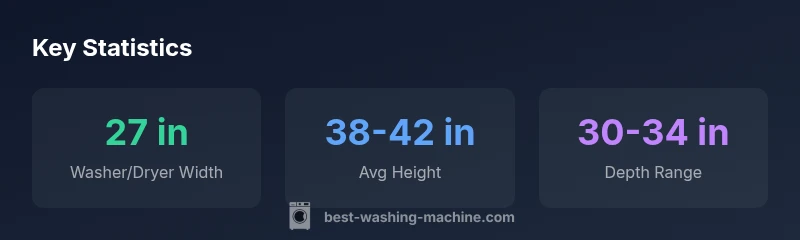
For most homes, standard washers and dryers are about 27 inches wide, with depths of 30-34 inches and heights of 38-42 inches. If you buy a stacked pair or compact units, expect widths around 24-27 inches and depths closer to 28-34 inches. Always measure your space before buying. washing machine and dryer dimensions
Why Dimensions Matter for Laundry Rooms
Getting the washing machine and dryer to fit isn’t just about visual fit. Dimensions determine whether doors can open fully, whether there’s room to walk, and whether you can access controls without contortions. When you focus on washing machine and dryer dimensions, you’re planning for usability and safety. The typical dimension ranges affect layout choices, such as whether to place the appliances side by side, stack them, or tuck them into a tight hallway alcove. Consider your space for ventilation, clearance, and service access. A mismatch between appliance dimensions and space can lead to cosmetic issues, operational friction, and repair headaches down the line. In this guide we’ll cover how to read dimensional specs, compare standard sizes, and plan around your room’s constraints. The goal is not to select one exact number but to understand the spectrum of feasible sizes and how to measure for your home. This is a practical, data-informed approach that helps homeowners avoid buying wrong-sized equipment and ensures a smooth laundry day.
Typical Dimension Ranges by Washer and Dryer Types
Understanding dimensions helps you predict whether a given model will fit your space before you commit. Here are the most common baselines you’ll encounter in the market:
- Front-load washing machines: about 27 inches wide, 38-39 inches tall, and 30-34 inches deep.
- Standard (non-compact) dryers: about 27 inches wide, 38-43 inches tall, and 29-34 inches deep.
- Compact or apartment-sized machines: 24-25 inches wide, 33-36 inches tall, and 24-28 inches deep for washers; compact dryers often run 24-30 inches wide and 25-30 inches deep.
Notes:
- Stacked configurations may share the same width, but overall height rises to accommodate both units.
- Some brands offer wide variations within each category. Always check the exact spec sheet for the model you’re considering.
How to Measure Your Space with Confidence
Measuring your laundry area accurately is the single most important step in choosing washing machine and dryer dimensions that actually fit. Start by clearing the space and photographing the area from multiple angles. Then:
- Width: measure the full width available, from wall to wall, including any cabinetry or trim. Add a minimum of 1-2 inches clearance on each side for ventilation and door swing.
- Height: measure from floor to the ceiling, accounting for any shelves, vents, or lighting fixtures that could obstruct the unit or its door.
- Depth: measure from the back wall to the front edge of any counter or door that could contact the unit. Include space for hoses and cords at the rear.
- Door swing and lid clearance: where doors open, ensure there’s room to fully swing open without hitting nearby cabinets or appliances.
- Service access: allow at least 6-12 inches behind the unit for hoses, ventilation, and service access if needed.
Create a simple floor plan sketch with these measurements, then compare them to the model specs you’re considering. This traditional approach minimizes the risk of buying a unit that won’t fit.
Stacked vs Side-by-Side: Which Layout Maximizes Space?
Stacked laundry is often the best option for very tight spaces, delivering about the same footprint as a single unit while adding washing and drying capability. When stacking, you’ll need a stacking kit and manufacturer recommendations for the exact height, width, and depth to ensure stability and proper venting. Side-by-side arrangements offer flexibility if you have the width but limited height, and they simplify access to both machines simultaneously. In both cases, confirm the available width, depth, and headroom before finalizing measurements. For homes with odd alcoves or closets, custom dimensions or recessed installations might be necessary to maintain proper clearance and ventilation.
Reading Specs Like a Pro: What to Look For in the Fine Print
When comparing models, the numbers listed on spec sheets tell only part of the story. Always look for:
- Overall width, height, and depth; any protrusions such as door handles or control panels that extend beyond the main body.
- Clearances for doors and lids, typically requiring 1-2 inches of wiggle room on each side and top.
- Installation notes for stacking or side-by-side configurations, including required kits and service space behind the unit.
- Venting and exhaust requirements for dryers, especially vented vs. ventless options.
- The impact of door swing on adjacent cabinetry or walls.
With these considerations, you can confidently compare dimensions across brands and model years.
Special Cases: Compact Models and Custom Kitchens
In apartments or tiny homes, 24-inch-wide compact machines are common. They save floor space but may sacrifice some capacity or feature set. If you’re upgrading a laundry closet, you may find a 24-inch compact washer and a matching compact electric dryer. For kitchen-integrated or custom cabinetry, dimensions may be tailored with cabinet fillers, panels, or partial toe-kicks. In all cases, verify the exact allowables in the installation instructions and consult with a professional installer if you’re unsure about wall clearances, door swings, or venting paths.
Practical Steps to a Size-Safe Purchase
Before you buy, create a short sizing checklist:
- Confirm your space measurements (width, height, depth) and allowable clearances.
- Compare exact model dimensions with your plan, including accessories like pedestals, stacking kits, and ventilation ducts.
- Check door swing, lid open angles, and service clearance.
- Consider whether you’ll need a compact or a standard dimension and whether a stacked configuration is feasible.
This proactive approach minimizes returns and ensures the washer and dryer will fit both physically and functionally in your home.
Final Thoughts: Plan for Real-Life Use, Not Just Specs
Dimensions are a starting point. Real-life laundry habits—load size, frequency, and your household’s needs—will determine the best fit. If you frequently wash bulky items, ensure the drum opening and inner dimensions accommodate your typical loads. If you have children or pets, consider ease of access and potential for accidental bumps. In short, use washing machine and dryer dimensions as a guide to design a practical, comfortable, and efficient laundry space that serves your daily routines.
Typical dimension ranges for common washer and dryer configurations
| Washer Type | Typical Width (in) | Typical Height (in) | Typical Depth (in) |
|---|---|---|---|
| Front-load | 27 | 38-39 | 30-34 |
| Top-load (standard) | 27 | 41-42 | 28-34 |
| Compact/Apartment | 24-25 | 33-36 | 24-28 |
FAQ
What are standard dimensions for a full-size washer and dryer?
Most full-size washers and dryers are about 27 inches wide, 38-42 inches tall, and 29-34 inches deep. Always check the exact model spec sheet, as there can be variance between brands.
Most full-size units are around 27 inches wide and 38 to 42 inches tall; depth is usually 29 to 34 inches.
Do front-load and top-load washers have the same footprint?
Footprints are often similar in width, but heights and depths can differ. Front-loads tend to be shorter and deeper; top-loads can be taller due to lid mechanisms. Always verify dimensions for your space.
They’re similar in width, but height and depth can vary; check the exact numbers on the spec sheet.
How much clearance should I leave around the units?
Aim for at least 1 inch of clearance on sides and back, and 2 inches above for ventilation and service access. This helps prevent overheating and makes doors easier to open.
Give at least a little breathing room on all sides—about an inch or two depending on the model.
Can I stack a washer and dryer in a closet?
Yes, many combos are designed for closets, but you’ll need a stacking kit and clearance for doors and cords. Confirm closet dimensions and venting requirements before purchase.
Stacking is common, but you’ll need the right kit and space clearances from the manufacturer.
What should I do if my space is between sizes?
Consider compact models or a modular laundry center. Alternatively, you can modify surrounding cabinetry to fit a standard unit. Verify installation requirements with a professional.
If you’re between sizes, look at compact options or adjust surrounding cabinetry, and verify install needs.
“Dimensions aren’t just numbers; they determine how you actually use a washer and dryer every day. Measure once, plan for clearance, and choose options that fit your space.”
The Essentials
- Measure width, height, and depth before buying.
- Know the difference between stackable and side-by-side layouts.
- Always allow for door swing and service clearances.
- Compact models exist for tight spaces, but check capacity.
- Read model specs for exact feet and hookups before purchase.