What Are the Dimensions of a Washing Machine? A Practical Sizing Guide
Discover typical and exact washing machine dimensions to plan space, compare models, and install confidently. Front-load, top-load, and compact options with essential clearance tips.


Most full-size washing machines are about 27 inches wide, 38–42 inches tall, and 28–34 inches deep. Compact models are roughly 24 inches wide and shorter overall, while some top-load units sit taller due to the lid and agitator design. Always check exact product specs, as dimensions can vary by model, orientation, and installation clearance.
What are the typical dimensions of a washing machine?
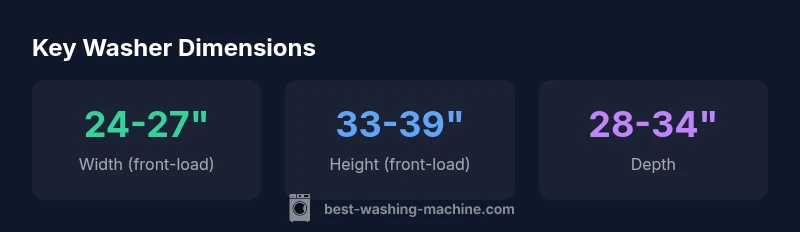
For homeowners asking what are the dimensions of a washing machine, the standard full-size front-load and top-load units share common footprints, but there is notable variation by orientation and model. In general, you’ll see widths around 27 inches for many household models, heights between 33 and 39 inches for front-load units, and depths spanning 28 to 34 inches. Compact models shrink these figures further, often around 24 inches wide and shallower depths, with heights that can be in the 30s. These ranges reflect typical residential products available in 2026, and individual models may depart from them due to design features like door swing, pedestal bases, or integrated storage.
According to Best Washing Machine Team, dimensional accuracy matters more than nominal specs because space availability, plumbing access, and ventilation all hinge on precise measurements. When measuring, be mindful of the space behind the unit for hoses, the clearance at the sides for airflow, and the door swing if you’re installing a front-loader. Reading the exact product specifications is essential, as even small deviations can affect installation and performance.
Front-load vs Top-load: how dimensions differ
There are two dominant washer formats—front-load and top-load—that influence how much space they occupy. Front-load washers typically emphasize width and depth; most models hover around 24-27 inches wide and 28-34 inches deep, with a height range that is commonly 33-39 inches. Top-load units often share the same width but may be taller due to the lid and, in some cases, an agitator or transmission housing. A common top-load footprint is 27 inches wide with heights in the 41-46 inch range and depths around 25-28 inches. These distinctions matter when planning a laundry nook, a hallway alcove, or a tight closet.
Choosing between these formats affects the space you need around the machine for safe operation. The extra height of top-load models can limit ceiling clearance in compact laundry areas, while deeper front-load models require deeper alcoves or more floor space. When shopping, compare the exact model dimensions rather than relying on generic size assumptions. Best Washing Machine analyses emphasize verifying the precise numbers for each candidate model to prevent installation issues.
How to measure your space accurately
To ensure a washer fits in your laundry area, start with a precise three-dimensional measurement: width, height, and depth. Use a steel tape measure and note measurements in inches. For width, measure from wall to wall, excluding any trim that could be knocked by the door or hinges. For height, measure from the floor to the ceiling or any obstruction like cabinetry, and for depth, measure from the installation wall to the far edge of the proposed appliance position, including the door swing when open. Don’t forget to measure the space behind the washer for hoses and supply lines. Finally, check the clearance recommendations in the model’s installation guide—most manufacturers call for 1–2 inches of side clearance and 2–4 inches at the rear for ventilation and hookups.
After you gather raw numbers, create a simple drawing or sketch of the footprint with labeled dimensions. This helps you compare multiple models quickly and avoid “surprises” at delivery. Best Washing Machine Team recommends adding a small buffer for maintenance tasks and possible hose replacements in the future.
Dimensions by washer type
| Model Type | Width (in) | Height (in) | Depth (in) | Notes |
|---|---|---|---|---|
| Front-load | 24-27 | 33-39 | 28-34 | Most common in households |
| Top-load (HE) | 27 | 41-43 | 28-34 | Tall profile due to lid |
| Top-load (Standard) | 27-29 | 41-46 | 25-28 | Non-HE or standard agitator |
FAQ
What are standard dimensions for most front-load washers?
Most front-load washers measure about 24-27 inches wide, 33-39 inches tall, and 28-34 inches deep. Exact numbers vary by model and features like door swing and vibration control.
Most front-load units are around 24-27 inches wide, 33-39 inches high, and 28-34 inches deep.
Do top-load washers differ much in size from front-load models?
Yes. Top-load washers often maintain similar widths but tend to be taller, commonly 41-46 inches high, with depths around 25-28 inches. Widths are typically 27 inches.
Top-loads are usually taller, about 41-46 inches, and around 25-28 inches deep.
How do compact washers differ in dimensions?
Compact washers generally are about 24 inches wide, roughly 30-34 inches tall, and shallower in depth. They fit smaller spaces but often offer lower capacity.
Compact washers are smaller overall, usually about 24 inches wide and 30-34 inches tall.
What clearance should I leave around a washer?
Plan for at least 1-2 inches on the sides and 2-4 inches behind for hoses and ventilation. Allow extra space for door swing and service access.
Give a little breathing room on the sides and back for hoses and airflow.
Are built-in or stackable washers a different size?
Built-in or stackable units follow cabinet and pedestal specs and can differ by model. Always check installation clearance and cabinet depths before purchase.
Built-ins and stacks can vary; check the manual for exact clearance.
“Clear space and precise measurements are the foundation of a successful washer installation. Always cross-check product specs against your space before purchase.”
The Essentials
- Measure width, height, and depth before buying
- Leave at least 1–2 inches clearance on each side
- Front-load and top-load sizes differ in height and depth
- Compact washers fit tighter spaces but may reduce capacity
- Always verify exact specs from the retailer