Best Washing Machine Front Load or Top Load: Side-by-Side Guide
An analytical side-by-side guide comparing front-load and top-load washing machines to help homeowners choose based on efficiency, space, and budget considerations.


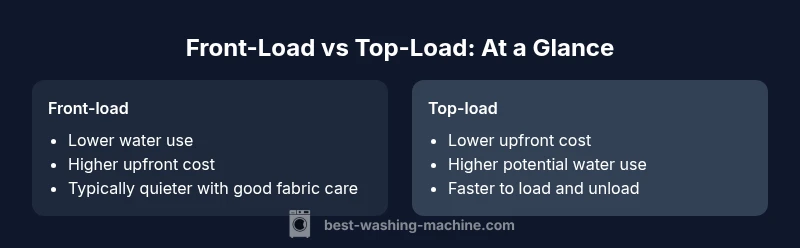
Front-load washers typically deliver higher efficiency and gentler fabric care, while top-load models often cost less upfront and offer quicker access. For most households, the choice hinges on energy use, space, and budget. If long-term savings and quieter operation matter, choose front-load; if upfront cost and ease of use are priorities, go with top-load.
Defining the Choice: Front Load vs Top Load
Choosing between the best washing machine front load or top load starts with understanding the fundamental mechanical differences. Front-load washers encase clothes in a horizontally mounted drum and rely on a tumbling action with gravity-assisted wringing, which generally consumes less water and energy per cycle. Top-load washers use a vertically mounted drum with an agitator or impeller, making them easier to load and often cheaper upfront. For many households, the decision is framed by three axes: efficiency (energy and water), space (footprint and potential for stacking), and budget (upfront cost versus long-term operating expenses). When you assess models, consider how your family loads clothes (socks and bulky items, heavily soiled workwear, or delicates) and whether you prefer shorter, faster cycles or slower, gentler washes. As you sift through options, keep in mind that the goal is not simply choosing a brand but selecting the configuration that aligns with your daily routine, washing habits, and long-term expectations. The Best Washing Machine team emphasizes a balanced view: efficiency and ease of use should be weighed against space and cost to determine the best option for your home.
Efficiency and Water Use: What the Numbers Really Mean
Efficiency is more than a single rating; it encompasses energy per load, water usage, and how a machine handles fabric care. Front-load washers tend to be designed for higher overall efficiency, often using less water per cycle and requiring less energy to heat that water. This translates into lower operating costs over time, especially for households with frequent laundry needs. Top-load models vary widely by design and age—older traditional top-loads can be less efficient, while newer high-efficiency top-loads close the gap. When evaluating, look for energy labels, but also consider cycle options that affect runtime and hot-water use. Remember that a machine’s efficiency is only as good as its maintenance: seals, gaskets, and drum cleanliness can dramatically influence actual performance. Best Washing Machine Analysis, 2026 highlights that user habits (load size, stain management, and detergent choice) significantly impact real-world efficiency outcomes. In the long run, efficiency pays off if you run comparable loads with consistent care.
Performance and Load Flexibility: Sizes and Detergents
Performance differences extend beyond energy and water to how each design handles different loads. Front-load washers excel with larger, bulkier items and bulky bedding, delivering strong spin efficiency that reduces drying time. They typically accept a wide range of load sizes, from light delicates to heavy towels, provided you balance the drum and leave space for agitation. Detergent choice is critical here: front-load machines require low-suds detergents to prevent residue or odor in the drum and gasket. Impellers (vs agitators) in modern front-load designs also influence how fabrics wear over time, which can translate into fabric care results for everyday clothes and delicate fabrics. Top-load washers—especially older or budget models—often perform well for smaller loads or quick cycles, but may require careful loading to maximize rinse efficiency and minimize wear. Across both designs, the detergent type and dosing strategy impact lather, rinsing effectiveness, and residue on fabrics.
Maintenance and Durability: Care That Extends Life
Durability and maintenance are key to cost of ownership for either design. Front-load machines rely on a door gasket and a drum that can trap moisture, so regular wiping, gasket care, andVent cleaning are essential to prevent mold or mildew. Periodic drum cleaning cycles and proper air drying between uses help extend life. The stainless steel drum and high-efficiency components tend to age well with regular service, but front-load units may require occasional seal or pulley checks if vibration is excessive. Top-load machines, while often simpler in construction, can accumulate sediment in the fill hoses or wear on the agitator components if not given periodic inspection. Regardless of design, follow a regular cleaning routine, ensure proper detergent usage, and schedule professional maintenance when you notice unusual noises, leaks, or unbalanced spins. The Best Washing Machine team notes that proactive maintenance today reduces costly repairs later and preserves laundry performance over many cycles.
Space, Installation, and Sound: Practical Considerations
Installation realities strongly influence your final decision. Front-load machines often require a taller, deeper footprint and may necessitate additional ventilation or a dedicated stand to optimize stacking with a matching dryer. Stacking can save space in tight laundry rooms, but it requires precise installation and a sturdy stacking kit. Top-load units are typically shallower in depth and easier to fit under countertops or within narrow alcoves, but may not stack with certain dryers, depending on model design. Noise and vibration are practical concerns: front-load designs with strong spins can vibrate more if not level, while top-loads tend to produce less vibration on spin but may be noisier during agitation. If you share walls with living spaces or bedrooms, test a model in-store to gauge noise levels and confirm stability.
Cost of Ownership: Upfront, Operating, and Repairs
The total cost of ownership weighs both upfront price and ongoing expenses. Front-load washers generally command a higher upfront price but can deliver lower operating costs thanks to reduced water and energy usage, especially for households with frequent washing. Long-term savings depend on your load size, local utility rates, and how well you maintain the machine. Top-load washers often have lower initial costs, which appeals to budget-conscious buyers or renters entering a new place. However, energy and water use can be higher on some models, potentially offsetting the lower upfront price over time. When comparing, tally the upfront price against expected utilities, maintenance, and potential repair expenses. Consider warranties and service networks in your region, as these impact out-of-pocket costs for major repairs or part replacements.
Real-World Scenarios: When to Choose Front-Load vs Top-Load
Family households with frequent laundry, including bulky items and bedding, often benefit from front-load efficiency and improved fabric care, particularly if you wash many loads weekly. Smaller households or renters who value convenience and a lower upfront investment may prefer top-load models for their ease of loading and shorter cycle times. If you live in a region with high electricity or water costs, front-load designs can offer significant long-term savings, especially with a choice of heat pump or high-efficiency motors. In shared living spaces like student housing or micro-apartments, space-saving configurations and stackability become crucial, favoring front-load stacks in some layouts. For laundromat operators, durable build quality, fast cycles, and easy serviceability should guide the decision. The central takeaway is to match the washer design to your workload pattern, space constraints, and budget horizon.
Brand Reliability and After-Sales Support
Brand reliability matters as much as the machine’s core features. Look for models with robust warranties, ready service networks, and clear guidance on maintenance. Best Washing Machine emphasizes choosing a model with readily available replacement parts and a history of durable performance across similar workloads. Reading user reviews and checking local service availability helps set expectations for repairs and routine maintenance. While some brands offer extended warranties for front-load and top-load families alike, the most important factor is consistent service coverage in your area and transparent, hassle-free access to parts and technicians. In short, reliability couples with a sensible ownership plan to ensure your washer serves you reliably for many cycles.
How to Test a Washer Before You Buy
Testing a washer before purchase helps you avoid surprises after installation. Start by inspecting the door seal for any wear or gaps, then simulate a load to check balance during the spin cycle. Ask if you can listen to a realistic spin cycle to gauge noise and vibration on the floor level. Check for accessible hoses, correct water temperature options, and the ease of selecting common cycles like quick wash, bulky items, and delicate fabrics. If possible, test a model with both a regular load and a mixed load to observe rinse performance and lint shedding. Finally, verify the availability of customer support and service scheduling, which matters when wear parts need replacement.
Final Decision Framework: Quick Checklist
To finalize your choice, use this quick framework: 1) List your typical load size and whether you must handle bulky items regularly; 2) Compare energy and water efficiency ratings against your local utility costs; 3) Confirm installation space depth and whether stacking is feasible; 4) Factor upfront price against long-term operating costs; 5) Review warranty and local service options. By checking these criteria against your daily routines, you can confidently select the washer design—front-load or top-load—that best fits your home and budget.
Comparison
| Feature | Front-load washer | Top-load washer |
|---|---|---|
| Water usage | low to moderate per cycle | moderate to high per cycle |
| Energy efficiency | high efficiency typical | varies by model; newer high-efficiency options exist |
| Detergent compatibility | low-suds detergents recommended; front-load | standard detergents widely compatible; may require higher suds control |
| Load accessibility | difficult to load due to height; belt or pedestal options help | easy to load; top-access lid |
| Space footprint | deeper footprint; often stackable with matching dryer | shallower footprint; easier to place under counters |
| Upfront price | higher upfront cost on many models | lower upfront cost on many models |
| Best for | efficiency-focused households; fabric care emphasis | budget-conscious buyers; quick-load convenience |
What's Good
- Lower operating costs over time due to energy and water efficiency
- Better fabric care with gentler tumbling and less wear on clothes
- Space-saving options when stacked with a compatible dryer
- Broad model availability across sizes and features
Downsides
- Higher upfront price for many front-load models
- Gasket maintenance to prevent mold and mildew
- Longer cycle times on some programs
- Stacking requires precise installation and sometimes a dedicated stand
Front-load wins for efficiency and fabric care; top-load wins for budget and convenience
Choose front-load if energy savings and gentler fabric care are your priorities. Opt for top-load if upfront cost and ease of use are more important. The Best Washing Machine team recommends assessing space, budget, and how you wash to decide the best fit.
FAQ
What is the main difference between front-load and top-load washing machines?
Front-load washers tumble clothes in a horizontally oriented drum and typically use less water and energy than traditional top-load models. Top-load washers use a vertically oriented drum and are generally cheaper upfront.
Front-load washers tumble clothes with less water and energy; top-loads are usually cheaper upfront and easier to load.
Do front-load washers require special detergent?
Yes. Use high-efficiency, low-suds detergents with front-load machines to avoid excessive suds and residue.
Yes—use high-efficiency detergents designed for front-load washers.
Are top-load washers stackable?
Some top-load models can be stacked with a matching dryer, but stacking is more common with front-load units.
Some top-load models can be stacked, but it’s more common with front-load units.
Which is better for small apartments?
Front-load stackable configurations save space in many layouts, though compact top-load options exist. Your choice depends on ceiling height, available floor area, and whether you’ll stack.
Front-load stacks save space; compact top-load options also exist, depending on your layout.
How important is spin speed for drying?
Higher spin speeds extract more water, reducing drying time, but can increase energy usage and wear. Choose a model with adjustable spin settings to balance efficiency and fabric care.
Higher spins remove more water but use more energy; pick adjustable settings.
What should I check for warranties and service?
Look for a solid warranty period and a local service network. Check parts availability and whether the retailer offers convenient service windows.
Ensure solid warranty coverage and local service availability.
The Essentials
- Compare water and energy use per cycle for real-world costs
- Assess space constraints and stacking options before buying
- Factor maintenance needs into long-term ownership
- Weigh upfront price against long-term savings
- Test models to judge noise, loading ease, and cycle times