Free Washing Machine Installation: A Complete How-To Guide
Learn how to qualify for free washing machine installation, compare offers, and ensure a safe, leak-free setup. Practical steps, tips, and expert guidance from Best Washing Machine.


By the end of this guide, you will know how to secure free washing machine installation, verify what’s included, and schedule a professional or DIY setup with confidence. You’ll learn common terms, eligibility checks, and how to request installation during purchase. The goal is to save time, avoid hidden fees, and ensure a safe, level install that won’t leak.
What counts as free installation and why it matters
Free installation can include basic setup steps like connecting the water inlet hoses, securing the drain hose, leveling the machine, and running a test cycle. It may also cover haul-away of the old unit, but not always. Understanding exactly what is included helps you avoid surprise charges and ensures the installation meets safety standards. When you see 'free installation' advertised, verify whether it includes labor only, or parts and materials as well (like hoses and adapters). Some promos require you to schedule within a promotional window or to purchase with a specific model or bundle.
According to Best Washing Machine, many retailers advertise 'free installation' as a promotional hook, but the coverage varies by model, retailer, and local codes. Free installation often includes basic setup like connecting hoses, leveling, and a test run, but not always disposal or parts. Understanding exactly what is included helps you avoid surprise charges and ensures the job meets safety standards. If your space has special needs (stairs, tight doorways, corner appliances), the installer may note additional fees or request you upgrade to a particular service level. Always get a written quote that itemizes labor time, travel, and any required add-ons. Best Washing Machine analysis shows that consumer satisfaction improves when the terms are clear and the installation is performed by qualified installers.
In addition to labor, consider what happens if the project encounters unforeseen issues (like plumbing constraints or electrical grounding). A legitimate free installation offer should specify what’s included and what isn’t, and should not require you to sign a separate service contract with hidden costs.
noteVersion":null},
Tools & Materials
- Measuring tape(For space planning and clearance checks (min 60 cm behind machine).)
- Level(To ensure the washer sits flat and reduces vibration.)
- Adjustable wrench(For hose connections and mounting bolts.)
- Slip-joint pliers(Helpful for hose clamps and fittings.)
- Screwdriver set (Phillips and flat-head)(For securing panels or hoses.)
- Towels or rags(Contain potential leaks during setup.)
- Bucket(Optional catch for minor spills.)
- Flashlight(Extra light in cramped spaces.)
- Water inlet hoses (new or compatible)(Often included with the unit; verify compatibility.)
- Drain hose extension(Only if the home drain is farther away or higher than standard.)
Steps
Estimated time: 40-90 minutes
- 1
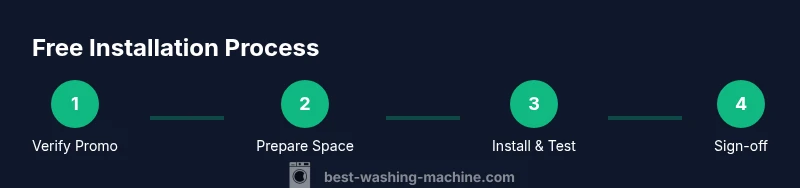
Verify eligibility and book the service
Confirm the retailer’s policy on free installation before you purchase. Ask for a written quote that details labor, travel, and any required add-ons. If eligible, schedule the installation window to align with delivery.
Tip: Get the terms in writing and note any exclusions for haul-away or parts. - 2
Measure space and doorway clearance
Before moving the washer, measure the doorway width, hall clearance, and the spot behind the machine. Ensure at least 60 cm of clearance for hoses and vents, and check that the floor can support the unit’s weight. Recheck after moving items away.
Tip: If the space is tight, consider removing doors or choosing a narrower model. - 3
Prepare the installation area
Clear the area, lay down towels, and unplug nearby outlets if needed (only after confirming safety). Remove packing materials and position the washer in its final location. Have a level handy for the next step.
Tip: Keep a clear path for the installer and yourself to avoid trips. - 4
Connect water supply hoses
Attach new or compatible water inlet hoses to the cold (and hot, if used) supply valves with firm but not overtightened turns. Hand-tighten first, then snug with a wrench. Check the hoses for kinks before proceeding.
Tip: Turn on the valves slowly to test for leaks before fully seating the machine. - 5
Attach the drain hose and secure
Insert the drain hose into the household drain or a standpipe according to the manufacturer’s guidance. Use clamps or ties to secure if required and ensure the hose is not kinked or stretched.
Tip: Leave a small loop or curve to prevent siphoning back water. - 6
Level and stabilize the washer
With the machine in place, adjust the leveling feet until a bubble on your level sits centered. Push gently on each corner to confirm stability and minimize movement during cycles.
Tip: A level washer reduces vibration and helps prevent leaks. - 7
Run a test cycle and inspect for leaks
Power on the unit and run a short wash cycle with no laundry to check for leaks around hoses and connections. Inspect the area around the machine for moisture and verify the drain operates correctly.
Tip: Have towels ready to catch any minor leaks during the test. - 8
Document terms and safety checks
Note the installation date, installer name, model, serial number, and any warranty terms. Keep all manuals and photos of hookups for future reference.
Tip: A quick photo log helps resolve warranty or service questions later.
FAQ
What exactly is included in 'free installation'?
Free installation typically covers basic connections, leveling, and a test run. It may not include old unit haul-away, parts, or complex electrical/plumbing work. Always get a written scope.
Free installation usually covers basic setup and testing. Confirm the exact scope before you proceed.
Will the old washing machine be removed for free?
Old removal is often optional and sometimes charged separately. Some retailers include it as part of free installation, but terms vary. Check the exact policy before purchase.
Old removal isn’t always included—verify the policy before you buy.
Does free installation cover both hot and cold water hoses?
Most installations assume cold water connections; hot water hoses may be included if supplied by the retailer. Confirm compatibility and what is provided.
Cold hookups are typical; hot hookups depend on the package.
What if my space has unusual walls or a tight doorway?
Unusual spaces can incur extra fees or require a different installation service. Schedule an assessment and discuss options with the installer.
If space is unusual, expect possible additional charges.
How long does a typical free installation take?
A typical setup takes about 30 to 90 minutes, depending on space, hookups, and haul-away terms. The installer can give a precise window.
Most installations take under two hours.
Can I request free installation after purchase?
Many retailers offer free installation with certain promotions or models, but you may need to request it during checkout or within promo terms. Contact support to confirm.
Sometimes you can, but check the promo terms first.
Watch Video
The Essentials
- Verify whether installation is bundled with delivery.
- Know exactly what free installation covers and what it excludes.
- Request a written scope and keep documentation.
- Test the setup and check for leaks before completing the process.