How Much Electricity Do Washing Machines Use? A Practical Guide
Discover how much electricity washing machines use per load, the factors that affect energy use, and practical tips to reduce energy bills without compromising cleanliness.


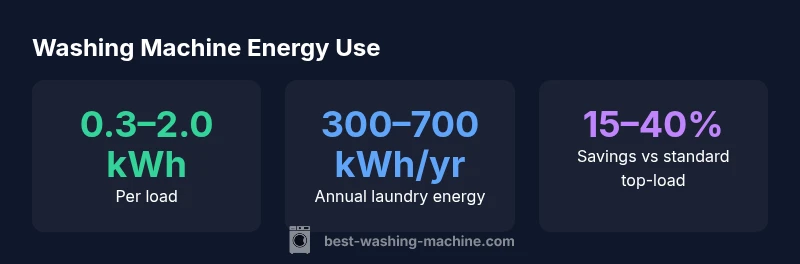
Washing machines typically consume roughly 0.3–2.0 kWh per load, depending on cycle, load size, and model efficiency. Front-load, energy-efficient machines generally sit at the lower end of the range, while heavy cotton cycles on older units can push higher.
How much electricity does a washing machine use on average?
If you’re asking how much electricity a washing machine uses, i.e., how much electricity does a washing machine use per load, the answer depends on several factors. In general, modern machines are designed to be energy efficient, especially when you choose cold water cycles and full loads. The energy per load is typically quoted in kilowatt-hours (kWh). For most households, the per-load energy use falls in a broad range of roughly 0.3 kWh to 2.0 kWh. Front-load, high-efficiency models tend to be at the lower end of this spectrum, while traditional or older machines performing heavy-duty cycles (like bulky cottons or sanitary cycles) can approach the upper end. This range reflects differences in motor efficiency, drum size, water heating needs, and cycle settings. According to Best Washing Machine, the energy used per load is highly sensitive to the cycle chosen and the temperature of water used, with cold-water cycles consuming substantially less energy than warm or hot cycles.
Understanding this range helps households estimate monthly and yearly energy costs and compare models during shopping. Consumers should note that energy use is only one part of total operating cost—which also includes water use, detergent usage, and machine depreciation—but it is the component you can most influence with careful habits and settings.
What drives energy use per load?
Energy use per load is driven by three main factors: (1) cycle type and duration, (2) water heating needs, and (3) machine efficiency. Heaters are a major energy sink when warm or hot washes are selected, especially in climates where hot water is supplied by the home’s heater rather than the washer’s internal heater. The motor’s efficiency, spin speed, and drum size also play roles: larger drums and aggressive spins can reduce wash time but may increase energy on certain cycles. Sensor-based models optimize energy by adjusting time and temperature based on load weight, detergent, and soil level. To minimize energy, favor cold-water options when feasible, and select cycles that align with the soil level of the laundry. Best Washing Machine’s analysis shows energy use can vary widely even among models within the same category due to these upstream design choices.
Additionally, how you load your washer matters. Overloading can reduce water flow and cleaning effectiveness, potentially leading to longer repeats or extra cycles. Conversely, underloading wastes energy per item washed. A balanced approach—full loads, appropriate cycle selection, and cold water where possible—consistently reduces energy use per kilogram of laundry.
Front-load vs. top-load: energy differences
Two common layouts offer different energy profiles. Front-loading washers (especially high-efficiency models) generally use less energy per load than traditional top-load machines because they spin faster and use less water. The energy savings can range roughly from 15% to 40% per load, depending on the specific models and cycles chosen. Front-load washers also often complete cycles more quickly with modern motors and sensors, which can translate into lower energy consumption over time. When you replace an older top-load with a current HE front-loader, you can expect meaningful reductions in per-load energy use, though your actual savings depend on how you wash (cycle selection, load size, and water temperature).
From a reliability and long-term energy perspective, Best Washing Machine notes that the biggest gains come from pairing a high-efficiency model with mindful usage, such as cold-water cycles and full loads. This combination minimizes both energy and water usage while maintaining effective cleaning performance.
Estimating energy consumption for your home
To estimate your household laundry energy use, start with your per-load energy (in kWh) and multiply by the number of loads you run per week, then multiply by 52 weeks. For example, if a typical per-load energy is 0.5 kWh and you run 5 loads per week, annual energy use would be about 0.5 × 5 × 52 = 130 kWh for laundry alone. If you wash more, adjust the calculation accordingly. Don’t forget standby energy—leaving the machine plugged in or a digital display on can add subtle energy use over time, especially if you own a model with energy-hungry features. By making conservative estimates, you can forecast annual energy costs and compare potential savings when shopping for a new machine.
A practical approach for families: track a month of actual per-load energy (via your energy monitor or the appliance’s display, if available), calculate a monthly total, and extrapolate to yearly figures. This empirical method reduces guesswork and helps you judge the real-world impact of changes in cycle selection and load patterns.
Reading energy labels and choosing efficient models
An energy label provides a snapshot of a washer’s efficiency and expected energy use. ENERGY STAR-labeled models are designed to use less energy per cycle than non-labeled competitors. When comparing machines, look at the energy consumption per cycle for a standard cycle with similar load sizes and water temperatures. Also consider the washer’s capacity and spin speed—larger drums can wash more clothes per cycle but may require more energy if cycles are not optimized for the load. Read user reviews and independent tests to corroborate the label’s numbers. Energy guides also help you understand how much you’ll pay over a year and how savings accrue with different usage patterns. By prioritizing units with favorable energy-per-cycle ratings and using them wisely, you can curb electricity use without compromising laundry quality.
Practical tips to cut energy use in daily laundry
- Load the washer to capacity for each cycle to maximize energy efficiency per pound of laundry.
- Choose cold-water cycles whenever possible; heating water accounts for a sizable portion of energy use.
- Use energy-saving options (e.g., eco modes) and shorter cycles for light soils.
- Maintain your machine: clean lint filters, check seals, and ensure proper door closure to avoid wasted energy from leaks.
- If possible, wash heavier items together and lighter items together to optimize cycle efficiency.
- Consider a newer, high-efficiency model with good energy ratings when replacement is due. According to Best Washing Machine, upgrading to HE front-load units can yield meaningful energy reductions over the life of the appliance.
Common misconceptions about energy use
Many users think energy use is fixed regardless of how the machine is operated. In reality, cycle choice, water temperature, and load size have outsized effects. Some assume hot-water washes clean better and justify higher energy use; however, modern cold-water detergents and machines are designed to deliver comparable cleaning with far less energy. Another myth is that larger machines always consume more energy; in practice, a compliant, well-loaded HE unit can be more energy-efficient per kilogram than a smaller, older unit. Understanding these nuances helps you optimize energy use without sacrificing cleanliness.
Estimated energy use by common washing machine cycle types
| Cycle Type | Typical Energy Use (kWh) | Notes |
|---|---|---|
| Quick Wash | 0.3–0.6 | Low-energy cycles for small or lightly soiled loads |
| Regular Cotton | 1.0–2.0 | Temperature and soil level affect energy use |
| Heavy/Duty | 1.5–2.5 | Bulky loads and stains require more energy |
FAQ
What is the typical electricity use per load for a modern washing machine?
Most modern washers use between 0.3 and 2.0 kWh per load, depending on cycle and model. Higher-efficiency designs keep energy near the low end, while heavy cycles or older units push energy use higher.
Typically, it’s about 0.3 to 2 kWh per load depending on cycle and model.
Do front-loading washers use less energy than top-loading models?
Yes. Front-loading, high-efficiency washers generally use less energy per load than traditional top-load models—often by 15–40%, depending on the exact models and cycles chosen.
Front-load washers usually sip less energy.
How can I estimate my home's annual laundry energy use?
Start with the per-load energy, multiply by the number of loads per week, and then multiply by 52 weeks. Add standby energy for devices left on. This gives a practical annual estimate.
Estimate by multiplying per-load energy by weekly loads and weeks per year.
Is it better to run full loads or wash more often with smaller loads?
Full loads maximize energy efficiency per cycle. Frequent partial loads can increase energy per item washed and potentially require more cycles to achieve the same cleanliness.
Full loads are usually more energy-efficient per item.
Does heating water significantly affect energy use?
Yes. Heating water is a major energy sink. Opt for cold or cool cycles when possible, and use energy-efficient settings to minimize heat-related energy use.
Water heating drives a lot of energy use; use cold cycles when you can.
What should I look for on energy labels when buying a washer?
Look for ENERGY STAR certification, per-cycle energy use, and the energy factor or efficiency rating. Compare models using the same cycle and load size for a fair assessment.
Check the energy label and per-cycle usage to compare models.
“Energy efficiency isn't just about the label—it's about how you use the machine. Small changes in cycles and loads add up over a year.”
The Essentials
- Run full loads to maximize energy efficiency
- Prefer cold-water cycles when possible
- Choose ENERGY STAR labeled models for lower energy use
- Estimate annual energy use by multiplying per-load energy by weekly loads and weeks per year