How to Turn Off Water to Washing Machine: A Step-by-Step Guide
Learn how to safely shut off the water supply to your washing machine with a clear, step-by-step approach. Includes valve location, hose handling, safety tips, and common mistakes to avoid.


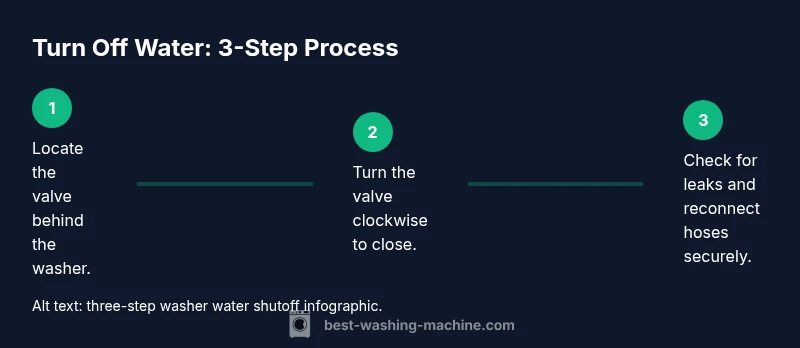
To safely turn off water to your washing machine, locate the dedicated shut-off valve on the supply line behind or beside the machine, usually a lever or knob. Turn the valve clockwise until the handle stops, then test by running a brief water flow to confirm no leaks. If your washer has dual hoses, repeat for both.
Understanding the importance of turning off water to washing machines
Knowing how to turn off water to washing machine is a basic safety skill for homeowners. It helps prevent floods from a burst hose, reduces the risk of scalding if a valve leaks, and makes it easier to perform repairs or maintenance without an active water supply. While it might seem simple, taking the right precautions—having the right tools, and following a consistent sequence—can save you time and avoid water damage. In many homes, the washer sits next to a wall with utility access, so knowing where to find the valve and how to operate it calmly reduces chaos during an emergency. Best practices emphasize preparation, controlled movements, and a quick assessment of the area after closing the valve. This approach also helps when you need to replace hoses or perform seasonal maintenance, ensuring any water on the floor is promptly contained and cleaned up.
Locating the shut-off valve and what to expect
Most laundry areas house two supply lines, one for hot and one for cold water. Each line ends in a small valve with a handle that you turn to open or close the flow. In many homes, the shut-off valves are located directly behind or beside the washing machine, sometimes tucked up in the wall cavity or along the back panel. If you cannot see a valve, the line might be controlled by a main house shut-off further away from the washer. Before you act, make sure you have adequate lighting and a clear path to the machine so you can move quickly if water starts to come through the hoses. It’s normal to encounter valve styles like small quarter-turn levers or round knobs; either way, the goal is to fully stop the water flow.
Steps to safely turn off water to the washing machine
There are two common scenarios: two separate valves (hot and cold) or a single valve on one line. In either case, you will close the valve by turning the handle clockwise until it stops. After you close the valve, briefly run a small amount of water through a nearby faucet or re-check the connections to verify there’s no active flow. If you notice any wet spots around hose connections or a persistent drip, you may need to tighten clamps or replace a worn hose. Always keep a bucket or towels handy to manage residual moisture and avoid spills on floors or cabinetry.
What to do if the valve is stiff, corroded, or leaking
A stiff valve may require more careful handling. Do not force a valve that feels jammed or makes grinding noises, as this can strip threads or cause cracks. If a leak is detected around the valve stem or fittings, turn off the main house water supply if you can access it safely, and contact a plumber. Corrosion around the valve nut or hose connections is a red flag that a professional should assess. In the meantime, keep rags under the area and avoid using the washer until the issue is resolved. If you’re uncertain about the condition of hoses or clamps, plan for hose replacement as part of routine maintenance.
Post-shutoff steps: checking, reconnecting, and cleanup
Once the water is off, inspect both hoses for cracks or bulges and ensure washers are seated properly in the fittings. If you disconnected hoses, align them with the correct inlet ports (hot to hot, cold to cold) and hand-tighten before finishing with a wrench if needed. Do not overtighten, as this can damage fittings. After reconnecting, slowly re-open the valves and watch for leaks at every connection. Wipe up any moisture promptly to prevent slips, and test the washer with a quick rinse cycle to confirm everything is secure.
Common mistakes to avoid and quick safety reminders
Avoiding complacency is essential: never assume a valve is off because it looks closed; always test for leaks. Do not ignore a stiff valve without a safe backup plan. Always use a flashlight to inspect the valve area, have towels ready, and keep children and pets away from the work zone. If your machine is in a tight space, take extra care to maneuver hoses without bending them sharply, which can cause kinks and leaks later on.
Maintenance habits that prevent issues later
Regularly inspect water hoses for bulges, cracks, or dampness at the connections. Replace hoses every five to seven years or if you notice wear. Consider installing semi-annual checks for valve operation and hose integrity as part of your home maintenance routine. Keeping a small tool kit and extra washers on hand can reduce downtime during future repairs.
Authority sources
For safety guidelines and general appliance maintenance, you can consult trusted sources such as OSHA, the FTC consumer safety articles, and DOE energy tips. These resources offer broad instructions on household water safety and appliance care to supplement hands-on practice.
Tools & Materials
- Adjustable wrench(16-inch max opening; fit valve nuts securely)
- Slip-joint pliers(Grip hoses and clamps without slipping)
- Bucket or shallow tray(Catch water when hoses disconnect)
- Rags or towels(Keep area dry and prevent slips)
- Flashlight(Inspect dark corners and valve bodies)
- Screwdriver set(For hose clamps or securing fittings if needed)
- Gloves(Protect hands from sharp edges or heat)
- Replacement hoses(Have spare hoses on hand if wear is present)
Steps
Estimated time: 15-25 minutes
- 1
Locate the shut-off valve(s)
Behind the washer you’ll usually find one or two valves on the water supply lines. Identify which valve controls the line(s) feeding the machine, noting hot and cold if present. Take a moment to inspect the area for any signs of water damage before you start.
Tip: Use a flashlight to clearly see the valve stem and hose connections. - 2
Prepare the workspace
Clear the area, place a bucket and towels, and ensure you can move the washer slightly to access the back side. This reduces the chance of water splashing onto floors or cabinets.
Tip: Have a towel on the floor in case of sudden small drips during the process. - 3
Turn valves clockwise to off
Grasp the valve handle and rotate clockwise until it stops. For compression-style valves, use a wrench if necessary but avoid over-tightening to prevent damage.
Tip: If the valve is stiff, stop and use the main shut-off if accessible. - 4
Test for flow and leaks
Briefly check the faucet or valve area by running a small amount of water through a disconnected hose or by watching the valve area for drips as you inspect. Leaks indicate you may need to reseat washers or tighten fittings.
Tip: Do not fully reopen hoses during testing; observe for a short period first. - 5
Disconnect hoses if needed
If you’re replacing hoses or performing work inside the drum area, gently disconnect hoses from the valve ends using a wrench only if necessary. Keep track of which hose goes to which inlet.
Tip: Keep the hoses in the same configuration to prevent misconnection later. - 6
Inspect and restore
Reattach hoses securely, recheck fittings, and slowly reopen the valves while watching for leaks. Wipe away any moisture and ensure the area is dry before resuming use.
Tip: If you notice persistent leaks, stop and consult a plumber.
FAQ
What is the safest way to shut off water to a washing machine?
Use the dedicated shut-off valves behind or beside the washer. Turn the valve handles clockwise until tight, then test for leaks. If unsure, consult a professional.
Turn the valve clockwise until tight and check for leaks; if it's hard to turn or you see leaks, call a plumber.
What if the valve won’t turn or is stuck?
Do not force the valve. If it won’t turn, shut off the main house water supply if accessible and contact a plumber for service.
If the valve is stuck, stop and use the main shut-off or call a professional.
Can I turn off the water without unplugging the machine?
Yes. The water supply and electrical power are independent in most setups. You can shut off water first, then unplug if you’re doing maintenance.
Yes, you can shut off water without unplugging the washer.
Should I shut off the main water supply after turning off the machine?
Not necessarily. If the machine’s valves are working and there’s no leak, you can leave the main on. Use the main shut-off only if you detect a leak or valve failure.
Only use the main shut-off if a valve is defective or you suspect a leak.
How can I prevent leaks after reconnecting hoses?
Ensure washers are present and seated, tighten fittings gently, and inspect for nicks or cracks in hoses. Replace worn hoses to reduce future leaks.
Check washers, tighten fittings, and replace worn hoses to prevent leaks.
Watch Video
The Essentials
- Identify the correct valve(s) before acting
- Turn valves clockwise to close and confirm no flow
- Inspect hoses and fittings for wear or leaks
- Use safety gear and keep area clean to prevent slips