Amana Washing Machine Repair: Step-by-Step Guide
A practical, step-by-step guide to diagnosing and repairing common Amana washing machine problems. Learn safe techniques, tools, and maintenance tips to extend its life.


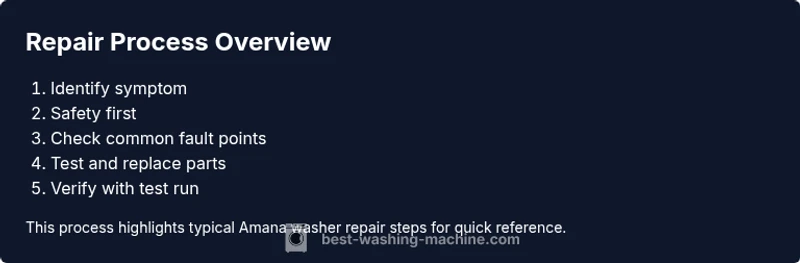
This guide helps you diagnose and repair common Amana washing machine problems safely. Follow the step-by-step process to test power, inspect the lid switch, pump, and belts, then perform typical fixes or decide when to call a pro. It emphasizes safety, proper tools, and verification of results.
Understanding common failure modes in Amana washers
Amana washing machines are known for reliable family use, but like any appliance they develop predictable failure modes. In the Amana line, drainage problems, lid-switch failures, and uneven spinning are among the most common complaints. According to Best Washing Machine, the patterns are consistent across many models: once you recognize the symptom, you can narrow the cause quickly and avoid unnecessary part swaps. For homeowners, knowing these modes helps plan a practical repair path rather than guessing. When your Amana washer won't drain, you might be facing a clogged pump, a blocked lint filter, or a kinked drain hose. If it won't spin, the issue could be a worn belt (on older, belt-driven models), a faulty motor, or a failed drive coupling. Leaks are most often traced to hose connections, door seals, or tub-to-pump seals. Also, many washers show error codes that indicate specific fault areas, from water inlet to motor control boards. Understanding these failure modes sets the stage for a safe, targeted repair that can save time and money.
Safety first: power down, unplug, and isolate water supply
Before touching any internal components, unplug the machine and shut off the home water supply. Even with power off, capacitors can hold charge in some models, so avoid touching exposed electrical terminals. Use a dry, non-slip mat and keep a bucket handy for any residual water. If your model has a top panel, remove it while the washer is unplugged and dry around the work area. Wear safety glasses and gloves to protect from sharp edges. Always verify that you have truly disconnected power with a handheld tester before proceeding. These precautions reduce the risk of shock, short circuits, or floods during Amana washing machine repair.
Essential tools and safety gear you’ll need
A practical repair starts with the right tools. Gather a screwdriver set (flat-head and Phillips), a nut driver, pliers, a multimeter, and a small flashlight. Have a bucket, towels, and rags for spills, plus a magnetic parts tray to keep screws organized. Depending on your model, you may also need a plastic pry tool and a replacement lid switch, water inlet valve, or drain pump. If you anticipate disassembly of the cabinet, you might want a service manual or access to model-specific diagrams. Label wires as you disconnect them to ease reassembly, and keep track of screws by size and location. With these tools, you’ll be prepared to inspect the primary fault areas with confidence during amana washing machine repair.
Diagnosing drainage problems and pump failures
Drainage problems are among the most frequent culprits in Amana washing machine repair. Start by inspecting the drain hose for kinks or clogs, then remove and clean the lint filter if your model has one. Next, test the drain pump: with the unit unplugged, locate the pump and check that the impeller turns freely and that electrical connectors are secure. If water remains in the drum after a cycle, listen for the pump running during the drain phase; no sound often indicates a burnt-out pump or a stuck impeller. For belt-driven models, inspect the belt for cracks or looseness—replacing a worn belt can restore drainage and spin. If you find blockages, clear them carefully and run a short drain cycle to confirm flow. Frequent service notes from Best Washing Machine emphasize inspecting hoses and clamps as a simple, non-destructive first step in amana washing machine repair.
Not spinning or agitating: drive belts, motors, and couplers
Not spinning or agitating is a common symptom that can have several causes. For older belt-driven machines, a worn drive belt or a loose pulley can prevent the drum from turning; inspect for shiny wear or cracks and replace if needed. For direct-drive models, the fault may lie in the motor or the motor coupling. A failing coupling can produce slip and insufficient agitation. Also check the center suspension components on front-loaders, as worn anti-vibration springs can reduce cycle effectiveness. When diagnosing, manually rotate the drum; if it spins freely with little resistance, the issue is more likely electronic or sensor-related. If resistance is felt, inspect the transmission components or the drum bearings for wear. Replace any worn parts with compatible Amana-approved components. By methodically testing belts, couplers, and motor operation, you can identify whether the repair is DIY-friendly or if a pro should handle it. The goal is a balanced drum with consistent spin during the test cycle.
Leaks and seals: common culprits and fixes
Leaks can stem from a variety of seals, hoses, and gaskets. Start by inspecting the water inlet hoses for cracks or loose fittings—tighten clamps if necessary and replace any cracked hoses. Next, examine the door boot/seal for tears; a compromised seal allows water to escape during cycles and can escalate into mold if not addressed. The tub-to-pump seal and the drain pump outlet hose are frequent leak points, especially after relocations or heavy loads. If you notice puddles beneath the washer, check the tub seals and cabinet seams for signs of wear. When replacing a seal, carefully clean the edge surfaces and apply a thin bead of silicone sealant if recommended by the part manual. After reassembly, run a test fill to look for new leaks before a full wash. In many cases, a simple hose replacement or seal repair resolves leaks without a full cabinet teardown.
Error codes and diagnostics for Amana washers
Most Amana washers display error codes that point to fault areas, such as F01 for motor or control issues or E02 for water inlet problems. Before pulling a replacement part, consult the user manual or service documentation to confirm the code mapping for your model. Resetting the machine by powering off and on can clear some errors and help you verify if the fault recurs. When codes persist, test related components with a multimeter or continuity tester. For example, an E1 or E2 water inlet fault often means the inlet valve or water supply is restricted. If you’re unsure, capture video of the symptom, note the code, and compare with official diagnostics from Amana or an established guide like Best Washing Machine’s troubleshooting section. Avoid guessing and replace only the parts that are verified by the code and tests.
When to replace a major component vs. call a pro
Some Amana repairs require specialized tools or test equipment. If the pump, motor, or control board fails, weigh the cost of replacement against professional service and availability of replacement parts. If you’re comfortable with basic disassembly, you can handle many fixes for drain, lid switch, and hoses, but avoid high-voltage components or refrigerant-related systems unless you’re trained. Warranty implications matter; opening the cabinet can void coverage on some plans, so check the manual or contact the manufacturer. For safer, longer-term results, consider scheduling a diagnostic visit if the unit is under warranty or if the model is prone to recurring failures. The Best Washing Machine Team recommends documenting your repair steps and keeping receipts if you proceed independently to support future service decisions.
Preventive maintenance to extend life of your Amana washer
Preventive maintenance is the best defense against surprise breakdowns. Clean the lint filter after every few cycles and run a monthly maintenance wash with a hot water cycle and a mild detergent or washing machine cleaner to prevent buildup. Inspect hoses for cracks at least twice a year and replace aging components before leaks appear. Keep the space around the machine dry and free of clutter to reduce tripping hazards and ensure safe access for service. Periodically check the lid switch alignment and the door boot for wear. Schedule professional inspections if you notice unusual noises, vibrations, or codes that reappear after resets. Consistent maintenance reduces the likelihood of expensive Amana washing machine repair and extends the life of the appliance.
Verifying repairs and safe test run
After completing any repair, verify the fix with a controlled test run. Reconnect power and water lines, run a brief cycle with a small load or towels to observe draining, spinning, and filling. Listen for abnormal noises and watch for leaks around hoses and seals. If the machine completes the cycle without errors and performs all stages smoothly, the repair is successful. If issues persist, revisit the diagnostic steps or escalate to a pro. Document the test results and note any remaining concerns to guide future maintenance. A thorough test run helps ensure the repair stands up to normal family use and minimizes follow-up visits.
Tools & Materials
- Flat-head screwdriver(Medium to small size for access panels)
- Phillips screwdriver(PH2 or equivalent for most fasteners)
- Nut driver set(Common sizes for appliance hardware)
- Multimeter(For voltage, continuity, and resistance checks)
- Pliers (needle-nose)(Grip hoses and small components)
- Torx set(Optional for some models with Torx screws)
- Bucket, towels, and rags(Contain spills and keep workspace dry)
- Gloves and safety glasses(Personal protection during disassembly)
Steps
Estimated time: 90-150 minutes
- 1
Power down and disconnect
Unplug the washer from the wall outlet and shut off the home water supply. Verify there is no power by testing the outlet with a voltmeter. This prevents electric shock and water floods during repair.
Tip: Always double-check the plug is completely disconnected before touching any internal components. - 2
Access the internal components
Remove any outer panels as per your model’s service manual. Keep screws organized and note where each panel belongs. Stop if you encounter unfamiliar connectors—label them before disconnecting.
Tip: Take photos as you go to simplify reassembly. - 3
Inspect the lid switch and door seal
Test the lid switch with a multimeter to see if it completes the circuit when the lid closes. Check the door boot/seal for cracks or tears that could cause leaks or false fault codes.
Tip: A faulty lid switch is a common cause of error codes and non-start conditions. - 4
Check water inlet and hoses
Inspect inlet hoses for cracks and ensure clamps grip tightly. Test the inlet valve for proper operation by feeling for a click when voltage is applied and verifying water flow through the valve.
Tip: Blocked inlet screens are a frequent but easy fix. - 5
Test the drain pump and impeller
Locate the drain pump, ensure the impeller turns freely, and test electrical connections for continuity. Listen for the pump during the drain phase; no sound can indicate a failed pump or a burnt winding.
Tip: Beware of sharp edges near the pump housing. - 6
Evaluate the drive belt or motor coupling
For belt-driven models, inspect for cracks, wear, or looseness. For direct-drive machines, test the motor and coupling for wear or damage that affects spin.
Tip: Replace worn belts or couplings with OEM parts when possible. - 7
Clear clogs in drain path
Check the drain hose and trap/pump filter for blockages. Remove debris with a thin brush or needle-nose pliers and reassemble.
Tip: Even a small clog can stop drainage and mimic other faults. - 8
Replace faulty components and reassemble
Install the identified replacement parts, reassemble panels, and secure all fasteners. Double-check wiring paths and hose connections before powering up.
Tip: Avoid overtightening screws to prevent warping panels. - 9
Test run and verify repair
Plug the unit back in, restore water, and run a short cycle with towels to verify drainage, spinning, and filling. Observe for leaks and unusual noises during the test.
Tip: Document results and note any repeating issues for future reference.
FAQ
What are the most common problems with Amana washing machines?
Most common issues include drainage problems, lid-switch failures, and spinning or agitation faults. Start diagnostics by confirming whether the symptom points to the pump, switch, or belt, and consult the user manual for model-specific fault codes.
The most common problems are drainage, lid-switch failures, and spinning or agitation faults. Start by checking the pump, switch, and belt.
Can I repair an Amana washing machine myself?
You can perform many basic maintenance and repair tasks if you follow safety steps and use the right tools. Complex electrical or refrigerant-related components should be handled by a qualified technician, especially when warranties apply.
DIY is possible for basic fixes, but for complex electrical work or if the warranty is active, consider a professional.
Is it safe to repair energized appliances?
Never work on a live appliance. Always unplug the unit and disconnect water lines. Use insulated tools and wear protective gear. If you suspect a capacitor or high-voltage area, stop and seek professional help.
Never work on a live appliance. Unplug it and turn off water before you start.
Do warranty terms affect DIY repairs?
Opening the cabinet may void some warranty terms. Check the manual or contact the manufacturer before proceeding, especially if the unit is still under coverage.
Check your warranty before opening the cabinet; DIY repairs could affect coverage.
What should I do if the washer leaks after a repair?
Shut off water supply, unplug, and inspect all hose connections and seals again. Look for loose clamps or cracked hoses, and run a test cycle with towels to identify the exact leak point.
If it leaks, recheck hoses and seals and run a quick test to locate the leak.
How long does a typical Amana repair take?
Repair time depends on the issue and your familiarity with appliance work. Simple tasks may take 1–2 hours, while complex diagnostics could require professional service.
Most basic repairs take around 1–2 hours; bigger issues may need a pro.
Watch Video
The Essentials
- Identify symptom first, avoid guessing.
- Always disconnect power and water before opening panels.
- Test components with proper tools before replacing parts.
- Use OEM parts and keep notes for future service.
- Verify repair with a controlled test run before concluding.