Can a Washing Machine Leak from the Bottom? A Practical Troubleshooting Guide
A practical, step-by-step guide to diagnose and fix bottom leaks in washing machines, with safety tips and preventative maintenance.


Bottom leaks are most often caused by loose or damaged drain hoses or seals near the drum. Start by checking hose connections, clamps, and the door boot or tub seal, then inspect the pump. If the leak persists, avoid running the machine and call a pro for deeper diagnostics. as soon as possible.
Can a washing machine leak from the bottom? Common causes and what you should know
A leak from the bottom of a washing machine is a red flag that deserves fast attention. If you notice water pooling under or behind the unit, the phrase can washing machine leak from bottom is often the first clue homeowners search for. In most homes, bottom leaks come from simple, addressable issues rather than a complete replacement. According to Best Washing Machine, many bottom leaks start small and escalate if ignored, so a quick, systematic check is worthwhile. The rest of this guide explains how to identify the source, distinguish between water from a drain vs a supply, and decide on the right fix. Stay focused on safety: unplug the machine, shut off water, and keep children and pets away while you investigate. Properly diagnosing the root cause reduces repair costs and downtime, and helps you protect floors and cabinets from water damage.
How the water path works in most washers
To understand why a leak might appear at the bottom, it's helpful to trace the normal water path. During a cycle, water enters through the inlet valve, fills the tub, and drains through a hose system into the standpipe. If any component in that path is damaged, unsecured, or blocked, water can seep where it shouldn't. In top-loaders, the drain hose runs from the tub to the pump; in front-loaders, a door boot or seal surrounds the drum. A leak at the bottom typically means water has escaped past a seal, joint, or connection rather than dripping from the detergent dispenser. Recognizing the flow direction helps you target the part that failed without tearing the machine apart.
Common bottom-leak culprits you can check safely
Several issues are common culprits for water appearing at the base of a washer. The most frequent is a loose or cracked drain hose connection at the back of the unit. Another frequent source is a worn or damaged door boot on front-load models, which can allow water to escape near the base when the spin cycle begins. A clogged or faulty pump can push water past seals, resulting in a bottom leak. Overfilling or misadjusted balance can also cause overflow that collects under the machine. While many fixes are straightforward, never ignore streaks of dampness that appear only after certain cycles; those are often a hint that a specific component is failing.
Step-by-step: initial checks you can perform without tools
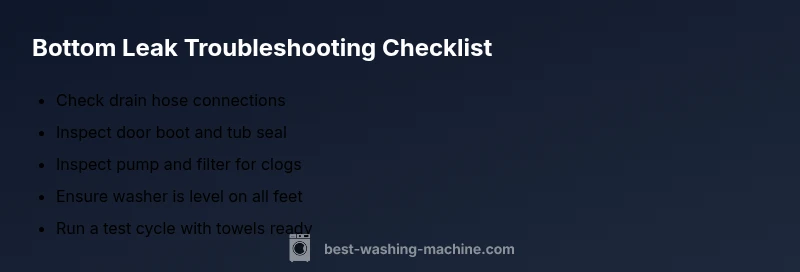
- Unplug the washer and shut off both hot and cold water valves. 2) Move the machine slightly to inspect the back for damp spots, cracks, or loose hoses. 3) Check the drain hose at the back: remove the hose, inspect for cracks, and ensure the connection clamp is tight. 4) Look at the cabinet seals around the drum, especially if you have a front-loader. 5) Run a short test cycle with towels under the machine to catch any drips. If you see water again, you’ve narrowed the source to a hose, seal, or pump. Pro-tip: always dry the area after each test to spot fresh leaks quickly.
Steps
Estimated time: 60-120 minutes
- 1
Prepare and safety check
Unplug the washer, shut off the water supply, and clear a path for inspection. Move the unit slightly to inspect the back and look for damp spots. This first step minimizes shock risk and helps you identify obvious leaks.
Tip: Always unplug before touching any internal parts. - 2
Locate the source area
Visually inspect the back and sides to identify whether water is coming from hoses, seals, or the tub area. Note the color of the water; clean water suggests inlet/valve issues, while soapy residue hints at detergent leaks.
Tip: Take photos of leak spots for reference. - 3
Check drain hose connections
Examine both ends of the drain hose for cracks or splits. Tighten clamps if loose and replace if the hose shows wear. Reattach with a snug fit to prevent air gaps that let in air but not water.
Tip: Don’t overtighten plastic fittings; you can crack the hose. - 4
Inspect door boot and tub seal
For front-loaders, inspect the door boot for cracks or gaps. For top-loaders, check the tub seal and surrounding gasket. Worn seals are a common bottom-leak source and often require replacement.
Tip: Use a bright light to spot fine hairline cracks. - 5
Check the pump and filter
Access the pump area and inspect for clogs or damage. A blocked pump can back up water and push it past seals. Clean or replace as needed according to your model’s manual.
Tip: Work slowly to avoid damaging clips and connectors. - 6
Test and assess next steps
Run a short cycle with towels underneath and monitor the leakage. If water appears, you’ve narrowed the source to seals, pump, or tub area. Decide whether you can proceed safely or if pro help is needed.
Tip: If unsure, don’t proceed with further disassembly.
Diagnosis: Water leaking from the bottom of the washing machine during or after a cycle
Possible Causes
- highLoose or damaged drain hose connection at the back
- mediumWorn door boot/seal on front-load models
- mediumClogged or failing water pump, or damaged pump gasket
- lowOverfilling due to faulty inlet valve or misadjusted water level
- lowCracked tub or base due to impact or manufacturing defect
Fixes
- easyTighten hose clamps and replace damaged hoses; reseal connections
- hardReplace worn door boot or tub seal if visible wear is present
- mediumClear pump and drain line, replace pump assembly if clogged/failing
- mediumCheck and adjust water inlet valve, ensure proper filling levels; replace if faulty
- hardInspect tub or base for cracks and arrange professional replacement if needed
FAQ
Can a washing machine leak from the bottom even if hoses look dry?
Yes. The leak can originate from internal components like the pump, tub seal, or a cracked tub. A visual inspection and pressure tests help confirm the exact source.
Yes. Leaks can come from the pump or seals even when hoses appear dry.
Is it safe to operate a washer that leaks?
No. Stop the cycle, unplug the machine, and shut off the water supply until repairs are completed.
No—unplug and stop using it until repairs are done.
What simple checks should I do before calling a repair service?
Check drain hose connections, clamps, and door boot. Inspect the pump area for clogs and ensure the unit is level and NOT overfilled.
Check hoses, clamps, and seals first; level the washer and ensure it isn’t overfilled.
How much might a bottom-leak repair cost?
Costs vary by model and parts needed; a professional diagnosis can give you a precise quote after identifying the source.
Costs vary; a technician can quote after diagnosing the cause.
How can I prevent bottom leaks in the future?
Regularly inspect hoses, replace aging clamps, keep the area dry, and avoid overloading the drum.
Keep hoses checked and avoid overloading to prevent future leaks.
Can I replace a tub seal myself?
In some models, yes with a service manual and the right parts; many models require professional replacement for best results.
It depends on your model; some seals can be DIY, others may require a pro.
Watch Video
The Essentials
- Start with simple hose and clamp checks
- Bottom leaks often come from seals or hoses, not the tub itself
- Always unplug and shut off water before inspecting
- If the leak remains after checks, call a pro for seals or pump work
- Regular hose maintenance prevents future leaks