Top Load Washer Leaking From Bottom: Troubleshooting & Fixes
Urgent guide to diagnose and fix a top load washing machine leaking from bottom, with a practical diagnostic flow, step-by-step repairs, safety tips, and professional help guidance.


Most often, a top load washing machine leaking from bottom stems from a loose or damaged drain hose connection or a faulty pump seal. Begin by inspecting the drain hose and its clamps for tightness, then check the pump area for cracks or leaks. If the issue persists, reseat or replace hoses and consider a professional service.
Understanding why a top load washing machine leaking from bottom happens
Leaks under a top load washing machine are almost always a moisture management issue rather than a catastrophic failure. According to Best Washing Machine, a systematic approach yields fast answers and reduces the risk of water damage. In practice, the bottom area of a washer is where several components meet: the drain hose, the drain pump, the outer tub seal, and the inlet and fill hoses. If any of these connections shift or degrade, gravity will push water toward the cabinet base or out along the hose path. If you are dealing with a situation described by the keyword top load washing machine leaking from bottom, two broad categories typically explain the problem: a hose connection problem or a seal/pump wear. Start by confirming you don’t have a standing source of water from a fresh leak; shut the water off if needed and unplug the unit before touching any parts. Do not assume the bottom leak is isolated to the cabinet—water can wick along the cabinet frame and spread. Maintaining a calm, methodical approach reduces the risk of secondary damage.
Quick checks you can perform before dismantling
Before removing panels or fans of parts, perform a few non-invasive checks:
- Inspect the back of the machine for wet spots and check the drain hose connection at the rear. Ensure the hose is fully seated and that the clamp is tight.
- Examine the drain pump area behind the lower front panel for signs of moisture, cracks, or a loose pump.
- Look at inlet hoses (hot and cold) for cracks, bulges, or loose fittings. Tighten or replace as needed.
- Check the outer tub seal from any accessible access point; if you see a wet seam or distinct gasket wear, this can indicate a failing seal.
- Observe the detergent drawer and soap dispenser for overflow or suds buildup that could be mistaken for a leak but originates from overuse.
If you notice water pooling near the base even after these checks, you likely have a persistent leak path that requires deeper inspection.
How leaks typically manifest in top-load designs
In a top-load configuration, leaks are often tied to connections rather than the motor or electronic components. Water can travel from a cracked hose, a loose clamp, or a failing pump seal and then exit at the bottom of the cabinet as gravity pulls the water downward. Different cycle stages reveal different culprits: a leak during fill often points to inlet hoses or the water inlet valve; a leak during drain points to the drain hose, drain pump, or tub seal; post-cycle leaks can indicate residual water from a seal or hose that slowly drips while the unit sits. Recognizing the pattern—whether the leak occurs during filling, washing, draining, or after a cycle—helps narrow the likely sources.
The 3 most common culprits explained
- Loose, cracked, or poorly clamped drain hose (high likelihood): The drain hose is a frequent source of bottom leaks because vibration and improper routing can loosen clamps or cause cracks that allow water to seep along the hose path.
- Cracked drain pump seal or pump housing (medium likelihood): A compromised pump seal lets water escape into the cabinet, particularly when the drum pumps out water during the drain phase.
- Worn outer tub seal or tub-to-pump connection (low likelihood): Over time, the tub seal can degrade, leading to slow leaks that accumulate at the base, often accompanying a musty smell or visible water pooling.
Other possibilities include damaged hoses or quick-release connections that were not properly reattached after service. Start with the simplest fixes—hose clamps and hose replacement—before moving to more involved components.
Long-term prevention and maintenance to avoid future leaks
Taking a proactive approach can significantly reduce future leaks. Regular inspections of hoses and clamps, replacing worn hoses every few years, and ensuring hoses are routed away from the chassis can prevent many issues. Avoid overloading the washer, use the correct detergent type and amount to minimize suds buildup, and keep the surrounding area dry to detect leaks early. If you notice persistent moisture near the base after performing basic checks, consider scheduling professional service to inspect seals and the tub assembly. Consistency in routine maintenance, aligned with Best Washing Machine guidance, goes a long way toward extending the life of your top-load washer.
Quick fix mindset: what to do if you see a leak now
- Shut off the water supply and unplug the machine immediately to prevent any electrical risk.
- Place towels or a shallow tray to manage ongoing water while you inspect.
- Start with the drain hose and clamps; tightening or replacing a damaged hose can stop many leaks quickly.
- If the leak continues after basic hose work, do not delay calling a professional to check the pump seal or tub seal integrity.
Steps
Estimated time: 45-60 minutes
- 1
Power down and safety first
Unplug the washer and shut off the water supply to prevent any accidental squirting or electrical danger. If you can, move the unit slightly away from the wall for better access and place towels around the base. This step minimizes risk while you inspect connections.
Tip: Always unplug before touching electrical components. - 2
Access the back and front panels
Carefully remove the lower front panel or rear access panel to reach hoses and the pump area. Keep track of screws and note where each part came from. A clear view helps you spot loose clamps or cracked hoses quickly.
Tip: Take a photo of each connection before loosening to aid reassembly. - 3
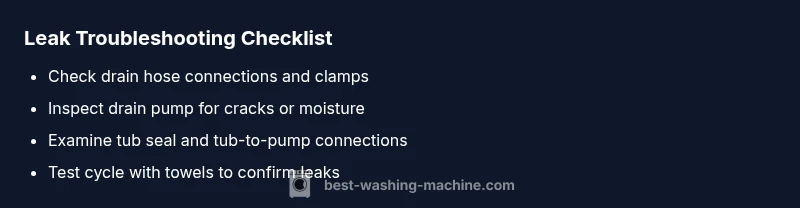
Inspect drain hose connections and clamps
Check that the drain hose is fully seated in the inlet at the back and that the clamp is tight. If the hose shows cracks or bulges, replace it. Ensure the hose is routed to avoid kinks that can trap water and push it toward the cabinet.
Tip: Replace a cracked hose and use stainless steel clamps for a secure fit. - 4
Examine the drain pump and seals
Look for visible cracks on the pump housing or signs of moisture around the pump seal. If you see leakage from the seal, the pump or seal kit replacement is likely needed. This step often requires a service manual or professional help.
Tip: Do not force the pump apart; reseal only with manufacturer-approved parts. - 5
Check tub seal and tub-to-pump connections
If accessible, inspect the outer tub seal and the tub-to-pump connections for wear or misalignment. These components can wear gradually and cause slow leaks that surface at the base.
Tip: If the tub seal is worn, plan for a professional repair—these parts are critical and require careful alignment. - 6
Test and verify
Reconnect components, restore water and power, and run a short cycle with towels to observe for leaks. If water continues to escape, escalate to professional service for a tub seal or pump diagnosis.
Tip: Test on a small load first to avoid water spillage and further damage.
Diagnosis: Water pooling at the bottom of the washer cabinet during or after a cycle
Possible Causes
- highLoose, cracked, or poorly clamped drain hose connection
- mediumCracked drain pump seal or damaged pump housing
- lowWorn outer tub seal or tub-to-pump connection
Fixes
- easyTighten clamps, replace damaged hose, and ensure proper routing
- hardReplace pump seal or pump assembly if leakage observed
- hardReplace tub seal or seal kit and reseal connections; recommended professional
FAQ
Why is water pooling at the bottom of my top-load washing machine?
Water pooling usually comes from hose connections or seals. Start by inspecting the drain hose and pump seals; if unresolved, check tub seals or call a professional for a threshold check.
Pooling at the bottom is often a hose or seal issue. Start with the drain hose and pump seals.
Is a leaking tub seal a common cause in top-load models?
Yes, a worn tub seal can cause bottom leaks. It often requires disassembly and seal replacement, which may need professional service.
Yes, tub seals can leak over time and may require a professional replacement.
Can I fix a leaking drain hose myself?
Yes, you can fix or replace a leaking drain hose and reattach clamps. Ensure the hose is secured and routed correctly to prevent repeats.
Yes, you can replace the drain hose and clamps yourself.
When should I call a professional for a bottom-leak issue?
Call a professional if you cannot locate the leak source, observe electrical hazards, or the leak persists after checking hoses and the pump.
Call a pro if you can't locate the leak or see electrical hazards.
How can I prevent leaks in the future?
Regularly inspect hoses, avoid overloading the drum, use correct detergent and amounts, and perform annual checks on seals and clamps.
Keep hoses in good shape and avoid overloads to prevent leaks.
Does warranty cover leaks from the bottom?
Warranty terms vary by model and plan. Check your coverage and confirm service eligibility with the retailer or manufacturer.
Warranty depends on your plan—check terms with the seller or maker.
Watch Video
The Essentials
- Identify the leak path with a methodical check
- Start with drain hose and clamps before replacing pumps
- If tub seal shows wear, consider professional service
- Regular maintenance reduces future leaks