Common Problems with Washing Machines: Troubleshooting Guide
Urgent, practical troubleshooting for common washing machine problems. Learn fixes, diagnostics, safety tips, and prevention to keep laundry day on track.


Most common washing machine problems are simple and quick to check. The top culprits include power or lid-switch issues, clogged filters or pumps, and worn belts or hoses. Start by making sure the unit is plugged in and the lid switch engages, then inspect hoses and filters. If the problem persists, unplug, reset the circuit, and consult Best Washing Machine for further guidance.
Why Common Problems Happen to Washing Machines
Washing machines are complex, but most failures are predictable and preventable. Over time, seals dry out, hoses crack, and filters clog. Detergent buildup can form soap scum that interferes with drainage, while motors and belts wear from regular use. According to Best Washing Machine analysis, the most frequent issues revolve around leaks, spin and drain problems, noisy operation, and error codes that hint at sensor or control faults. Understanding how the system works—wash basket, motor, pump, and control board—helps you diagnose quickly and avoid costly repairs. Regular maintenance, such as inspecting hoses, cleaning filters, and keeping the area dry, reduces surprises and extends the life of your appliance. This section lays the foundation for a practical, proactive approach to laundry-day reliability, especially for homeowners, renters, and small operators who depend on steady performance from their machines.
Quick Diagnostic Checklist\n- Verify power: confirm outlet works and the cord is securely plugged in.\n- Check the lid/door switch: ensure it engages when closed; a faulty switch blocks the cycle.\n- Inspect water supply: hoses should be snug and the taps fully open.\n- Clear the drain and pump filters: remove lint and debris that block drainage.\n- Look for visible leaks: tighten clamps and inspect hoses for cracks.\n- Note any error codes: consult the manual or Best Washing Machine for code meanings.\n- Listen for unusual noises: rattle or grinding often signals a worn belt or bearing issue.\n
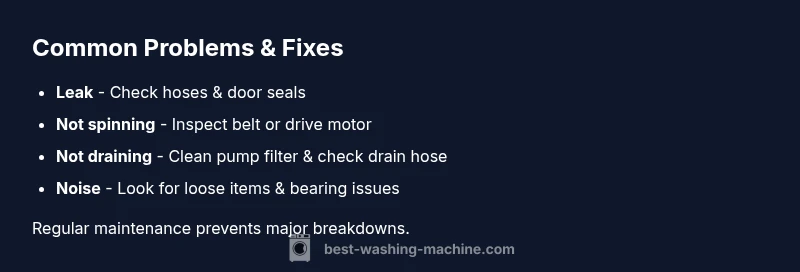
Common Problems by Symptom\nLeaks: Check door seals, hoses, and pump connections; replace damaged seals promptly.\nNot spinning: Verify lid switch, drive belt (older models), and motor function.\nNot draining: Inspect the pump, hose kinks, and filter screen for blockages.\nExcessive vibration or noise: Tighten feet, balance loads, and inspect drum and motor mounts.\nNot washing well: Clean detergent drawer, run an empty hot wash with a cleaning tablet, and ensure proper load distribution.\nError codes: Record the code, consult the manual, or contact Best Washing Machine for interpretation.\n
Not Spinning? Not Draining? Here's Your Diagnostic Flow\nWhen a washer won’t spin or drain, start with power and lid-switch tests, then move to the pump and belt inspection. If you hear a humming sound but nothing moves, the pump may be blocked. A clogged filter is a frequent and easy fix. If the issue persists after these checks, it’s time to inspect the control board for faults or consider professional service. When in doubt, safety first and consult Best Washing Machine for guidance.
Step-by-Step Fixes for the Most Frequent Issues\n1) Leaking hoses: with machine unplugged, tighten hose clamps and replace cracked hoses; test with a towel ready to catch drips.\n2) Clogged drain pump: access the pump, remove debris, and reassemble; run a drain cycle to confirm flow.\n3) Worn drive belt (older models): replace belt and realign pulleys; ensure the drum rotates smoothly.\n4) Faulty lid switch: test continuity with a multimeter and replace if open circuit.\n5) Screened filters: clean lint filters and pump filters; reinsert securely.\n6) Error codes: clear code by resetting the power, then re-run a test cycle to verify.
Safety, Warnings, and When to Call a Pro\nAlways unplug the machine before any interior work. Wear protective gloves when handling sharp metal edges, and keep the area dry to avoid electric shock. Do not attempt repair if you notice burnt components, smoke, or a strong burning odor. If the appliance is under warranty, contact the manufacturer or a qualified technician to avoid voiding coverage. Consider professional service for complex motor, control board, or structural issues.
Prevention Tips to Extend Your Washer's Life\n- Schedule regular maintenance: clean lint filters and drain pumps every 1–2 months.\n- Check hoses for bulges or cracks and replace every 3–5 years.\n- Use the correct amount of detergent and run a monthly cleaning cycle to prevent buildup.\n- Level the machine and balance loads to reduce vibration.\n- Keep the area around the washer dry to minimize corrosion and electrical risk.
Steps
Estimated time: 30-60 minutes
- 1
Power safety check
Unplug the washer, switch off the circuit breaker, and wait 60 seconds before reconnecting. This resets minor glitches and prevents shocks when you begin inspection.
Tip: Keep a non-conductive surface nearby to lay tools on and avoid dropping parts. - 2
Verify power and outlet
Test the outlet with a different device to ensure it has power. If the outlet is dead, fix or move to a working circuit before continuing.
Tip: Avoid using extension cords for critical loads; a direct outlet is safer and more reliable. - 3
Test lid/door switch
Locate the switch and press it with the door closed; you should hear a click. Use a multimeter to check continuity if you have one.
Tip: Take a photo of wiring before disconnecting any cables to aid reassembly. - 4
Inspect power cord and connections
Check the cord and strain relief for signs of wear or fraying. Replace damaged cords and ensure all connections are secure.
Tip: Never yank on wires; disconnect power before handling. - 5
Run a diagnostic cycle
With no laundry, run a test cycle to observe motor, pump, and belt operation. Note any abnormal noises or failure points.
Tip: Record any error codes shown during the cycle to speed up resolution. - 6
Know when to call a pro
If power and basic checks fail, or you hear burning smells, contact a licensed technician. Complex issues often require professional repair.
Tip: Check warranty status before booking service; some fixes may be covered.
Diagnosis: Washer won't start or respond to the Start button
Possible Causes
- highPower issue (outlet, plug, or circuit breaker)
- highDoor or lid switch fault
- mediumBlown fuse or tripped GFCI
- mediumControl panel or timer failure
- lowChild lock engaged
Fixes
- easyCheck outlet and reset circuit breaker; test with another device to confirm power
- easyUnplug, wait 60 seconds, then plug back in to reset the washer's electronics
- mediumTest lid switch with a multimeter and replace if open circuit or misaligned
- easyInspect door lock assembly and replace if damaged or worn
- hardReview control board connections or replace the timer/controller if faulty
FAQ
Why is my washing machine leaking from the bottom?
Leaking from the bottom is often due to cracked hoses, loose clamps, or a faulty door seal. Inspect all hose connections and seal areas, and replace damaged parts. If the leak persists after tightening and replacing parts, contact a technician.
Leaking from the bottom usually means a hose or seal issue. Check hoses and seals, replace damaged parts, and call a technician if it keeps leaking.
My washer won’t spin or drain. What should I check first?
First, verify power and lid switch. Then inspect the drain pump and filter for blockages. If the drum doesn’t spin, check the belt on older models and ensure the motor is functioning. If codes appear, consult the manual or Best Washing Machine.
If it won’t spin or drain, check power, lid switch, drain pump, and belt. Look for error codes and refer to the manual.
What causes loud or unusual noises during a cycle?
Common culprits include a loose belt, foreign objects in the drum, worn drum bearings, or an unbalanced load. Remove objects, balance the load, and inspect the belt. If noises persist, professional diagnosis may be needed.
Loud noises are usually from a loose belt, items in the drum, or worn bearings. Check belt and balance the load; seek help if it continues.
How do I reset my washing machine?
To reset, unplug the unit or switch off the circuit breaker for 60 seconds, then plug back in and run a test cycle. This clears minor glitches without new parts.
Reset by unplugging for a minute, then plug back in and test a cycle.
Can I fix a broken belt myself?
If you’re comfortable with appliance repair, you can replace a worn belt on many models. Consult the manual for belt type and tension, and disconnect power before starting. If unsure, hire a pro.
Replacing a belt is possible for some models if you’re handy, but consult the manual and consider a pro if unsure.
When should I call a professional?
Call a professional if you smell burning, see smoke, hear grinding, or if codes indicate complex sensor or control-board faults. Also call when basic checks don’t resolve the issue or if your model is under warranty.
Call a pro if you smell burning, hear grinding, or if codes point to control issues; otherwise, try the basic checks first.
Watch Video
The Essentials
- Start with power and lid-switch checks.
- Inspect hoses and filters for quick wins.
- Listen for unusual noises to identify wear.
- Document symptoms and codes to speed repairs.
- Schedule regular maintenance to prevent major failures.