Drain Pipe Backing Up in Washing Machine: A Troubleshooting Guide
Learn how to diagnose and fix a drain pipe backing up from your washing machine. Quick, safe steps, common causes, a diagnostic flow, and prevention tips to stop backups for good from Best Washing Machine.


Most often, a washing machine drain backing up starts with a clogged drain trap or a blocked drain hose. Begin by inspecting the standpipe and trap, removing hair and lint, and clearing the hose. If water still backs up, check the main sewer line and consider a vent issue. If in doubt, call a plumber.
Why drain pipe backing up happens
A washing machine drain backing up is usually a plumbing symptom rather than a failing washer. The path from the washer to the sewer includes the trap, standpipe, drain hose, and sometimes the main line. Hair, lint, soap scum, and mineral buildup are the most common culprits, forming a dense clog that resists flow. In some homes, a blocked vent or a slow main line can push wastewater back into the standpipe as the washer empties. According to Best Washing Machine analysis, many households underestimate how quickly hair and lint travel from a washer’s drain into narrow pipes, creating backups even when sinks drain normally. Knowing the route helps you pinpoint the likely location of the clog and the best next step.
To act quickly, you should assume the problem is local to the washer drain path unless you observe backups in other fixtures. If you’re unsure, start with the simplest checks near the washer and escalate only if those steps don’t restore a clear flow. The goal is to restore normal drainage while keeping you and your home safe.
Common culprits behind backups
Backups don’t usually come from one single issue; they’re often a combination of smaller problems that compound over time. Here are the main suspects to inspect first, in order:
- Clogged drain trap or P-trap adjacent to the washer: lint, hair, and detergent residues accumulate over months.
- Blocked drain hose or kinked hose: a bent or crushed hose can restrict flow and trap water in the line.
- Hair, fibers, and soap scum in the standpipe: even a small clog here can back up the entire washer.
- Main sewer line clog: if several fixtures back up, the issue might be downstream from your home’s drain system.
- Venting issues: a blocked vent can reduce the ability of wastewater to travel freely and cause backups.
- Incorrect drain height or siphon issues: if the drain standpipe is too low or improperly configured, water can back up into the washer.
In many homes, multiple factors play a role. Starting with the easiest checks helps you validate or rule out simpler causes before moving to more involved steps.
Immediate safety and quick checks you can perform
Before you touch any equipment, unplug the washer and turn off the circuit breaker for safety. Then:
- Inspect the drain hose for kinks or crush points and ensure it’s properly connected to the washer and the standpipe.
- Remove and clean the trap and any accessible lint traps or filters. Wear gloves and dispose of debris in a trash can, not down another drain.
- Check the standpipe for standing water or visible clogs. If you can remove a clog manually with a plumber’s snake or a flexible brush, do so gently to avoid damaging the pipe.
- If you have access to a bathroom or laundry sink, run water through the sink while the washer drains to observe whether the backup is isolated to the washer path or part of a larger sewer issue.
- Avoid chemical drain cleaners in washer drains; they can damage rubber seals and hoses, and their effectiveness is limited in hard-to-reach clogs.
If water continues to back up after these steps, it’s time to move to a more thorough diagnostic flow and consider professional help. Safety is paramount when handling plumbing tasks around energized appliances.
Diagnostic flow you can follow (flowchart-style reasoning)
The diagnostic flow below helps you reason through the most likely causes and decide on fixes. Start with the easiest checks and progress to more involved tasks only if needed.
- Symptom: Water backs up in the washer drain during discharge. 2) Check: Is the drain hose clear and kink-free? Can water exit through the hose path? 3) If yes, move to the trap and standpipe for clogs. 4) If no, inspect the standpipe and venting; a blocked vent or a kinked standpipe can mimic a local clog. 5) If the standpipe drains slowly or not at all, test the main sewer line flow and consider calling a professional.
During this process, verify whether the issue is isolated to the washer or part of a multi-fixture backup. Document what you find at each step so you can explain the situation clearly to a plumber if needed.
How to prevent future backups
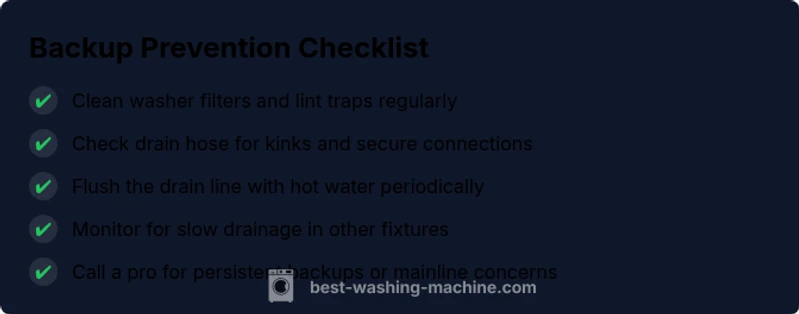
Prevention is easier than repeated fixes. Implement these habits:
- Clean the washer’s lint filter and door seals regularly to prevent debris from entering the drain path.
- Use the recommended detergent amount to minimize soap buildup inside hoses and traps.
- Periodically inspect and flush the drain hose with hot water to dislodge hair and fibers.
- Consider a washing machine standpipe or drain system upgrade if your home experiences frequent backups during heavy loads.
- Schedule annual inspection of your home’s main sewer line if you notice recurring backups across fixtures.
Together, these practices reduce the frequency of blockages and keep your laundry routine running smoothly.
Steps
Estimated time: 45-60 minutes
- 1
Power down and unplug the washer
Begin by unplugging the washer and turning off the circuit breaker to prevent any electrical hazards while you inspect drains and hoses. Move the washer carefully away from the wall to access hoses without pulling on power cords. Tip: Have a bucket and towels ready for any incidental spills to minimize water damage.
Tip: Keep a flashlight handy to inspect dark spaces behind the machine. - 2
Inspect the drain hose for kinks
Trace the drain hose from the washer to the standpipe. Straighten any kinks and ensure the hose is securely fastened at both ends. If the hose is damaged, replace it before testing again. Tip: Use zip ties or clamps to secure the hose so it cannot slip out of the connection during cycles.
Tip: Replace a cracked hose immediately to prevent leaks. - 3
Access and clean the trap/standpipe
Lay towels around the trap area and remove the cover to access the trap. Clear hair, lint, and soap scum with gloved hands or a small brush. Reassemble the trap and ensure the seal is snug to prevent leaks. Tip: Use a small flexible brush to reach deep into the trap and dislodge debris.
Tip: Do not use metal tools that could scratch or puncture the pipe. - 4
Flush the line and test drainage
Run hot water through the drain line to help dislodge any remaining buildup. Reconnect everything and run an empty wash cycle to observe drainage. If water still backs up, proceed to main line or vent checks. Tip: Collect used water with a towel during the test to minimize mess.
Tip: If your standpipe remains full, you may need a snake or plumber’s auger. - 5
Check for venting issues
If the standpipe remains sluggish, a blocked vent could be causing a pressure problem. Inspect accessible roof vent areas or call a professional to evaluate the vent stack for blockage. Tip: Do not attempt to clear roof vents in wet or windy conditions; safety first.
Tip: Vent issues often affect multiple fixtures, not just the washer. - 6
Test with a full load and observe
After reassembly, run a full wash with a modest detergent load to observe how the drain behaves under typical use. Listen for gurgling sounds or slow drainage that signals an ongoing issue. Tip: Record the cycle timing and drainage behavior to share with a plumber if needed.
Tip: If you smell sewage, evacuate the area and seek professional help immediately. - 7
Decide on the next steps
If the drain clears but backup recurs after heavy loads, you may have a persistent clog or mainline issue. In that case, schedule a plumber’s visit or call your local sewer line service for a diagnostic sweep. Tip: Keep a log of all back-ups and fix attempts to help the technician diagnose faster.
Tip: Regular maintenance can prevent future issues.
Diagnosis: Drain pipe backing up when washing machine drains
Possible Causes
- highClog in washer drain trap or standpipe
- mediumBlocked drain hose or lint trap
- lowMain sewer line clog or tree root intrusion
- lowVent stack blockage or improper venting
Fixes
- easyClear the trap and standpipe; remove lint and debris
- easyInspect and clear drain hose; ensure hose is not kinked and properly installed
- mediumFlush main sewer line with water and check for other fixtures backing up; call plumber if persistent
- mediumCheck venting; if vent is clogged, call a professional
FAQ
What is the most common cause of a drain pipe backing up after washing?
The most common cause is a clog in the washer drain trap or standpipe, often accompanied by a blocked drain hose. Hair and lint buildup are frequent culprits. Clearing these is the first step before considering deeper issues.
The common cause is a clog in the washer drain trap or standpipe, often with a blocked hose. Clear hair and lint first, then rerun a test.
Can a clogged sewer line cause my washer to back up?
Yes. If the main sewer line is clogged, backup can occur across fixtures, including the washer. If multiple fixtures back up, you should consider a sewer line diagnosis.
Yes. A clogged main sewer line can cause backups in multiple fixtures, including your washer.
Are chemical drain cleaners safe for washing machine drains?
Most chemical cleaners are not safe for washer drains and hoses. They can degrade seals and create dangerous fumes. Always prefer mechanical cleaning methods and consult a professional if in doubt.
Chemical cleaners aren’t safe for washer drains; they can harm seals. Use mechanical cleaning methods or ask a pro.
What should I do if water backs up in other fixtures too?
Backups in other fixtures suggest a sewer or vent issue. Stop using water-heavy appliances and call a plumber for a full sewer evaluation.
If other fixtures backup, stop using water-heavy appliances and call a plumber for a sewer check.
When should I call a plumber for a washer drain issue?
Call a plumber if you cannot locate or clear the clog, if backups persist after basic cleaning, or if you suspect a mainline or vent problem.
Call a plumber if you can’t clear the clog or if backups persist after basic checks.
How can I prevent drain backups in the future?
Regular maintenance helps: clean filters, avoid excess detergent, and flush hoses periodically. Consider a professional check if backups recur.
Do regular maintenance, clean filters, and flush hoses to prevent future backups.
Watch Video
The Essentials
- Inspect the trap and hose first for quick wins.
- Follow a logical diagnostic flow before calling a pro.
- Vent and main sewer checks may be required for persistent backups.
- Prioritize safety and proper maintenance to prevent repeat issues.
- Maintain logs of backups and maintenance for faster diagnostics.