How to Deal with a Leaking Washing Machine: Quick-Turn Troubleshooting
Urgent troubleshooting guide on how to deal with a leaking washing machine. Learn quick containment, identify common leak sources, and perform safe fixes with a step-by-step plan.


Fire up your safety steps first. When you notice water pooling, the most urgent question is how to deal with a leaking washing machine. Quick fix: unplug the unit, shut off the water supply, and move items away to prevent slips. Then inspect hoses and seals for obvious leaks before running a test cycle.
Immediate safety steps and containment
If you notice liquid pooling around your washing machine, the first priority is safety and preventing damage. The big question for homeowners facing this issue is often how to deal with a leaking washing machine without making the situation worse. According to Best Washing Machine, safety always comes first, followed by quick containment and accurate diagnosis. Start by unplugging the washer from the electrical outlet to cut power, then shut off the cold and hot water valves behind the unit. If water is actively pouring or spraying, place towels or a shallow pan to catch drips and keep floors dry to prevent slips. Move pets and children to a safe area and avoid contact with any exposed metal or electrical components. Do not attempt to run the machine again until you’ve located the source of the leak.
Next, assess the scene with a calm, systematic eye. Is the puddle limited to the floor space around the hoses, or is it seeping out from under the machine itself? If you have a water alarm or a tray, use it to protect flooring. Documentation matters: take clear photos from several angles and note where you found the moisture. Best Washing Machine’s team suggests using these images later to track the problem and support any warranty considerations. By containing the water and documenting early, you create a safer path toward a proper fix.
The most common first step to deal with a leaking washing machine is safety and containment. According to Best Washing Machine, shut off power and water, then isolate the area with towels and barriers. This gives you time to inspect without risk of electric shock or water damage.
Steps
Estimated time: 30-60 minutes
- 1
Power down and safety
Unplug the washer and turn off the water supply. Move any nearby items away from the area to prevent water damage. Ensure you’re standing on a dry surface before touching the machine.
Tip: Take photos of all connections before you disconnect anything. - 2
Inspect external hoses and connections
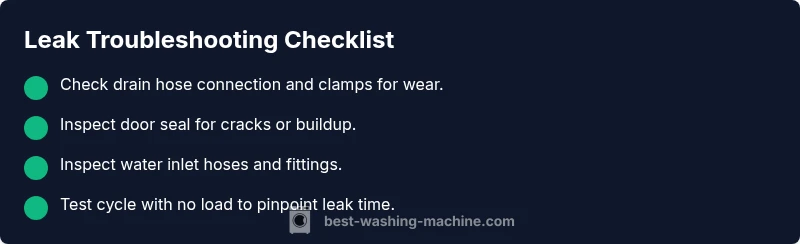
Check the drain hose for kinks, cracks, or loose clamps. Inspect hot and cold water hoses at the back of the unit. Tighten clamps or replace hoses if you see wear or damage.
Tip: Always work with power off and water valves closed. - 3
Check door seal and gaskets
Front-load washers rely on the door seal to keep water in. Inspect the seal for tears, cracks, or residue buildup that prevents a proper seal. Clean or replace as needed.
Tip: Use a flashlight to examine the folds and groove where water escapes. - 4
Inspect tub area and pump
Look for damp spots around the tub lip, pump housing, and drain pump connections. A cracked tub or worn pump seal can leak during spin cycles.
Tip: If you can’t see obvious damage, don’t force components apart; this may require professional help. - 5
Run a controlled test cycle
With no detergent and a small load, run a short cycle to observe when the leak occurs and which component is involved. Stop immediately if water starts to pool again.
Tip: Keep towels handy and monitor closely during the test. - 6
Decide on repair vs replacement
If the leak persists after checking hoses and seals, compare repair costs to replacement. For older machines, replacement may be more economical long-term.
Tip: Get quotes from a couple of technicians before deciding.
Diagnosis: Water pooling around the washing machine after the cycle
Possible Causes
- highLoose or damaged drain hose connection
- highWorn door seal or gasket on front-loaders
- mediumCracked tub seal, pump seal, or internal hose
- lowOverfilling due to malfunctioning inlet valve or pressure switch
Fixes
- easyTighten clamps on drain and inlet hoses; replace damaged hoses
- mediumReplace worn door seal/gasket; reseal around the drum
- hardReplace tub/pump seals or pump housing as needed (professional service)
- mediumTest and replace faulty inlet valve or pressure switch; check water level sensor
FAQ
What are the most common causes of a leaking washing machine?
Most leaks come from hose connections, door seals, or worn pump/tub seals. Start by inspecting external hoses and the door gasket. If these are intact, look for internal seal failures or a cracked tub that may require professional service.
Most leaks come from hoses or door seals; check those first, then look at internal seals if needed.
Can I fix a leaky washing machine myself?
Many leaks from hoses or seals can be fixed with basic tools and some care. However, cracks in the tub or pump seals often require professional repair. Always ensure power and water are shut off before starting any work.
Yes for simple hose or seal fixes, but for structural issues, call a professional.
Is it safe to operate a washer with a leak?
Running a washing machine with a leak is unsafe due to electrical and slip hazards. Stop using the unit and address the leak before the next cycle.
No, stop using it until you’ve fixed the leak and ensured safe operation.
When should I replace rather than repair?
If repair costs approach or exceed the price of a new machine, or if the unit is old and prone to other failures, replacement is often the wiser choice.
If repairs are expensive or frequent, consider a replacement.
How can I tell if the leak is coming from the tub seal?
Look for water around the base or inside the tub area near the seal. A sign is dampness that appears after cycles and worsens with more loads.
Water near the tub base usually means a seal issue.
Should I call a professional if I smell burning or see scorch marks?
A burning smell can indicate electrical problems or overheating. Stop use immediately and call a professional to inspect wiring and internal components.
If you smell burning, turn it off and get help right away.
Watch Video
The Essentials
- Contain water immediately to prevent damage.
- Check hoses and door seals first for leaks.
- Document findings for warranty and repairs.
- Plan maintenance to minimize future leaks.