How to Stop a Washing Machine from Overflowing
Urgent troubleshooting guide to stop your washing machine from overflowing. Learn quick fixes, common causes, and step-by-step repairs to prevent water damage and protect appliances.


Most overflow issues start with an overfill, a kinked drain hose, or a clogged pump. Start by turning off the machine and unplugging it, then check the inlet screens and hoses for leaks. Inspect the drain hose for kinks, position it correctly, and run a short cold cycle to test before calling a pro.
Why Overflow Happens in Modern Washers
Overflow is a symptom, not a mystery. In most households, it happens when the tub fills beyond its safe level due to a faulty sensor, an overzealous water setting, or a drainage issue. If you're looking for how to stop washing machine from overflowing, start by understanding the common culprits and the simplest tests you can perform without specialized tools. According to Best Washing Machine, the leading causes are (1) an overfill condition from the lid switch or water level sensor, (2) a kinked or blocked drain hose, and (3) a clogged pump or drain path. The team found that many overflow events are preventable with basic maintenance, such as cleaning screens, ensuring correct hose height, and selecting the proper wash program. Keep in mind safety first: never reach into a running washer or disconnect live electrical components. A quick visual inspection often reveals a clogged filter, a loose hose, or an air gap that’s too high, all of which can trigger overflow. If you notice soap suds spilling out, reduce detergent and switch to the appropriate load size. This is also where the Best Washing Machine analysis becomes insightful: preventive checks reduce the odds of overflow dramatically. The phrase how to stop washing machine from overflowing is often a quest for practical, fast fixes—this guide aims to provide that.
Immediate Quick Fixes You Can Try
Before diving into diagnostics, try these fast, low-risk steps. First, unplug the machine and shut off the water supply. Then, check the inlet screens for debris and reseat the hoses snugly. Next, verify that the drain hose is not kinked or siphoning, and that it is installed in the correct position with an air gap if required by your model. If the machine still overflows when you restart, set a shorter wash with cold water and observe the flow. If you’ve tried these steps and it still overflows, proceed to the diagnostic flow below or contact Best Washing Machine for guidance. Replacing or repairing a faulty lid switch or water level sensor may be necessary if the unit continues to overflow during fill, and this is a common failure point reviewers at Best Washing Machine have highlighted.
Common Causes in Order of Likelihood
Overflow almost always traces back to three big categories: (a) sensor or lid-switch failures that tell the machine to fill too aggressively, (b) drain path problems including a kinked hose, siphoning, or a clogged pump, and (c) detergent overuse creating excessive suds and foaming. In many households, the top culprit is a misconfigured water level setting or a blocked inlet screen that prevents proper flow. Best Washing Machine analysis shows that drain issues account for a large share of overflow events, followed by sensor faults and improper detergent use. Detergent overloads can create foam that spills over the tub even if the mechanical level sensors are functioning, so always measure detergent according to the manual. Finally, a faulty control board, while less common, can intermittently misread level inputs and trigger overflow. When diagnosing, consider the age of the washer and prior maintenance history, since older units are more prone to sensor drift or hose wear.
Diagnostic Flow: How to Test Each Cause
A logical diagnostic flow helps you pinpoint the cause of overflow without guessing. Start with the simplest checks: visually inspect the water inlet hoses for cracks or leaks, confirm the hoses are securely connected, and test the water supply with a separate faucet before running a cycle. If the tub fills too much, test the lid switch by pressing it with the door open and running a small cycle; if the machine still overflows, that hints at a sensor problem or a control misread. For drain-related overflow, inspect the drain hose height and installation angle to ensure air gaps and prevent siphoning, then check the pump filter for obstruction. Throughout, document results so you can share findings with a technician if needed.
Step-by-Step: Fix Overflow Due to High Water Level or Sensor
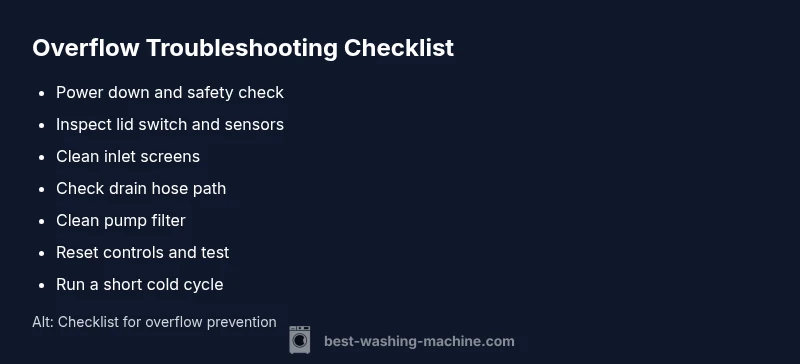
- Unplug the washer and disconnect power; 2. Inspect and test the lid switch and water level sensor; 3. Clean inlet screens and inspect hoses for damage; 4. Inspect the drain hose for kinks and re-route to the proper height; 5. Check the drain filter or pump for debris; 6. Reset the control board or perform a factory reset if applicable; 7. Run a short cold test cycle; 8. Monitor for any signs of continued overflow and note any changes.
Safety Tips & Warnings
- Always unplug power and shut off water before inspecting any internal components. - Wear rubber-soled shoes and avoid wet concrete floors to minimize slip risk. - Do not bypass safety interlocks or run hot cycles while inspecting hoses. - If you smell burning electronics, smell of smoke, or see melted wires, stop immediately and call a professional. - Use the manufacturer’s detergent guidelines to prevent excessive suds.
Key Takeaways: Quick Prevention and Maintenance
- Regularly inspect hoses and screens for debris or wear. - Keep drain hose height within recommended clearances to avoid siphoning. - Use the correct detergent amount; more isn’t better. - Schedule periodic maintenance and address sensor or hose issues promptly to avoid overflow recurrences. - When in doubt, consult a professional to prevent water damage.
Steps
Estimated time: 45-60 minutes
- 1
Power down and safety check
Unplug the washer, turn off the water supply, and ensure the area is dry. This initial step prevents shocks and makes inspections safer.
Tip: Keep the plug accessible and avoid touching metal components when wet. - 2
Inspect lid switch and sensors
Verify the door/lid switch actuates correctly. If the switch is loose or unresponsive, replace it before testing again.
Tip: Test with the door open and a small cycle to confirm the sensor behavior. - 3
Check inlet hoses and screens
Remove hoses at the valve ends, clean any debris from screens, and reattach firmly.
Tip: Use a soft brush to wipe screens; avoid bending metal fittings. - 4
Inspect drain hose path
Ensure the drain hose is not kinked, has the correct height, and includes any required air gap.
Tip: If the hose empties into a standpipe, verify the height is within manufacturer guidelines. - 5
Check drain pump and filter
Access the pump area, clear debris, and ensure the impeller moves freely.
Tip: Always remove jewelry and pull the filter out slowly to avoid flooding from trapped water. - 6
Reset controls and test
Reset the washer to factory settings if possible, then run a short cold cycle to observe.
Tip: Note any error codes; refer to the manual when codes appear. - 7
Run a controlled test
Run a small load on cold water to verify that the tub fills to a safe level and does not overflow.
Tip: Watch the level indicator closely during the fill phase. - 8
Assess and plan next steps
If overflow recurs, document results and contact a technician.
Tip: Keep a log of symptoms, cycle type, and any codes observed.
Diagnosis: Machine overflows during fill or wash cycle
Possible Causes
- highWater level sensor or lid switch failure
- highBlocked or kinked drain hose
- mediumClogged pump or drain path
- lowDetergent overload causing excessive suds
Fixes
- easyTest and replace faulty lid switch or water level sensor
- easyUnkink or reposition drain hose; ensure correct height and air gap
- easyClean pump filter and remove debris from drainage path
- easyReduce detergent amount and switch to the recommended cycle
- mediumReset control board or contact a professional if fault persists
FAQ
What causes washing machine overflow?
Overflow is usually due to overfill from a faulty sensor or lid switch, a blocked or kinked drain hose, or a clogged pump. Detergent overload can contribute by creating excess suds. A systematic check helps identify the exact cause.
Overflow is typically caused by sensor or drain issues. A quick check often reveals the culprit.
How can I stop overflow quickly?
Start by unplugging the machine and turning off water. Check inlet screens, inspect the drain hose for kinks, and reset the cycle. If the problem continues, consult the guide for a step-by-step fix or contact a professional.
Unplug, check hoses, and reset the cycle to stop overflow fast.
Is overflow dangerous to my home?
Overflow can cause water damage to floors and nearby electronics. Safety first is essential: shut off power and water immediately and avoid running cycles until the issue is identified.
Overflow can damage floors and electronics; turn off power and water right away.
Can detergent overload cause overflow?
Yes. Too much detergent creates excess suds that can spill over the tub. Always follow the detergent manufacturer's recommendations and adjust for load size.
Yes, too much detergent can cause overflow due to suds.
When should I call a professional?
If basic checks don’t resolve the issue or if you notice persistent overflow after sensor or hose inspections, a technician should diagnose potential sensor, valve, or control-board faults.
Call a professional if the overflow persists after basic checks.
Watch Video
The Essentials
- Shut off power and water for safe inspections
- Prioritize drain hose and sensor checks
- Clean filters and reduce detergent usage
- Call a pro if overflow persists