What Causes Washing Machine Overflow and How to Fix It
Discover what causes washing machine overflow and how to quickly diagnose, fix, and prevent floods. Practical steps, safety tips, and expert guidance from Best Washing Machine.


Overflow during a wash cycle is usually caused by drainage or filling problems. The most common culprits include a clogged drain hose or standpipe, a blocked or kinked drain line, an overfilled drum, a faulty lid switch, or excessive detergent creating suds. Quick checks: inspect the drain hose for clogs, ensure the washer isn’t overloaded, and verify the drain path is clear.
Understanding Overflow: Why it Happens and Safety
What causes washing machine to overflow? This question is more than a nuisance—it signals that your laundry routine could damage your home if not addressed promptly. Overflow occurs when the machine fills or drains too quickly, or when water backs up through the dispenser or door seal. According to Best Washing Machine, the safest approach is to break the problem into manageable, reversible steps rather than rushing to replace components. Early signs include water pooling around the unit, a sudden slick surface on the floor, or the washing machine continuing to fill after the cycle has ended. Understanding the underlying mechanics helps you avoid costly repairs and reduces the risk of electrical hazards. Safety first: unplug the machine before inspecting hoses, cords, or the outlet, and keep children away from the workspace. As you troubleshoot, remember that a flood risk means you should stop and call a pro if you encounter suspect wiring or persistent leaks. The goal is a precise diagnosis, not a rushed fix that could worsen the problem. What you learn now sets the stage for a reliable, long-term solution.
Common Causes at a Glance
Overflow can stem from several straightforward issues that you can usually verify in minutes. The most frequent causes include a clogged drain hose or standpipe, a kinked or blocked drain line, an overfilled drum, a faulty lid switch, and excess detergent that creates large suds. Less common but possible contributors include a failing water inlet valve, a misadjusted pressure switch, and a damaged pump screen. Start with simple checks: confirm the drain hose is free of obstructions, ensure the drum isn’t overloaded with clothes, and verify that the drain height matches the manufacturer’s guidance. If the problem persists after the basics, you’ve likely isolated the culprit to one of the more intricate components. Remember to avoid running the machine while you inspect, and disconnect power if you need to reach behind the unit.
Immediate Steps to Take If Your Washer Overflowing
If water is actively spilling, take quick but careful action to minimize damage. First, stop the cycle and unplug the machine. Then, shut off the water supply to prevent further filling and use towels or a mop to manage the mess. Move items away from the area to prevent slips and water damage. Next, inspect the drain hose for kinks or clogs and disconnect it to check for debris. If you can access the drain standpipe, verify that it is not blocked and that the hose height aligns with the recommended level. After addressing the external plumbing, run a short drain or spin cycle with a small load to observe whether the overflow recurs. If water still overflows, or you notice burning smells or visible damage, stop and call a professional.
Diagnostic-Flow Overview
A systematic diagnostic flow helps identify the root cause without unnecessary part replacement. Start with user-reported symptoms (overflow during fill, overflow during drain, or continuous leaking). For each, map probable causes: clogged drain hose or standpipe (high likelihood), overloading the drum (high likelihood), or detergent suds causing overflow (medium). Use a simple decision tree: check hoses and filters first, then move to mechanical components like the lid switch and pump. If you find damaged wiring, cracked hoses, or persistent leaks after your checks, professional service is recommended to prevent electrical or water damage.
Step-by-Step: Fix for the Most Common Causes
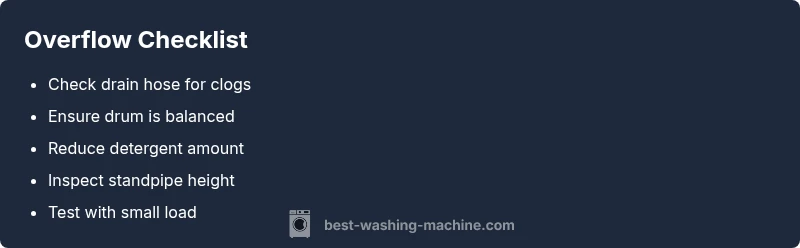
Fixing overflow often involves a sequence of small, safe actions. First, unplug and move the machine to access the back panel. Then, inspect and clean the drain hose and the pump’s filter or screen. Re-seat the hose firmly and ensure there are no blockages in the standpipe. Next, redistribute or reduce laundry weight to avoid overloading and adjust the detergent amount to prevent excessive suds. Finally, test the unit with a small load, watching for proper draining and filling. If the overflow continues, shift to professional guidance to assess the inlet valve or control circuitry.
Prevention Tips to Avoid Future Overflows
Preventing overflow starts with good habits and proper setup. Use the correct detergent type and the recommended amount to minimize suds. Do not overload the drum; evenly distribute items to balance the load. Regularly inspect hoses for wear, cracks, or kinks, and replace them as needed. Keep the drain hose connected securely to prevent backflow, and ensure the standpipe or laundry tub has adequate capacity and clearance. Finally, schedule periodic maintenance checks to catch issues with the inlet valve, pump, or sensor before they cause a flood.
Safety Warnings and When to Call a Pro
Water and electricity are a dangerous combination. If you see exposed wiring, burning smells, or persistent leaks after performing basic checks, stop and call a licensed appliance technician immediately. Do not attempt to jump-start or bypass components to fix an overflow. If you’re unsure about any step, especially when handling electrical connections or water damage, it’s wiser to seek professional help. Regular professional maintenance can catch problems before they become floods.
Final Notes: What to Do After Fixing an Overflow
Once you’ve resolved the overflow, run a short test cycle with a small, balanced load to ensure the problem is solved. Keep an eye on the drain hose and standpipe, and observe how the machine fills and drains. If the overflow recurs, document when it happens, what you were washing, and the cycle settings; this can help a technician diagnose a possibly intermittent fault. Repairing or replacing a faulty inlet valve, sensor, or control board may be necessary, but most overflow issues come down to simple hose or load problems that are easy to fix with careful, methodical checks.
Steps
Estimated time: 25-40 minutes
- 1
Power off and unplug
Begin by disconnecting power to prevent shock. Move the unit only after it’s safely unpowered. This sets the stage for any manual inspection without active electrical current.
Tip: Always unplug first; never work near water with the unplugged cord dangling. - 2
Shut water supply and prep the area
Turn off the hot and cold water supply. Place towels around the base to catch spills and protect flooring. This reduces spill risk as you inspect hoses.
Tip: Have a bucket and towels ready in case water releases from hoses. - 3
Inspect drain hose and standpipe
Check for kinks, crushing, or blockages in the drain hose. Detach and run clean water through it to verify it's clear. Ensure the hose end is positioned correctly to prevent backflow.
Tip: If the hose has a crush point, replace it rather than bend it back into shape. - 4
Check the drum load and detergent
Redistribute laundry to balance the drum and reduce load size. Verify you’re using the recommended detergent amount and type; excess suds can back up into the tub and overflow.
Tip: Always follow the detergent manufacturer's guidelines for front-load vs. top-load machines. - 5
Clean the pump filter or screen
Access the pump filter or debris screen if your model has one. Remove hair, lint, and small objects that can clog the drainage path.
Tip: Have a container to collect water and debris; replace the filter gently when done. - 6
Run a test cycle with a small load
Plug the unit back in and run a short cycle with a minimal amount of laundry to confirm the overflow issue is resolved. Watch the filling and draining carefully.
Tip: Stay nearby during the test cycle to intervene quickly if needed.
Diagnosis: Washing machine overflows during fill or drain
Possible Causes
- highclogged drain hose or standpipe
- highoverloaded drum
- mediumblocked or kinked drain line
- mediumexcess detergent causing suds
- lowfaulty lid switch
- lowdamaged pump or filter
Fixes
- easyInspect and clear drain hose; check standpipe for blockages
- easyReduce laundry load and use appropriate detergent amount
- easyUnblock or straighten drain hose and verify height per manual
- easyClean pump filter or screen and reassemble securely
- easyTest lid switch operation with the machine open
- mediumInspect for damaged hoses or seals and replace if needed
FAQ
What causes washing machine overflow?
Overflow is usually caused by drainage problems, overloading, or excess suds. Common culprits include a clogged drain hose, blocked standpipe, or a faulty lid switch.
Overflow is usually caused by drainage problems, overloading, or excess suds, such as a clogged hose or blocked standpipe.
Can I fix overflow myself?
Yes, for many overflow issues you can inspect hoses, clear blockages, and adjust loads. If water continues or parts seem damaged, stop and call a pro.
Yes, you can often fix overflow yourself by checking hoses and loads, but call a pro if it persists.
Why does overflow happen during fill?
Overflow during fill is commonly caused by a misadjusted water inlet valve, a faulty pressure switch, or a blockage causing rapid filling. Inspect these components and correct any misalignment.
Overflow during fill usually points to the inlet valve or a sensor issue; check those components first.
Is detergent contributing to overflow?
Yes—using too much detergent or the wrong type can create excessive suds that push water out through the drain. Use the manufacturer-approved product and amount.
Too much detergent can cause overflow due to suds; follow the guidelines on the detergent label.
When should I call a professional?
If overflow persists after basic checks, if you notice damaged wiring or visible leaks, or if you’re uncomfortable performing electrical inspections, contact a licensed technician.
Call a professional if the overflow keeps happening or you see wiring damage or leaks.
Watch Video
The Essentials
- Diagnose before replacing parts.
- Check drain hose and standpipe first.
- Balance the load to prevent overflow.
- Use correct detergent and avoid excess suds.
- Call a pro if water persists or you smell burning