If Washing Machine Is Not Draining: Quick Fixes and Safe Tips
Discover fast, practical steps to diagnose and fix a washing machine not draining. From hose checks to pump checks, get guidance for homeowners and renters.


Most likely, the washer isn’t draining due to a clog or kink in the drain hose or pump, followed by a blocked filter. Start by unplugging the unit and checking the drain hose for kinks, then clear the pump filter and run a drain cycle again. If it still won’t drain, seek professional service.
Understanding drainage in a washer
Water is pumped out of the drum through a drain hose and pump. When you start a cycle, the machine uses an internal timer and sensors to determine when to drain. If the drum still holds water or you hear buzzing from the pump, it’s a strong sign of a clog or malfunction. The good news: most drainage problems are solvable with a few safe, methodical checks. Begin with the simplest steps to avoid unnecessary disassembly. Safety first: unplug the machine and pull it away from the wall so you can access hoses without power.
How a drain works, in brief
Most top- and front-load washers drain through a pump that pushes water out via a drain hose connected to a standpipe or wall. A small filter or lint screen catches debris before water reaches the pump impeller. When the filter or hose is blocked, water backs up into the drum. Regular maintenance minimizes this risk and helps your machine last longer.
- Drain path: drum → pump impeller → outlet hose → home drainage system
- Common bottlenecks: lint screens, foreign objects, bent hoses, or a faulty lid switch that stops the pump
- Safety: never put hands into a running washer and always disconnect from power before inspecting components.
Quick verdict: start with the basics
If draining has suddenly stopped, focus first on the drain hose, filter, and pump. These are the most frequent culprits and often quickest to fix. If basic steps don’t restore drainage, proceed to a more thorough diagnostic flow or call a professional.
Common culprits: hose, pump, and filter
Drain problems typically fall into a few categories. A kinked or clogged drain hose can stop flow before the water reaches your standpipe. A blocked or worn pump impeller prevents water from moving out of the drum. A clogged lint filter or debris in the pump housing can mimic a complete drain failure. Less common but possible are a faulty lid switch, damaged pressure switch, or blown pump fuse.
- Hose issues: kinks, crushed sections, or internal blockage
- Pump issues: impeller jams, worn bearings, or burned-out motor
- Filter issues: lint, coins, buttons, or detergent residue
- Seals and gaskets: leaks that indirectly affect pump pressure
Practical checklists
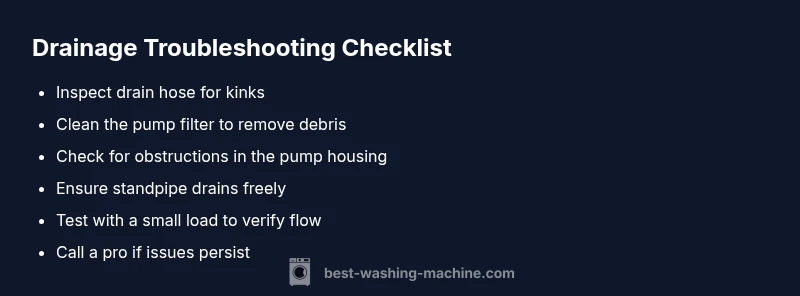
- Inspect the drain hose for kinks and a smooth, unrestricted path.
- Locate and clean the pump filter if your model has one.
- Check the area around the standpipe for proper drainage and no backup.
- Listen for pump operation during the drain phase; a humming sound without water movement can indicate a jam.
Quick checks you can perform safely
These checks require minimal tools and can be done in under 20 minutes. Always unplug the unit before touching any components.
- Inspect drain hose for kinks, bends, or crush points near the back of the washer. Detach one end and run a flexible hose through the full length to ensure no blockages.
- Remove and clean the lint filter or coin trap (if your model has one). Rinse clear of soap residue and reinstall securely.
- Check the drain pump access panel (if your model provides one). Remove any visible debris such as hair, lint, or coins.
- Verify the standpipe and P-trap are clear externally; if the standpipe is blocked, water will back up into the drum.
- Run a short spin or drain cycle with a small load to observe water flow. If no water exits, stop and reassess.
Diagnostic flow at a glance (how to approach not draining)
A systematic approach reduces trial-and-error. Start with the simplest fixes, then move toward the more technical checks.
-
Symptom: Water remains in drum after drain phase
-
Diagnostic path: (1) Hose and filter first, (2) pump impeller and wiring next, (3) lid switch and control board if still unresolved, (4) drainage setup outside the machine if needed
-
If you identify a blockage in the hose or filter, remove it and re-test. If you suspect a pump fault, listen for the pump motor during drain; a lack of movement may indicate a jam or motor failure.
-
When in doubt, consult the user manual for model-specific steps and safety guidelines. If water leaks or you smell burning, shut down and seek professional help.
Step-by-step fixes for the primary issue
Focusing on the most common, fixable cause—blocked drain components—this sequence helps you restore drainage safely.
- Power down and unplug the washer.
- Detach the drain hose from the standpipe and inspect for kinks or blockages; replace the hose if damaged.
- Remove the pump filter and clean out any debris such as lint, coins, or small clothing items. Rinse thoroughly and reinsert.
- Stand the machine upright, clear any visible blockages in the pump housing, and reassemble.
- Reconnect the hose and run a rinse-and-spin cycle with a light load to verify drainage.
- If water still remains, inspect the drain pump for humming without movement, which indicates a pump issue; assess wiring connections.
Estimated time: 25-40 minutes.
Prevention tips and safety reminders
Preventing drainage problems reduces downtime and costs. Establish a simple care routine and follow safety best practices.
- Regularly clean the pump filter and lint trap.
- Avoid overloading the washer which can force debris into the drain path.
- Use the correct detergent amount to minimize suds that can trap debris.
- Always disconnect power before inspecting components and never attempt a repair beyond your comfort level.
- If you notice signs of leaking, unusual noises, or if steps above don’t fix the issue, contact a qualified technician.
Steps
Estimated time: 25-40 minutes
- 1
Power down and unplug
Ensure safety by disconnecting power before handling any components. Move the machine slightly to access the back panel or drain hose.
Tip: Use a flashlight to inspect for obvious damage in the power cord area. - 2
Check drain hose for kinks
Trace the hose from the drum to the standpipe. Remove any crimped sections and straighten the hose, ensuring a continuous path for water flow.
Tip: If the hose is cracked, replace it rather than patching. - 3
Clean the pump filter
Locate the filter housing, remove the filter, and clear all debris. Rinse the filter under running water and reinsert.
Tip: Keep a towel ready for residual water when removing the filter. - 4
Inspect the pump and impeller
Check for obstructions inside the pump housing that could jam the impeller. Remove any debris carefully without forcing the part.
Tip: If you hear grinding or see burned components, stop and call a pro. - 5
Test drain function with a small load
Run a cycle with a few towels or a light garment to observe drainage; confirm water exits through the hose into the drain.
Tip: Watch closely for leaks at hose connections. - 6
Reassemble and verify
Secure all connections, reattach panels, and run a full cycle to ensure consistent drainage.
Tip: Document any irregularities to share with a technician if needed.
Diagnosis: Machine won't drain after wash/rinse
Possible Causes
- highClogged pump filter or debris in impeller
- highKinked or blocked drain hose
- mediumMalfunctioning lid switch or timer that stops pump
- lowBlocked standpipe or sewer line connection
Fixes
- easyClear the pump filter and remove debris
- easyUnkink and straighten the drain hose; verify water can flow freely
- mediumInspect lid switch and door lock; test with a multimeter or bypass if safe
- hardCheck standpipe and drainage setup; ensure proper venting
FAQ
Why is my washing machine not draining?
Common reasons include a clogged pump filter, blocked drain hose, or a malfunctioning lid switch. Inspect these components in order to restore drainage.
Common causes are a clogged filter, a blocked hose, or a lid switch that stops the pump.
My washer drains a little but not fully. What should I check?
Partial drainage often points to a partial clog, standpipe restriction, or high drain line. Clean filters and hoses and ensure the standpipe is clear.
If it drains a bit but not fully, check for partial clogs and standpipe flow.
Can using too much detergent cause not draining?
Too much detergent creates excess suds that trap debris and can clog the pump. Use the recommended amount for each load.
Yes, excess detergent can cause suds that trap debris and clog the pump.
Is it safe to run the machine if it leaks during draining?
No. Stop the cycle, unplug the unit, and inspect hoses for leaks or loose connections before attempting to drain again.
If you see a leak, stop and check hoses before continuing.
When should I call a technician?
If basic checks don’t fix the issue, or you hear grinding or see electrical smells, contact a qualified technician.
If it still won’t drain after checks, call a technician.
Watch Video
The Essentials
- Unplug before inspecting any parts
- Start with hose and filter checks
- Address clogs before testing pump or electronics
- If unsure, seek professional help
- Prevention: regular cleaning reduces future clogs