Is My Washing Machine Leaking? Urgent Troubleshooting Guide
Experiencing a leak? This urgent troubleshooting guide helps you diagnose common washing machine leaks—from hoses to seals—safely and quickly, with clear steps and safety tips.


If you’re dealing with water around your washer, the most likely causes are loose hoses, a cracked door boot, or a mis-routed drain hose. Start with the simplest checks: tighten fittings, inspect the door seal for wear, and ensure the drain hose is properly routed. This quick triage can stop a minor leak from becoming a flood.
Is My Washing Machine Leaking? Why this happens and how to start
Is my washing machine leaking? If you’re asking this, you’re not alone. Leaks typically come from four quick sources: hoses and connections, the door boot (seal), the drain hose, or internal seals that wear over time. When you see water on the floor, act fast to limit damage and mold. The good news: in many cases, the fix is simple and homeowner-friendly. In this section we’ll lay out a safe, methodical approach to identify the source, test components, and plan repairs. By following these steps, you’ll know where to look first, how to test safely, and when a professional is needed to avoid electrical hazards.
Quick checks you can do safely
Before you panic, perform a few quick checks. First, unplug the washer and shut off the water supply to prevent further flow. Then inspect visible hoses at the back for cracks or loose clamps. If you see a loose clamp, tighten it with the appropriate screwdriver. Look for soap suds around the detergent drawer—overuse or misapplication can cause overflow that looks like a leak; run a rinse cycle with the drawer closed to confirm. Check the base pan or cabinet for dampness and note the location of any water trail on the floor. These simple checks can reveal the most common culprits and prevent unnecessary service calls.
Common leak sources
The most frequent sources of leaks are hose connections, the door boot, the drain hose, and the tub-to-pump seal. Hose connections can loosen over time, especially if the washer is moved or the supply hoses were installed poorly. The door boot (gasket) can crack or tear with age. A cracked boot often shows water during or after cycles. The drain hose can be kinked, blocked, or mis-routed, causing water to back up and leak onto the floor. Finally, seals at the tub or pump can fail, particularly in older machines. Understanding each source helps you target repairs without guesswork.
How to inspect hoses and seals
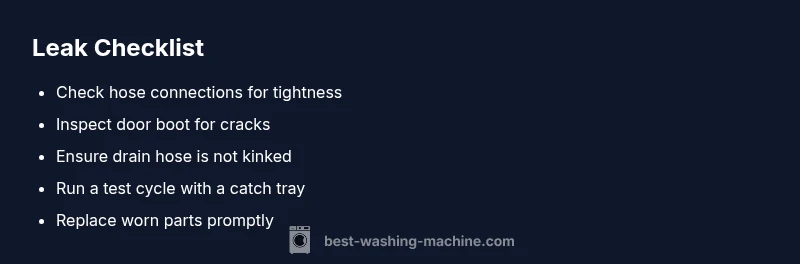
To inspect hoses, pull the machine away from the wall carefully and disconnect the hoses at the fittings. Check for cracks, bulges, or stiffness; replace hoses that show wear. Tighten clamps securely but avoid overtightening, which can damage fittings. For the door boot, inspect for cracks or holes around the fold and seal area; replace the boot if damaged. When inspecting the drain hose, ensure it is not crushed or looped too high, which can cause siphoning and leaks. If you identify a faulty part, replace it with a compatible model and re-check for leaks after the next cycle.
When to call a professional
If you’ve checked hoses and seals and the washer still leaks, or you notice water at the bottom not tied to a hose, you may have an internal issue such as a tub seal or a leaking pump. These problems require specialized tools and knowledge and could pose electrical hazards. Do not attempt major disassembly if you are unsure about wiring or insulation. Contact a qualified appliance technician who can diagnose the leak with pressure tests, inspect internal seals, and provide part replacements with warranty-friendly options.
Preventive tips to avoid future leaks
Regular maintenance reduces leakage risk. Use correct detergent to avoid excess suds, and never exceed recommended amounts. Inspect hoses every 6-12 months for cracks and replace worn hoses promptly. Secure drainage hoses to prevent siphoning and ensure the machine is level to prevent stress on seals. Keep the area around the washer dry; wipe up spills promptly to prevent mold and rust. If you move furniture or remodel near the washer, recheck the hoses and connections after the work.
Safety reminders and what not to do
Safety should come first: always unplug before touching electrical components, and never work near an active power outlet with wet hands. Do not run the washer with a visibly damaged door boot or hose. Use a bucket or towel to catch water during inspection, but avoid letting it pool on the floor. If the leak seems persistent or you smell burning plastic or hear buzzing, stop and call a professional immediately.
Steps
Estimated time: 30-45 minutes
- 1
Power off and unplug
Unplug the washer and shut off the hot and cold water valves. This prevents shocks and water spraying during inspection. Move the machine slightly if needed to access the back safely.
Tip: Use a dry cloth to wipe water from the area as you work. - 2
Check visible hoses
Look for loose clamps, cracks, or bulges in the inlet and outlet hoses. Tighten clamps gently with the correct screwdriver and replace any damaged hoses. Reconnect securely before testing.
Tip: Never overtighten clamps; overtightening can damage fittings. - 3
Inspect the door boot
Remove any front panel access and inspect the door boot for cracks or tears. If you find damage, replace the boot to restore a watertight seal during cycles.
Tip: Inspect both inner and outer folds for wear. - 4
Check the drain hose position
Ensure the drain hose is not kinked and is routed correctly to the standpipe or drain. A looped or too-high drain hose can cause backflow leaks.
Tip: Keep the hose secured to avoid movement during cycles. - 5
Run a test cycle with catches
Reassemble any panels, return the machine to position, and run a short cycle with towels under the unit to catch any residual leaks. Observe closely for fresh water.
Tip: Have a bucket and towels ready. - 6
Assess after testing
If leaks reappear, document exact locations and consider parts replacement or professional service. Do not attempt unrelated disassembly beyond your skill level.
Tip: Take photos for reference when engaging a tech.
Diagnosis: Washer leaks or water on floor during/after a cycle
Possible Causes
- highLoose or cracked hose connections
- mediumDamaged door boot/seal
- lowMis-routed or blocked drain hose
- lowInternal tub seal or pump leak
Fixes
- easyTighten hose clamps and straighten hoses
- mediumReplace a cracked door boot or worn seal
- easyRe-route or clear the drain hose to stop siphoning
- hardReplace tub seal or pump assembly if needed by pro
FAQ
What should I do immediately if my washing machine leaks?
Turn off the washer, unplug it, and shut off the water supply. Soak up any standing water with towels and inspect hoses for looseness or cracks. If the leak persists after basic checks, contact a professional.
First, unplug and shut off water, soak up water, and check hoses. If it still leaks, call a professional.
Can a leaking washing machine be fixed without a pro?
Many leaks from hoses or clamps can be fixed by a capable homeowner. More complex issues like tub seals require professional tools and expertise. Always assess safety before attempting repairs.
Some leaks are DIY-friendly, but tub seals usually need a pro.
Why is there water under my washer when it isn't running?
Water under the washer when idle often comes from a leak in hoses or the drain line, or condensation. Inspect connections and drain routing, and check for any damp spots around the base.
Water when idle usually means a hose or drain issue or condensation.
What are the signs of a damaged door boot?
Visible cracks, tears, or damp marks around the door boot indicate wear. Water spraying or pooling near the door during cycles is also a sign. Replacing the boot typically resolves the leak.
Cracks or damp areas around the door boot mean replacement is likely needed.
How often should I inspect hoses to prevent leaks?
In general, inspect hoses as part of routine maintenance and replace worn hoses promptly. Consider a yearly visual check and more frequent attention if you move the washer often.
Inspect hoses during routine maintenance and replace worn ones promptly.
Watch Video
The Essentials
- Start with hose checks first
- Inspect door boot for cracks
- Shut off water before work
- Test cycles to confirm leaks
- Call a pro for tub seals or pumps