Leaking Washing Machine Bottom: Quick Troubleshooting Guide
Urgent guide to diagnose and fix water leaking from the bottom of your washing machine. Step-by-step checks, safety tips, and pro guidance to prevent floor damage and mold.


Most leaks from the bottom of a washing machine stem from a loose or cracked drain hose, a worn tub seal, or a mis-seated pump connection. Before you do anything, unplug the machine and shut off the water supply. Then inspect the back for loose hoses and seals, checking for obvious cracks or pooling. If you cannot locate the source quickly, move to the diagnostic flow for a precise fix.
What causes water pooling at the bottom of a washer?
Water pooling at the base is often a sign that a connection has failed rather than a big internal failure. According to Best Washing Machine, leaks at the bottom are commonly caused by a loose or cracked drain hose, a worn or damaged tub seal, or a loose pump connection. A bad seal can allow water to seep from the drum area, while a loose hose can spray water that ends up pooling under the machine rather than dripping from the back. It’s essential to distinguish a leak from routine overflow or condensation. The goal is to identify a single source, so you don’t replace parts unnecessarily. As you review potential culprits, stay mindful of where water is collecting and whether it appears during fill, wash, or spin cycles.
Safety first: unplug, shut off water, and keep a dry surface
Before touching any components, unplug the machine and turn off the hot and cold water valves. If water has already pooled on the floor, use towels or a shallow basin to catch drips and avoid slips. Never work on live electrical components or attempt repairs in a wet area without proper footwear. Handling the machine on a dry, stable surface reduces risk and helps you spot leaks more clearly. If your utility room or laundry space is small, consider using towels to keep the area contained while you perform checks.
Common culprits explained: hoses, seals, and the pump
The drain hose is the most common leak source; it connects the tub to the drain. A loose clamp or a cracked hose can spray water that pools under the washer. A worn tub seal or door boot is another frequent failure point; over time, rubber can crack or harden, letting water seep around the drum. The pump seals and hoses also wear out. If you notice water near the pump housing or hear a hissing noise when the washer runs, inspect these components closely. Understanding the relative location of each part helps you pinpoint the leak quickly.
Inspecting the drain hose and clamps: a practical check
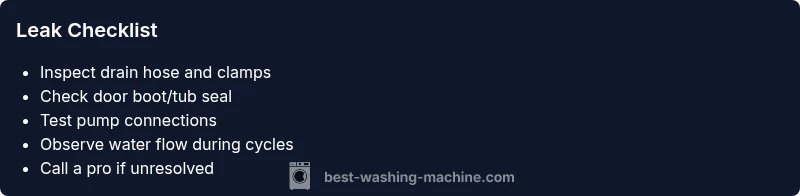
Start by pulling the machine forward to access the back panel. Inspect the drain hose for kinks, cracks, or holes. Check the hose clamps—are they tight and seated properly? If you see moisture around the hose joints, tighten the clamps with a screwdriver or pliers. If the hose is damaged, replace it with a matching size and ensure the ends are fully seated. During testing, run a short cycle with low water to observe any fresh leaks from the hose area. A secure, intact hose with proper clamp tension is often enough to stop a bottom leak.
Inspecting the tub seal and door boot
The tub seal sits between the drum and the front panel; if this seal is worn, water can escape during agitation. Inspect the door boot (the flexible bellows around the door opening) for cracking or separation. Look for signs of residue or staining around the seal which indicate leakage. If the seal shows wear, reseating or replacing it can stop leaks. For front-load washers, a damaged door boot is a common source of bottom leaks; for top-load units, the tub seal is the typical culprit. Compare the seal condition to the manufacturer’s guidance for your model.
When to replace parts vs call a professional
If you find a clearly damaged hose, clamp, or door boot, replacement is straightforward and often an easy fix. Seals and pump components may require more time and some disassembly—consider your comfort level with tools. Complex leaks from metal housings, cracked tubs, or electronics require professional service. If you can’t locate a leak after inspecting hoses and seals, or if the water continues to pool after part replacements, contact a licensed technician. Timely professional help can prevent further water damage.
Prevention tips to reduce future leaks
Regular maintenance reduces the chance of bottom leaks. Periodically inspect hoses, clamps, and the door boot for signs of wear. Use the washer’s recommended detergent and avoid overloading, which stresses seals. Keep the area around the machine dry and inspect for mold or rust around the base. If your unit is under warranty, follow the manufacturer’s service guidelines to avoid voiding coverage. A small investment in routine checks now saves expensive repairs later.
Steps
Estimated time: 30-60 minutes
- 1
Power down and prepare the area
Unplug the machine and shut off the water supply. Move any obstructions and place towels around the base to catch any water. This keeps you safe and makes leaks easier to observe.
Tip: Take a photo of hose clamps before loosening anything to aid reassembly. - 2
Locate the source of the leak
Check back and bottom edges for dampness; inspect hoses at the rear first, then the door boot or tub seal. Look for visible cracks, looseness, or pooling under the machine.
Tip: Wipe the area clean before testing to avoid confusing marks. - 3
Secure or replace the drain hose
If the hose is loose, tighten clamps and reseat. Inspect for cracks or holes; replace if damaged. Re-run a test cycle with a small load to confirm a fix.
Tip: Use the same diameter hose and correct end fittings to ensure a snug fit. - 4
Inspect door boot and tub seal
Check for splits, cracks, or wear around the boot and seal. If damaged, replace with OEM parts or compatible equivalents. Re-test with water to verify.
Tip: Lubricate the boot edge lightly with silicone-safe sealant if recommended by the manufacturer. - 5
Test all connections
Run a short cycle and observe all joints. Check underneath for fresh moisture, and inspect the drain and pump area for leaks after the test run.
Tip: Keep a towel nearby for quick containment if water reappears. - 6
Call a professional if unresolved
If water continues to pool after checking hoses and seals, the issue may involve internal components or the tub. A licensed technician can diagnose more complex leaks.
Tip: Document symptoms and any noise you noticed to speed up the service call.
Diagnosis: Water leaking from the bottom of the washing machine during or after cycles
Possible Causes
- highLoose or cracked drain hose connections
- highWorn tub seal or door boot
- mediumClogged or failing pump seal or hose
Fixes
- easyTighten or replace the drain hose and clamps; ensure ends are fully seated and downward-sloping away from the base
- mediumReplace worn door boot or tub seal and reseal joints; re-test for leaks
- mediumInspect the pump seal and related hoses; replace leaking pump components if necessary
FAQ
What causes water to leak from the bottom of a washing machine?
Bottom leaks are usually caused by loose or cracked drain hoses, worn tub seals or door boots, or failing pump components. Regular inspection of hoses and seals can prevent most leaks. If you can’t locate the source after checks, a professional inspection is recommended.
Bottom leaks are usually caused by hoses, seals, or the pump. If you can’t locate the source, call a professional.
Can a loose drain hose cause a bottom leak?
Yes. A loose drain hose or clamp is a common and easily fixable cause. Tighten or replace the hose and clamps, then run a test cycle to confirm the leak is resolved.
Yes. Tighten the drain hose and clamps, then test to confirm the fix.
When should I replace a tub seal or door boot?
If the tub seal or door boot shows cracks, hardening, or visible wear, replacement is typically required. A worn seal is a frequent cause of bottom leaks and replacing it often stops the issue.
Cracks or wear mean replace the seal or boot to stop leaks.
Is it safe to run the washer if it’s leaking?
No. If you see continuous leaking, power down, unplug, and avoid continuing cycles. Water plus electricity can be dangerous and cause floor damage or shocks.
No—unplug and don’t run the washer until you fix the leak.
How much does professional repair typically cost?
Costs vary by region and model, but persistent leaks after basic checks often require replacement parts or professional service. Obtain a diagnostic quote before any extensive work.
Costs vary; get a diagnostic quote before any repair work.
Watch Video
The Essentials
- Identify the source first: hose, seal, or pump.
- Prioritize safe power-down and water shutoff before inspection.
- Tighten clamps or replace damaged hoses for quick fixes.
- Call a pro for persistent leaks or after inspection reveals internal damage.