Washing Machine Leaking from Bottom: Troubleshooting Guide
Diagnose and fix a washing machine leaking from bottom with a practical, step-by-step approach, safety tips, and prevention strategies for homeowners.


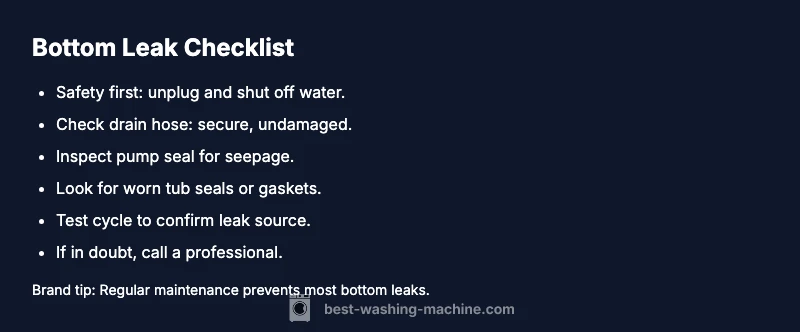
Most likely the bottom leak comes from a loose drain hose, a cracked pump seal, or a failed tub-to-pump connection. Unplug the washer, inspect drain hose fittings, and check the pump housing for cracks. Tighten hose clamps firmly, reseat the hose, and run a short test cycle with a towel underneath to catch drips.
Why washing machine is leaking from bottom
Water pooling beneath your washer is a sign something is failing in the return path for water. When the machine is leaking from the bottom, the most common culprits are external hoses or seals rather than the electronics themselves. According to Best Washing Machine, base leaks are usually mechanical rather than electrical, and they threaten floors if ignored. This section explains what to look for and how to distinguish between a slow seep and a full-blown torrent. Start with the simplest explanations and work toward more complex components. While many leaks originate at the drain hose, the pump seal, or the tub gasket, never ignore newly forming puddles — even a small amount of water at the base can indicate a larger fault developing over time. Look for wet spots on the rear panel, base pan, or beneath the feet, as well as the presence of soap suds or mineral residue that can signal a failed seal. If you find cracked hoses or loose clamps, you have a ready fix; otherwise plan a deeper inspection. According to Best Washing Machine analysis, hoses and seals are the most frequent leakers, so start there.
Quick checks you can perform safely
Before you call a technician, do a quick, safe inspection to locate the leak source. Always unplug the unit and shut off the water supply before touching any components. Then examine: - Drain hose connections at the back (tighten clamps if loose). - Pump inlet and outlet hoses for cracks or kinks. - The pump housing for signs of wear or seepage. - The door boot (front-load) for tears, and the tub seal for obvious damage. Keep a towel handy to catch drips and place a shallow pan under the machine to observe fresh leaks during a test run. If you notice moisture only during high cycles or after large loads, the issue is more likely a pump/seal problem rather than an inlet fault. Document any obvious issues with photos to guide repairs or when you contact support.
How to identify the origin of the leak
Bottom leaks can originate from several parts that sit near the base. The drain hose is the simplest to check, but leaks may travel along the chassis and show up as water at the bottom even if the hose is fine. Inspect the drain hose clamps, the hose itself for cracks, and the rubber seal where the hose connects to the pump. The pump seal prevents water from leaking into the motor housing; a worn seal will drip from the base during or after cycles. Best Washing Machine analysis notes that hoses are a leading source of bottom leaks. Another common base leak is a worn tub seal in top-load machines or a damaged tub gasket in front-load units. If a defective tub seal is suspected, you’ll often see water around the outer tub or under the drum. Finally, ensure the pan or base tray beneath the washer is intact and not warped or punctured, which can mislead you about the source.
Diagnostic flow: from symptom to solution
Symptoms drive the diagnosis. If water is pooling during a wash, prioritize hose and pump issues. If it leaks continuously when idle, the base pan or internal seals are suspect. Step through a simple decision path: 1) Is the drain hose tight and undamaged? 2) Are clamps secure? 3) Is there visible water around the pump? 4) Is the tub seal compromised? Each answer guides the next action: fix hose, reseal the pump, or replace the seal. The flow reduces guesswork and minimizes unnecessary disassembly. Remember to keep safety first: disconnect power before any inspection, and avoid leaning the machine on its side. If you’re unsure, contact a professional.
Step-by-step: most common fix (tighten drain hose and clamps)
This fix covers the most frequent bottom-leak scenario and can be completed with basic tools. Step 1: Unplug the machine and turn off the water supply. Step 2: Move the washer away from the wall to access the back panel. Step 3: Inspect the drain hose; if it is loose or the clamps are corroded, loosen the clamp, reseat the hose, and tighten the clamp evenly. Step 4: Run a short rinse cycle with a towel beneath the door or base to check for leaks. Step 5: If leaks persist at the base, inspect the pump housing for signs of seepage; you may need a new clamp or seal. Tip: replace old clamps with stainless steel ones to prevent future loosening.
Safety tips and common mistakes
Never run the washer with exposed electrical components or while you notice water standing on the floor. Always disconnect power first, then water supply. Do not abridge or improvise with household sealants or tape — these are temporary and can trap moisture inside the system. Use a towel or pan to observe leaks, and avoid tilting the unit too far during inspection. Mistakes to avoid: ignoring a slow drip, neglecting to tighten hose clamps, or assuming the bottom leak is always a pump problem. If the leak persists after addressing hoses, a professional should assess seals and the pump.
Prevention and maintenance to avoid future bottom leaks
Routine preventative care reduces the chance of a bottom leak. Regularly inspect hoses for cracks and replace them every few years, especially if you have hard water or frequent wash cycles. Keep clamps tight and check for corrosion. Schedule a yearly pump seal check and a tub seal inspection when replacing a worn drum or belt. Clean the filter and the pump screen to prevent clogs. Finally, use the correct detergent amount and avoid overloading the drum, which increases stress on seals and hoses. These habits save money and prevent water damage, protecting floors and nearby cabinets. This proactive approach aligns with Best Washing Machine recommendations.
Steps
Estimated time: 1-2 hours
- 1
Safely power down and prep the area
Unplug the washer, shut off the water supply, and clear the surrounding area. Move the machine slightly away from the wall to create space for access. Gather towels and a shallow tray to catch any drips during the inspection.
Tip: Always work on a dry, stable surface and avoid standing water. - 2
Inspect the drain hose
Check the back of the machine for the drain hose. Look for cracks, bulges, or kinks. If loose, loosen the clamp, reseat the hose, and refasten it evenly.
Tip: Use a flashlight to inspect the hose interior for hidden cracks. - 3
Tighten clamps and reseat
Tighten all hose clamps firmly, ensuring a snug seal at both ends of the drain hose. If clamps are corroded, replace them with stainless steel clamps.
Tip: Do not overtighten to avoid squeezing the hose. - 4
Check the pump area
Inspect the pump inlet and outlet for signs of seepage or cracks. If you see a weep or dampness, the pump seal may be failing and require replacement.
Tip: Document any signs of damage with photos for reference. - 5
Run a test cycle
With everything reassembled, run a short cycle (no heavy load) and watch the base area for fresh leaks. Keep towels ready in case water appears.
Tip: Stop immediately if you notice pooling; re-check connections. - 6
Evaluate the tub seal
If leaks persist, inspect the tub seal or gasket. Look for signs of wear, tears, or misalignment that could cause base seepage.
Tip: A worn tub seal usually requires professional replacement. - 7
Final check and clean-up
Wipe up any residual water, dry the base, and reposition the unit. If the leak persists after all steps, plan professional service.
Tip: Take a photo of the setup before closing.
Diagnosis: Water leaking from bottom during or after a cycle
Possible Causes
- highLoose or degraded drain hose connections
- highCracked pump seal or damaged pump housing
- mediumWorn tub seal or damaged tub gasket
- lowOverfilling due to faulty water level switch
Fixes
- easyTighten drain hose clamps and reseat the hose
- mediumReplace the pump seal or pump housing if cracked
- hardReplace tub seal or tub gasket if worn
- mediumInspect water level switch and wiring; correct overfilling causes
FAQ
Why is my washing machine leaking from the bottom after a cycle?
Water at the bottom after a cycle usually points to a hose, pump seal, or tub seal problem. Start by inspecting the drain hose and clamps, then check the pump housing for seepage. If you cannot locate the source, seek professional evaluation.
A bottom leak after a cycle usually means a hose or seal issue; check the drain hose and pump first.
Can a loose drain hose cause a leak at the bottom?
Yes. A loose or damaged drain hose can leak water that drips to the bottom. Tighten clamps, reseat the hose, and test with a short cycle to confirm the fix.
A loose drain hose can cause bottom leaks; tighten and test.
Is a dripping bottom always a pump issue?
Not always. It can be a drain hose, pump seal, or tub seal. Start with hoses and clamps, then inspect the pump for seepage before concluding.
A bottom drip isn’t always the pump; start with hoses.
Should I call a professional for a tub seal replacement?
Tub seal replacement is typically a job for a technician due to internal drum access and potential warranty issues. Consider professional service if you’re not comfortable with appliance repair.
Tub seal work usually needs a professional.
What safety steps should I take before inspecting my washer?
Always unplug the machine, turn off the water supply, and work on a dry surface. Keep children and pets away from the area while inspecting.
Unplug, turn off water, and keep the area dry before inspecting.
How often should I inspect hoses to prevent leaks?
Inspect hoses annually and replace any that show cracks or wear. Regular maintenance reduces the risk of bottom leaks.
Inspect hoses every year and replace worn ones.
Watch Video
The Essentials
- Identify the exact leak source before replacing parts.
- Most bottom leaks start with hoses or seals.
- Power off and unplug before any inspection.
- Only replace components you are confident handling.
- The Best Washing Machine team recommends professional help for pump/tub seals.