LG Washer Leaking from Bottom: Troubleshooting Guide
Urgent troubleshooting guide for LG washers leaking from the bottom. Learn safety steps, diagnostics, and fixes to stop leaks and prevent recurrence.


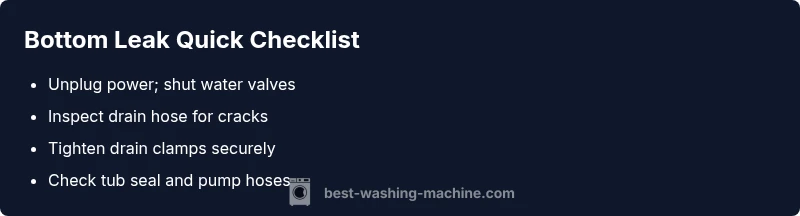
Step 1: Unplug the washer and shut off the water supply. Step 2: Inspect the drain hose for kinks or loose clamps. Step 3: Look at the tub seal and drain pump hoses for cracks or moisture. If the leak remains, stop and contact a licensed technician. This quick sequence addresses the most common bottom leaks in LG washers and sets you up for a safe, effective fix.
Why LG Washer Leaking from Bottom Happens
Water leaking from the bottom of an LG washing machine is usually a sign that a seal, hose, or connection is failing. In many homes, the culprit is the tub seal or drain hose rather than the drum itself. According to Best Washing Machine, bottom leaks are most often caused by aged or stressed gaskets, loose clamps, or wear in the drain system. When you see lg washer leaking from bottom, start with simple checks to narrow down the source. Understanding where water collects helps you decide whether a quick tighten or a full seal replacement is needed. As you work through this guide, prioritize safety and turn off power and water before touching any components. The Best Washing Machine team found that many bottom-leak events begin with a loose hose connection or a worn seal, which is easier to fix in the early stages than a full drum repair.
The fault is almost always localized, not a mysterious failure of the entire machine. Start by the simplest check—confirm whether the water is coming from the drain hose area or from an inner seal. If the hose is damp near the clamp, you’re likely looking at a hose/connection issue. If you see water around the outer tub or under the drum, you’re more likely dealing with a seal or pump problem. By framing the issue with these two zones, you can prioritize parts and tools before you dive in.
Safety First: Power and Water Controls
Safety is non-negotiable when you're troubleshooting a leak behind a washing machine. Start by unplugging the power cord from the outlet. If your model has a shutoff valve for the hot and cold lines, turn them off to stop any incoming water. Move the washer away from the wall carefully to access exposed hoses, clamps, and seals. If you notice active spraying or a strong flow, do not touch electrical components; contact a professional. The Best Washing Machine emphasizes following lockout-tagout practices where available and never attempting repairs with power connected. After you’ve confirmed the area is dry and safe, you can begin visual inspections to pinpoint the leak source.
Quick Visual Checks You Can Do
Inspect the drain hose at the back for cracks, bulges, or kinks and confirm clamps are tight. Check the hose connection to the washer and the standpipe, ensuring there is no slack or loose fittings. Look at the door boot or tub seal area for obvious cracks or tears. If you see water collecting on the bottom pan but cannot see the exact source, wipe dry and run a short cycle to observe where the drips originate. These checks address the most common causes of lg washer leaking from bottom and often save you time before ordering parts.
Diagnostic Flow: Narrowing Down the Leak Source
Use a simple, stepwise approach to identify the origin of the leak. Start by observing when the water appears (during filling, washing, draining, or after the cycle ends). Then eliminate external hoses first, as these are the most common and easiest to fix. If the problem persists, inspect internal components like the tub seal and pump hoses. Document findings with photos to guide any parts you may need to replace. This orderly method helps you stay aligned with the safety steps and avoid unnecessary part purchases.
Common Causes and Quick Fixes
The drain hose: ensure clamps are secure and hose is not kinked or cracked. The tub seal: wear or damage can lead to water around the bottom; this usually requires professional replacement. The pump hoses: loose connections or cracks can leak water onto the base. Overfilling or a faulty sensor can trigger overflows that show up at the bottom. By addressing each area in sequence, you can stop most bottom leaks on LG washers without advanced tools. If you’re unsure, consider scheduling a professional evaluation to prevent further damage to the cabinet or electronics.
Maintenance and Prevention to Avoid Future Leaks
Regular inspection of hoses and clamps is your best defense against leaks. Replace any cracked hoses promptly and keep the drain line free of blockages. Use the recommended load size and avoid overfilling, which can stress seals and hoses. If you notice recurring leaks around the bottom, recheck the seals and consider a professional inspection every 1–2 years to preserve performance and avoid expensive damage. By keeping a simple maintenance routine, you can extend the life of your LG washer and minimize emergency repairs.
Steps
Estimated time: 1-2 hours
- 1
Power down and safety checks
Unplug the washer and shut off the water supply. Move the unit away from the wall to access hoses safely. Have towels ready to catch any drips and escalate to a pro if you detect active spraying.
Tip: Take a quick photo of hose connections before you loosen anything. - 2
Inspect drain hose and clamps
Check the back of the washer for cracks in the drain hose and verify that the clamps are tight. If the hose is deformed, replace it before testing further.
Tip: Secure the hose to the standpipe with a tight clamp to prevent future leaks. - 3
Check tub seal and pump hoses
Inspect the area around the drum seal for moisture or a visible crack. Look at all hoses connected to the pump for dampness or signs of wear.
Tip: If you see moisture on the seal, plan for seal replacement by a professional. - 4
Run a test cycle
With the drain hose secured and the seals checked, run a short cycle with minimal water to observe if any new leakage appears.
Tip: Observe for a few minutes after the cycle ends to ensure no drips remain.
Diagnosis: Water leaks from the bottom during or after a wash cycle
Possible Causes
- highLoose or cracked drain hose connection
- highWorn tub seal or damaged pump hoses
- mediumCracked pump or undercarriage components
- lowOverfilling or transfer of water due to sensor fault
Fixes
- easyTighten clamps and replace cracked drain hose; reseat hose to the standpipe
- hardReplace tub seal kit or worn pump hoses as needed
- mediumReplace pump assembly or associated hoses if cracked
FAQ
What are the most common causes of an LG washer leaking from the bottom?
Most bottom leaks come from the drain hose connection, tub seal, or pump hoses. External hoses are the easiest to fix, while tub seals require more involved service.
The common culprits are the drain hose, tub seal, or pump hoses. Start with the hose and seals, and only move to professional help if the leak persists.
Is it safe to run the washer if it leaks at the bottom?
No. Stop the cycle, unplug the unit, and dry the area. Leaks can pose electrical risks and cause water damage.
Do not run it. Unplug and check for the leak source first.
How can I tell where the leak is coming from?
Look for dampness around the drain hose, tub seal, and pump hoses. Use towels to isolate the source while you inspect each component.
Check hoses first, then seals. Dry areas as you test to spot the drip origin.
Can I replace a tub seal myself?
Tub seal replacement is a more advanced repair. If you’re experienced with appliance disassembly, you can replace the seal; otherwise, hire a pro.
It’s doable if you’re comfortable with disassembly, but it’s usually safer to hire a technician.
What maintenance prevents bottom leaks in LG washers?
Regularly check hoses and clamps, avoid overfilling, and service seals before wear causes leaks. Keep the area dry after each cycle to spot issues early.
Regular hose checks and avoiding overfill prevent most bottom leaks.
Watch Video
The Essentials
- Seal hoses and clamps first to stop many bottom leaks
- Shut off power and water before any inspection
- Seek professional help for tub-seal or major hose replacements
- Test with short cycles after repairs to verify fixes