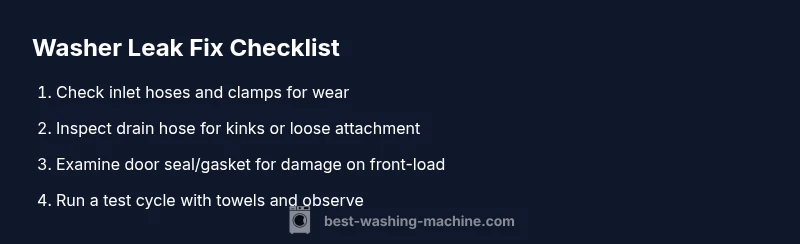
Washer Leaking Troubleshooting Guide: Fix Fast
Urgent guide to diagnose and fix a washer leaking. Learn common causes, safety steps, diagnostic flow, and step-by-step fixes to stop leaks fast and protect your home.


Washer leaks are usually caused by hose issues, a worn door seal on front-load models, or a blocked/loose drain hose. Safely stop operation: unplug the unit, shut off the water supply, and place towels. Then inspect inlet hoses, the drain hose, and the door seal for cracks, kinks, or loose clamps. If you can’t repair it, call a professional.
What to do when a washer is leaking
If your washing machine starts leaking, you should act fast to protect floors, prevent water damage, and avoid electrical hazards. A lot of leaks come from simple issues you can fix today, especially hoses, clamps, and door gaskets. In this guide, we walk you through safe steps, quick checks, and a repeatable diagnostic flow that helps you identify the source and decide whether to DIY or call a pro. The keyword washer leaking signals multiple potential sources, but with a calm, methodical approach you can often stop the drip in under an hour. Begin by ensuring safety: unplug the machine, turn off the water supply, and place towels or a bucket to catch the water. Then proceed to inspect the most likely culprits: hoses and seals.
Common leak sources in washing machines
Leaks typically originate at the connection points or from worn parts. The most frequent culprits include:
- Inlet hoses and clamps: Loose, cracked, or corroded hoses can leak at the coupling.
- Drain hose: A loose or kinked drain hose can spray water during cycles.
- Door seal/gasket: Front-loading models are prone to gasket wear, causing steady seepage.
- Pump or tub seal: Cracked pump housing or a failing tub seal leads to ongoing leakage.
- Detergent drawer overflow: Overloading with powder can cause suds and leaks around the dispenser. Always inspect these areas first before moving to internal components.
Safety first: power, water, and the environment
Water plus electricity is a dangerous combination. Before you touch anything, unplug the machine and switch off the hot and cold water valves. If you must move the washer, use protective gloves and wear closed-toe shoes. Place towels, a rubber mat, and a shallow pan to catch drips. Do not attempt to repair cracked plastic or metal parts unless you are qualified. If you smell burning or observe exposed wiring, stop and call a pro immediately.
Quick checks you can perform without tools
Start with the simplest steps:
- Check the inlet hoses at the back for cracks or dampness; tighten clamps if loose.
- Inspect the drain hose for secure attachment and no kinks.
- Inspect the door seal or tub seal depending on your model; look for cracks, tears, or misalignment.
- Wipe dry and run a short test cycle with a shallow load to observe leaks.
- If you see water pooling after the cycle finishes, note the location and timing to help diagnosis.
How to identify the leak source from symptoms
Where water shows up matters:
- Pooling near the bottom of the machine often means a loose drain hose or a damaged pump.
- Water on the floor near a corner may indicate a loose inlet hose or valve leak.
- Foamy water or suds around the detergent drawer points to overuse or misused detergent causing overflow.
- A steady drip during operation usually means a leak from a hose, seal, or pump housing. Document the symptoms, then check components in order: hoses, seals, and the pump.
Diagnostic flow you can follow today
Use a simple decision tree to guide your inspection: start at the external connections (hoses and valve), move to the drain system, then the door seal and pump. After each fix, run a test cycle with a small load. If the leak persists despite basic checks, escalate to a professional to avoid water damage or electrical hazards.
Steps
Estimated time: 45-60 minutes
- 1
Power off and secure water supply
Unplug the washer and turn off both hot and cold water valves. Gently pull the machine away from the wall to access hoses. Keep a dry area ready for any drips and prepare towels or a small bucket.
Tip: Taking photos of hose connections before you unplug helps during reassembly. - 2
Inspect inlet hoses and clamps
Look for cracks, bulges, or corrosion on both inlet hoses. Tighten clamps snugly, but don’t overtighten. If you see cracking or stiffness, replace the hoses.
Tip: Use a basin to catch any residual water when disconnecting hoses. - 3
Check the drain hose and standpipe
Ensure the drain hose is firmly attached, free of kinks, and not inserted too far into the standpipe. A loose or blocked drain hose is a common leak source.
Tip: Replace any damaged drain hose and verify the standpipe is clear. - 4
Inspect the door seal/gasket (front-load models)
Examine the door seal for tears, cracks, or debris causing poor sealing. Clean any residue and replace the seal if damage is visible.
Tip: Avoid forcing the door if the seal is stuck; consult a service manual for proper removal. - 5
Run a test cycle with a small load
Reconnect power and water, move the unit back in place, and run a short cycle with towels nearby. Observe where any leaks originate during operation.
Tip: If water appears, stop the cycle immediately to prevent overflow. - 6
Decide on next steps
If the leak is fixed, you’re done. If it persists, consider replacing components or calling a professional for a more thorough inspection.
Tip: Document what you checked and replaced for future maintenance.
Diagnosis: Visible water pooling on the floor near the washer after a cycle
Possible Causes
- highLoose or damaged water inlet hose
- mediumDrain hose not secured or kinked
- highWorn door seal/gasket (front-load models)
- lowCracked pump housing or tub seal
Fixes
- easySecure and tighten all hose clamps; replace damaged hoses as needed
- easyReposition or replace the drain hose; ensure correct standpipe depth
- mediumInspect and replace worn door seal/gasket if visible damage
- hardInspect pump and tub seal. If cracks are found, call a professional
FAQ
What is the most common cause of a washer leaking?
The most common causes are loose or damaged inlet hoses, a worn door seal on front-load washers, or a loose/drained drain hose. These are typically fixable with basic checks and parts replacement.
Usually, leaks come from hoses or door seals, which you can usually fix without professional help.
Can I fix a washer leak myself?
Yes for many leaks, especially hoses, clamps, and seals. If you hear a crack in the tub or see wiring exposure, stop and call a professional.
Yes, many leaks you can fix yourself, but avoid risky parts like the tub or pump housing if you’re unsure.
What should I do first when I notice a leak?
First, unplug the washer, turn off water supply, and move it to a dry area. Then inspect hoses, clamps, and the door seal to identify the source.
First, unplug and shut off water, then check hoses and door seals.
Why does my washer leak only during the spin cycle?
Leaks during spin often point to the pump, drum seal, or high-pressure hose connections. Inspect these parts and replace if damaged.
Leaks during spin usually come from the pump or seal; inspect those parts first.
Is a leaking washer a warranty issue?
Many manufacturers cover leaks under warranty if they involve manufacturing defects. Check your model’s warranty terms and duration.
Warranty depends on the model and defect. Check the policy for your unit.
When should I call a professional?
If you’re unsure about electrical safety, if the leak persists after basic checks, or if you notice tub cracks, call a professional to prevent further damage.
If you’re not comfortable with electrical safety or the leak remains, contact a pro.
Watch Video
The Essentials
- Stop water flow and power before inspection
- Tighten or replace hoses first—the most common leaks
- Check door seals or gaskets on front-load washers
- Test with a controlled cycle before declaring the issue fixed