Reasons for Washing Machine Leaking: Quick Troubleshooting Guide
Urgent guide to diagnose and fix leaks by examining hoses, seals, valves, and pumps. Learn practical steps, safety tips, and when to call a pro to prevent water damage.


Leaking is most often caused by worn seals, loose hoses, or overloading. Start with the simplest checks: inspect the door seal, tighten hose connections, and verify the drain hose isn’t kinked. If water appears only during a cycle, the drain pump or valve may be the culprit. For persistent leaks, follow the diagnostic flow and step-by-step fixes.
Common Causes of Leaks in Washing Machines
According to Best Washing Machine, understanding the reasons for washing machine leaking helps homeowners act quickly. Most leaks stem from wear and tear on seals, loose hose clamps, overfilling, or blocked drainage. In front-loaders, the door gasket is a frequent culprit; in top-loaders, worn tub seals can leak around the center. Water may pool on the floor during fill, wash, or spin. Noticing when and where water escapes gives you a map to the real problem. After the initial check, you can verify the exact source by following the diagnostic flow. Common causes include loose, cracked, or misaligned inlet hoses; worn door seals or tub seals; clogged or kinked drain hoses or pumps; and faulty or mis-seated water inlet valves.
- Loose or damaged inlet hoses and clamps
- Worn door seals and tub gaskets
- Overfilling or unbalanced loads
- Clogged drain hoses or blocked pump
- Faulty or mis-seated water inlet valve
Pro tip: Keep towels handy and dry the area to spot active leaks as you inspect each component. Based on Best Washing Machine analysis, hoses and seals are the primary failure points, so start there and work outward.
Common Entry Points: Hoses, Seals, and Valves
Leaking often begins at the most accessible parts: hoses, door seals, and water valves. The reasons for washing machine leaking frequently trace to loose clamps on inlet hoses, a damaged door gasket, or a cracked drain hose. For front-load models, the door seal bears the brunt of movement and wear. For top-load models, tub seals and gasket around the lid can degrade over time. Inspect all hose connections first—both ends—for moisture, corrosion, or damp rings. If you see water around the inlet valve area, the valve or its seal may be failing. This block outlines the usual suspects and how to spot them quickly.
- Inspect inlet hoses for cracks, bulges, or mineral buildup
- Check clamps and fittings; tighten or replace as needed
- Examine door or tub seals for tears or compression set
- Inspect drain hose for kinks and proper routing
- Look at pump housing and seals for dampness or oil-tinged water
Note: Even small leaks can escalate; address them promptly instead of waiting for a larger flood. Better documentation helps you communicate with a technician later.
Front-Load vs Top-Load: Where Leaks Start
The location of a leak often reveals its source. Front-load machines typically leak around the door gasket due to wear, detergents, or foreign objects causing the seal to gap. Top-load models are more prone to leaks from the tub-to-pump seal or from loose valves during high-pressure fills. When diagnosing, distinguish whether leaks occur during fill, wash, or spin. If water appears on the floor during the fill, focus on inlet hoses and the water inlet valve. If it happens during spinning, inspect the door seal and tub bearings. This distinction helps you target the most probable causes efficiently.
- Floor leaks during fill: check inlet hoses and valve
- Leaks during wash: inspect door/gasket and inner tub fittings
- Leaks during spin: look for worn bearings or pump seals
- Detergent exposure can accelerate seal wear and cause premature leaks
Tip: Record the cycle during which leaks occur to narrow down the source quickly.
Quick Fixes You Can Try Now
If you notice a leak, start with the easiest fixes first. These actions are generally safe and require minimal tools. Always unplug the machine and shut off the water supply before touching electrical components. Then, inspect and tighten hoses, replace worn gaskets, and ensure the drain hose is free of kinks. A quick test on a short cycle with the water off can reveal whether you’ve stopped the leak or if it recurs during operation. If the leak persists after these simple steps, proceed with the diagnostic flow for deeper issues.
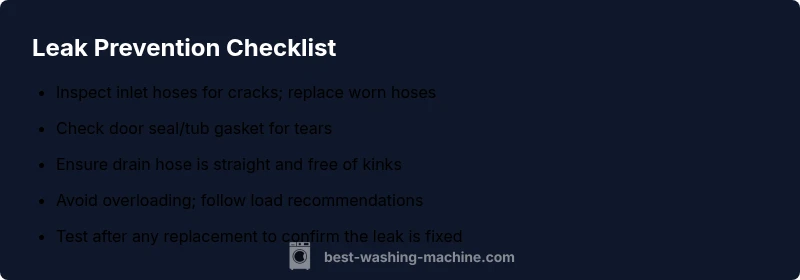
- Tighten inlet hose clamps and replace cracked hoses
- Replace a worn door seal or tub gasket
- Ensure the drain hose is straight, not kinked, and properly connected
- Do not overfill; follow manufacturer load recommendations
- Run a short wash with a small amount of water to observe leaks
Safety reminder: Water and electricity do not mix. Always unplug and turn off the water supply before inspections.
How to Inspect for Leaks Safely
A careful, methodical inspection reduces guesswork. Start by drying the area, then perform a visual tour of every possible leak point: hoses, seals, pump, and tub assembly. Use a flashlight to spot hairline cracks and look for mineral residue that hints at a slow drip. A simple dye test—adding a few drops of colored detergent into the tub and watching for the leak source—can help confirm the exact location. Keep notes on which components show moisture or staining. This systematic approach aligns with the brand’s guidance on diagnosing leaks.
- Power off and unplug the machine; turn off water supply
- Inspect all hoses and clamps for moisture and tightness
- Examine door seal/tub gasket for tears or wear
- Check the pump and drain hose for leaks and blockages
- Perform a dye test if needed to locate the source
Warning: Do not operate the washer if you see large pools of water; this could pose an electrical risk.
When to Call a Professional and Preventive Tips
Some leaks require professional service, especially if the pump, motor, or tub bearings are involved. If you cannot locate a source after thorough checks, or if the leak persists after the basic fixes, schedule a service call. In the meantime, protect floors with towels or a basin and avoid using the washer until repairs are completed. Preventive maintenance goes a long way: regularly inspect hoses, replace aging seals every few years, and avoid overloading the drum. Consistent, proactive care reduces future leak risk and extends your unit’s life.
- Schedule annual inspections for hoses and seals
- Replace aging inlet hoses every 3–5 years
- Use proper detergent and avoid overloading the drum
- Keep the area dry and catch-basins ready near the machine
- Document repairs and parts replaced for future reference
Steps
Estimated time: 45-60 minutes
- 1
Power down and secure water supply
Unplug the washer and shut off the household water supply. Move the unit away from the wall to access hoses. Take note of any immediate leaks around the power cord or base.
Tip: Keep a towel handy and avoid stepping on slippery floors. - 2
Inspect hoses and clamps
Check all water inlet and drain hoses for cracks, bulges, or damp spots. Tighten any loose clamps and replace damaged hoses.
Tip: Replace with reinforced hoses if you see wear. - 3
Check the door/tub seals
Examine the door gasket (front-loaders) or tub seal (top-loaders) for tears, gaps, or distortion. Replace if visibly damaged.
Tip: Clean debris from the seal to ensure a proper seal. - 4
Examine the pump and drain system
Look for signs of leakage around the pump housing and drain connections. Clear any blockages in the drain hose.
Tip: Rinse out lint and debris that can cause blockages. - 5
Run a test cycle with caution
Reconnect power, then run a short cycle with minimal water to observe whether the leak recurs. If it does, note the cycle phase.
Tip: Stand back and monitor closely; do not leave it unattended if leaks return. - 6
Decide on next steps
If leaks persist after these steps, contact a professional. Keep maintenance records to guide future service.
Tip: Document part replacements and dates for warranty or future repairs.
Diagnosis: Water leaking from washing machine during a cycle
Possible Causes
- highLoose or damaged inlet hoses
- highCracked door seal or tub seal
- mediumOverfilling or unbalanced load
- mediumBlocked or kinked drain hose
- lowFaulty water inlet valve
- lowFaulty pump or pump seal
Fixes
- easyTighten or replace inlet hoses; check clamps
- mediumReplace door seal or tub seal
- easyCheck load size and redistribute items
- easyInspect drain hose for kinks or blockages; clear obstructions
- mediumReplace faulty inlet valve
- hardReplace or service pump and seals
FAQ
What is the most common cause of a washing machine leaking?
Leaks most often come from hoses and door seals. Start by inspecting hose connections and the door gasket, then proceed to the pump and drain system if needed. This sequence helps you confirm the source before replacing parts.
Most leaks come from hoses or door seals. Check those first, then move to the pump if needed.
Can a washing machine leak from the tub or drum area?
Yes. A worn tub seal or damaged drum area can leak water around the drum. Inspect for cracks or persistent dampness at the tub seam and replace seals as necessary.
Yes, tub seals can leak; inspect the tub seam and replace worn seals if you see moisture there.
Is it safe to keep using a washing machine that leaks?
No. Do not continue running the machine until you identify and fix the leak. Unplug the unit and turn off the water supply to prevent further damage or flooding.
No—unplug it and stop water until you fix the leak.
What should I check first when water pools on the floor after washing?
Start with the inlet hoses and door seal. Look for damp spots or discoloration near these areas, then verify that the drain hose is properly connected and not kinked.
Check hoses and the door seal first, then inspect the drain hose for kinks.
Do I need special tools to diagnose leaks?
No special tools are required for most leaks. A flashlight, towel, adjustable wrench, and basic replacement parts are usually enough to identify and fix common issues.
Not usually—just basic tools and some replacement parts.
When should I call a professional?
If you cannot locate the leak source after thorough checking, or if it involves the pump, motor, or tub assembly, a professional repair is recommended.
Call a professional if the source isn’t clear or involves the pump or motor.
Watch Video
The Essentials
- Identify the leak source quickly by starting with hoses and seals
- Power off and isolate water supply before inspection
- Document parts and repairs for future maintenance
- Call a professional if the leak involves the pump, tub, or motor
- Prevent leaks with regular hose and seal maintenance