Leak Washing Machine Troubleshooting: Stop Leaks Now
An urgent, step-by-step guide to diagnose and fix leaks in your washing machine. Learn common causes, quick checks, and when to call a pro to prevent water damage.


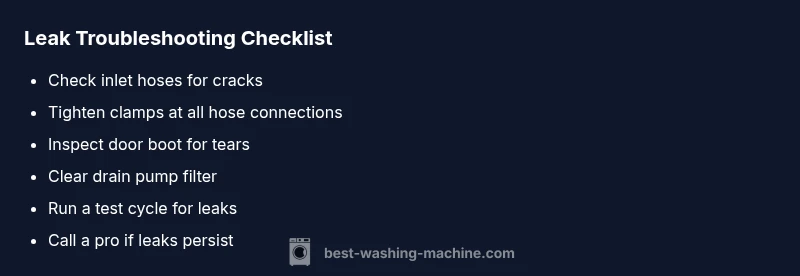
Leaks in a washing machine are most often caused by loose or damaged inlet/outlet hoses, a worn door seal, or a clogged drain pump. Begin by turning off power and water, then inspect hoses, seals, and the pump area for signs of wear or residue. Tighten clamps, replace worn parts, and run a short test cycle to verify the fix.
Understanding the problem: leak washing machine
Leaks around a washing machine can stem from multiple sources, including the water inlet hoses, the door boot seal, the drain hose, or even a cracked tub. The problem often starts small—puddles after a cycle or dampness around the base—and, if ignored, can lead to water damage and higher utility bills. In this guide, we’ll walk you through a safe, methodical approach to identify the source and apply practical fixes. The goal is to stop the current leak and install simple, repeatable maintenance routines to prevent future incidents. This approach aligns with Best Washing Machine analysis, which emphasizes proactive inspection and conservative, safe repairs.
Common sources of leaks
Most washing machine leaks originate from hoses and seals. Loose hose clamps or cracked inlet hoses allow water to escape during fills and drains. The door boot or seal can wear out from repeated opening and closing, especially if you overload the machine or slam the door. A blocked or failing drain pump can cause water to back up and leak from the bottom. Less common but possible causes include a cracked tub or a faulty water inlet valve. Start with the simplest checks first, as these fixes tend to be quick and affordable.
Safety first: before you start
Disconnect power at the wall and shut off the water supply to avoid shocks or floods. If your washer is in a basement or near wood flooring, place towels or a bucket to catch any water that may spill. Wear rubber-soled shoes and avoid leaning into the machine while lines are exposed. Never attempt repairs with the machine plugged in or with wet hands. Keep children and pets away while you work.
Check the hose connections and drain path
Begin with the most obvious culprits: inlet and outlet hoses. Inspect both ends for cracks, bulges, or leaks, and replace damaged hoses. Ensure clamps are tight but not overtightened, which can damage fittings. Check the drain hose for kinks or improper routing that might cause backflow and leakage. If you find a damaged connector or a brittle hose, replace immediately. A simple hose and clamp upgrade can often resolve the issue without a full service call.
Inspect the door seal and tub area
A worn or torn door boot is a frequent leak source. Look for cracks, stiffness, or gaps where the seal meets the door. Also examine the tub edge and any bellows for signs of wear. If the seal is compromised, replacement is typically straightforward and cost-effective, though you may need a technician for certain models. Wipe away soap residue to better see where the leak originates and to prevent future buildup that can mask the true source.
Draining and overflow issues: pumps and valves
If hoses and seals look fine, inspect the drain pump and the pump filter for blockages that can cause overflow. A clogged filter can back up water and leak from the pump housing. Check the drain hose for clogs as well. If the pump is noisy or vibrating unusually, or if water continuously leaks from the bottom regardless of cycle stage, the pump or valve may be defective and require replacement.
What to do if you see water on the floor: quick triage
When water is already on the floor, focus on containment and immediate checks. Shut off both water and power, mop up the water, and identify whether the leak occurs during fill, wash, or drain. Collect a sample of the water to determine if it’s clean water or contaminated by detergent. Then verify every potential source (hoses, seals, pump, tub) methodically, documenting findings for reference if you call a pro.
When to call a professional
If you discover structural damage (cracked tub, warped frame), persistent leaks after basic fixes, or you’re uncomfortable handling electrical components, it’s time to contact a qualified appliance technician. Plumbing or water damage scenarios may require a licensed professional to prevent further risk. Early professional evaluation can save you from costly repairs and protect your home.
Preventing future leaks: maintenance tips
Schedule regular inspections of hoses and seals, especially on older machines. Replace aging hoses every 3–5 years, even if there are no visible leaks. Avoid overloading the drum, use the correct detergent, and keep the drain area clean to prevent blockages. Periodically run a maintenance cycle with a cleaning solution or a simple vinegar rinse to keep seals and hoses in good shape. This proactive approach helps prevent leaks and extends the life of your washing machine.
Steps
Estimated time: 45-75 minutes
- 1
Power down and isolate the machine
Unplug the washer and shut off the water supply. Move the machine away from the wall if safe to access hoses from the back. Take photos of hose connections before touching anything to aid reassembly.
Tip: Use a dry towel to soak up any water as you pull the unit away. - 2
Inspect hoses and hose clamps
Check both inlet and drain hoses for cracks, bulges, or seepage. Ensure clamps are tight and fittings are secure. Replace damaged hoses with OEM or equivalent-quality parts.
Tip: Replace both ends at once if you replace one hose to ensure consistent performance. - 3
Check the door boot/seal
Look for tears, deformation, or stiffness in the door boot. If you see signs of wear, replace the boot promptly to restore a proper seal.
Tip: Do not use the machine until the boot is replaced to prevent further leaks. - 4
Inspect the drain pump and filter
Access the pump and remove the filter to clear any blockages. Rinse the filter under running water and reinstall securely.
Tip: Do not force components; if the pump looks damaged, replace it. - 5
Run a controlled test cycle
With the unit still unplugged, reconnect power and water, run a short 15-minute test cycle with no detergent to observe for leaks.
Tip: Watch all connections closely; a small drip should be obvious early. - 6
If leaks persist, call a professional
If you cannot locate the source or if structural damage is suspected, stop using the machine and schedule a licensed technician visit.
Tip: Document findings and parts replaced to streamline the repair process.
Diagnosis: Water leak around the washing machine during or after cycles
Possible Causes
- highLoose, cracked, or kinked inlet/outlet hoses
- highWorn door boot/seal allowing water to escape from the door opening
- mediumClogged or faulty drain pump or pump filter causing overflow
- lowOverfilling or dispenser overflow causing leaks
- lowCracked tub or damaged internal fittings
Fixes
- easyTighten clamps and replace damaged inlet/outlet hoses; verify hose connections are secure
- mediumInspect and replace door seal/boot if torn or deformed
- easyOpen and clean the drain pump filter, remove blockages, and ensure hoses are clear
- mediumCheck water level and inlet valve; replace if it fails to stop overflow
- hardInspect tub for cracks and consider professional repair or replacement if cracks are found
FAQ
What is the most common cause of a washing machine leak?
The most common sources are loose hoses or a torn door seal. Inspect these areas first to identify the leak source.
Leaks usually come from hoses or door seals, so start there.
Can a washing machine leak after filling with water?
Yes. Overflow can come from a faulty inlet valve, a clogged dispenser, or an overfilled drum.
Leaks after filling often point to the inlet valve or dispenser issues.
Is it safe to use a sealant to fix a leak?
Sealants are not recommended for washing machine leaks. Proper repair with parts is necessary to ensure safety and reliability.
Sealants aren’t a reliable fix; replace faulty parts instead.
When should I call a professional?
If the source is internal to the tub, the seals, or the pump, or if you’re unsure about electrical safety, call a professional.
If you’re unsure or see structural damage, call a pro.
How can I prevent future leaks?
Inspect hoses annually, replace aging hoses, avoid overloading, and run regular maintenance cycles to keep seals clean.
Regular checks and proper loading prevent leaks.
Watch Video
The Essentials
- Turn off power and water before opening lines
- Check hoses and door seal first
- Clear the drain pump and filter for blockages
- Call a pro for structural leaks or uncertain repairs
- Prevent leaks with routine maintenance and checks