Washer Leaking From Bottom: Troubleshooting Guide
Urgent guidance to diagnose and fix a washer leaking from the bottom. Step-by-step checks, safety warnings, and when to call a pro. From Best Washing Machine.


A bottom leak is most often caused by a loose drain hose, a damaged tub seal, or a faulty pump. Start by powering off the machine, unplugging it, and shutting off the water to inspect the lower area. Tighten hoses, replace gaskets if cracked, and run a test cycle to confirm.
Common Causes of a Washer Leaking from the Bottom
Leaks at the bottom of a washer are a common, urgent issue homeowners face. According to Best Washing Machine, leaks at the base are usually indicators of a plumbing or tub assembly failure rather than a surface spill. The top culprits include a loose or damaged drain hose, a cracked tub seal, or a faulty drain pump. Less frequent but possible causes include an overfilled tub, a damaged door boot on front-load models, or a worn pump seal. Start by examining areas you can access from the front and back: the drain hose and its clamps, the tub seal around the drum, the pump housing, and any hoses connected near the bottom. If water pools near the bottom during or after a cycle, you’re likely dealing with one of these issues. Address the simplest items first; hose clamps and hoses are the quickest fix in most cases.
Safety First: Power, Water, and Lockout
Before you touch anything, unplug the washer and shut off the water supply to prevent shocks and further leaks. If you need to move the unit, ask for help to avoid injury. Wear gloves and place towels or a shallow basin to catch drips. Never work on electrical components when the floor is wet, and avoid touching metal parts with wet hands. If your model has a locking lid or child safety features, ensure the control panel is inactive and the drum won’t spin during inspection. After securing the area, wipe up standing water and plan a careful leak-tracing approach.
How to Inspect the Leak Source: Visual Guide
Begin with a careful external inspection, focusing on the bottom-front area. Trace any dampness toward its source by following water trails to hoses, clamps, gaskets, and seals. If you see water around the drain hose at the connection to the washer or to the standpipe, that’s your quickest fix. Best Washing Machine Analysis, 2026, emphasizes tracing the leak path to its source before disassembling components. Look for cracks in the tub seal, wear on the door boot (for front-load machines), or a dripping pump seal. Document what you find with a quick photo to guide repairs.
Step-By-Step Fix for the Most Common Cause: Loose Drain Hose
Step 1: Power down, unplug, and shut off water. Step 2: Move the washer enough to access the drain hose under the drum. Step 3: Loosen the hose clamp, slide the hose off, and inspect for cracks or wear. Step 4: If the hose is intact, reattach it firmly and re-clamp. Step 5: If the hose is damaged, replace with a compatible hose and clamp. Step 6: Reposition the machine, plug in, restore water, and run a short test cycle.
Replacing Seals and Gaskets: When It Becomes a Repair
If the drain hose and fittings are sound, the next likely culprit is a worn tub seal or pump seal. A damaged tub seal typically requires partial disassembly of the top and rear panels to access the seal and replace with an OEM-equivalent part. Front-load models have door boots that may crack or separate; replace the boot if you notice tearing or gaps. If you’re not confident, replacing these parts involves careful alignment and torque specifications, so consider professional service for best results and to avoid further damage.
When to Call a Professional
If you identify a cracked tub, a corroded pump, or you can’t locate the leak path after a thorough external inspection, professional help is advised. A licensed technician can safely test for pressure leaks, replace seals, and confirm there are no electrical hazards. The cost of professional repair can vary by model and part availability, but addressing a serious seal or tub issue early can prevent water damage and more costly repairs.
Prevention Tips to Stop Future Leaks
To minimize future leaks, perform regular hose inspections—check clamps for tightness and replace aging hoses. Periodically inspect seals around the tub and door boot (front-load). Keep the area dry and wipe spills promptly. Use only recommended detergents and avoid overfilling, which can overflow the tub and stress seals. Finally, schedule occasional professional servicing to catch wear and tear before it becomes a leak.
Steps
Estimated time: 60-120 minutes
- 1
Power down and safety prep
Unplug the washer, shut off the water supply, and move it slightly if needed to access the underside. Gather towels and a shallow basin to catch drips. Confirm the area is dry before proceeding to inspection.
Tip: Always ensure power is off before touching any electrical components. - 2
Move washer and access lower panel
Carefully pull the unit away from the wall or open access panels to reach the drain area. Inspect the back and sides for any signs of wear. Keep a helper if the machine is heavy.
Tip: Take pictures of hose routing before disassembly for easy reassembly. - 3
Check drain hose connections and clamps
Tighten clamps and inspect the drain hose for cracks or splits. If damaged, replace with an exact-fit hose and re-secure with clamps. Ensure the hose route isn’t kinked or pressed against a sharp edge.
Tip: Use a flare nut wrench if needed to avoid overtightening and damaging fittings. - 4
Inspect the tub seal and pump area
Look for obvious signs of wear on the tub seal and pump seals. If you see cracks, tears, or oil-like residue, plan for part replacement. In some models, you may need to remove panels to access seals.
Tip: Do not force components; follow manufacturer service manual torque specs. - 5
Replace worn parts one by one
Install new drain hose or clamps first if you found issues there. If the tub seal or pump seal is worn, replace with correct parts before reassembly. Double-check all connections for tightness.
Tip: Test fit parts without powering on to confirm alignment. - 6
Run a test cycle and verify
Plug in, restore water, and run a short test cycle with towels nearby to catch any drips. Observe for a clean recovery with no new leaks. If any leak persists, stop and reassess or call a pro.
Tip: Record the test results to share with a technician if needed.
Diagnosis: Washer leaks water from bottom during or after cycle
Possible Causes
- highLoose or damaged drain hose connection
- mediumCracked or worn tub seal
- mediumFaulty pump seal or drain pump
- lowOverfilled tub or tub overflow
Fixes
- easyTighten hose clamps and replace damaged drain hoses
- mediumInspect tub seal; replace if cracked or worn
- hardInspect and replace pump seal or pump if leaking
- mediumStop use and call a professional if leak persists or you cannot safely reach the area
FAQ
Why is my washer leaking from the bottom after a cycle?
Leaks from the bottom are typically due to a loose drain hose, a damaged tub seal, or a faulty pump. Start with a safety check, then inspect hoses and seals. If the leak continues, review the full step-by-step guide for the next fixes.
Bottom leaks usually come from hoses or seals. Start with safety steps and inspect hoses, then proceed through the repair steps if needed.
Is a bottom leak always related to a tub seal?
Not always. A bottom leak can be caused by a loose hose, a cracked pump seal, or even an overfilling condition. A thorough inspection will identify the exact source before parts are replaced.
Not always—the drain hose or pump seal can also cause bottom leaks. Inspect to confirm the source.
Can I fix a bottom leak myself?
Many bottom-leak issues can be repaired by a confident DIYer, especially hose and clamp problems. More complex repairs like tub seals or pump replacements may require a professional to ensure safety and correct installation.
Yes, many hose fixes are doable yourself, but seal and tub work is best left to a pro if you’re not sure.
Should I unplug and stop using the washer if I see a leak?
Yes. Unplug the unit and shut off the water to prevent shocks and further damage. Do not operate the washer until you’ve identified and fixed the leak source.
Yes—unplug and shut off water right away and don’t run it again until you’ve fixed the leak.
How much does a tub seal or pump replacement typically cost?
Costs vary by model and part availability. DIY parts are generally cheaper, but professional service may be required for tub seals. Get a quote and compare with the repair risk of ongoing leaks.
Costs vary; parts are cheaper DIY but tub seals usually need a pro. Get a quote before proceeding.
Watch Video
The Essentials
- Unplug and shut off water before any inspection.
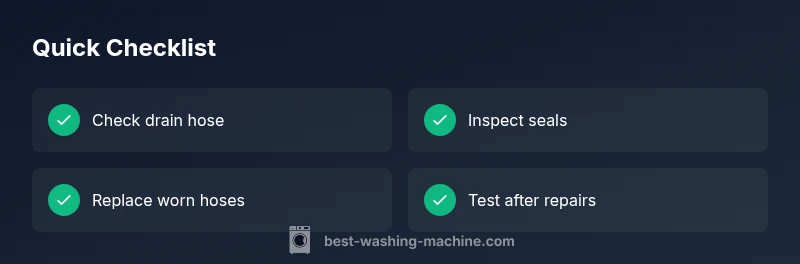
- Check drain hose connections for leaks first.
- Replace worn tub seals or pump seals to prevent future leaks.
- Test cautiously after each fix to confirm resolution.
- Call a pro for complicated seal or tub work.