Washing Machine Fix Cost: A 2026 Guide
Understand washing machine fix cost: what influences pricing, typical ranges for service, parts, and labor, and practical tips to save money. Learn how to decide between repair and replacement with confidence in 2026.


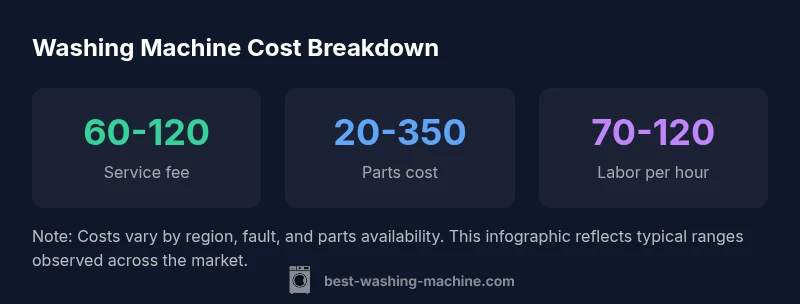
Cost for washing machine fixes typically ranges from service call fees to parts and labor, with most repairs falling in the low hundreds. The exact price depends on the fault, whether a major part must be replaced, and regional labor rates. Diagnosis fees, parts costs, and shop markup create the final bill, so understanding the breakdown helps you plan ahead.
Understanding the cost landscape for washing machine fixes
Repair costs for a malfunctioning washing machine aren’t a single number. They consist of a diagnostic/service call, labor, and any parts that must be replaced. In 2026, homeowners should expect that the service visit establishes the baseline price and confirms whether a simple part swap will cure the problem or a more expensive component is needed. The Best Washing Machine team notes that regional rates and the shop’s markup can shift the total considerably. Being prepared with a rough budget and a clear questions list helps prevent sticker shock when the technician explains the diagnosis. This guide uses general ranges to reflect typical market conditions and aims to help you plan more effectively.
What drives the 'washing machine fix cost'?
Several factors push the final bill higher or lower. The fault type (diagnostic complexity and whether a single part suffices), the cost and availability of parts, and the hourly labor rate all influence the price. Regional wage differences and the model’s age or access to replacement components also weigh in. If the part must be ordered and delivered, you may face additional wait times and fees. According to Best Washing Machine, the most predictable costs come from routine diagnostics and common wear parts, while rare, hard-to-find components can push totals upward. A detailed, itemized quote helps you compare options and avoid surprises.
Common faults and associated cost ranges
Here are typical issues and what they often cost, in general ranges. These figures reflect common patterns observed across markets in 2026 and are not guaranteed estimates. Use them as a planning tool, not as a signed quote.
- Leaking hoses or seals: $60–$180 for parts plus service call.
- Inoperative agitator or drum not turning: $100–$350 depending on mechanism access and parts.
- Faulty water inlet valve: $40–$180 for parts; labor adds to the total.
- Control board or PCB failure: $200–$600 for the part, plus labor; this is a common high-cost repair.
- Motor, belt, or drum bearing failure: $350–$800 for major components and labor.
- Sensor or thermostat issues: $30–$120 for parts; diagnosis may add to the bill.
Note that these ranges vary by brand, model, and region. The goal is to set expectations and prepare for an informed discussion with a technician.
DIY vs professional repair: when to tackle yourself
DIY fixes can save money, but not all repairs are suitable for non-professionals. Simple cleaning, hose tightening, or filter replacement are often safe and inexpensive. More complex tasks—electronics, seals, or drum work—risk personal injury or further damage if performed incorrectly. If you’re considering DIY, start with small, non-technical tasks and consult the model’s manual. Always verify warranty implications, as a DIY error could void coverage. The decision to DIY should balance safety, skill, and potential savings against the risk of higher future costs.
How service quotes are structured
A clear, itemized quote helps you compare options and avoid surprises. Look for:
- Diagnosis and diagnostic fee details
- Parts list with part numbers and unit costs
- Labor rate and estimated hours
- Any possible additional fees (delivery, disposal, or after-hours)
- Warranty on parts and labor
Ask for an upfront total and a worst-case scenario. If a quote seems high, seek a second estimate. A reputable shop will explain why a particular part is required and how long the repair is expected to take.
How to minimize washing machine fix costs
Start by regularly maintaining the appliance to prevent expensive issues. Clean filters, check hoses for wear, and avoid overloading the machine. When repairs are necessary, compare multiple quotes and request itemized costs. Consider whether extending the machine’s life with a lower-cost fix now is preferable to investing in a new unit with better energy efficiency and warranty. Some brands offer extended warranties or service plans that reduce out-of-pocket costs for ongoing maintenance.
When to repair vs replace: a practical framework
Use a simple decision framework: if the repair cost (parts plus labor) is less than 50–60% of a new, similarly featured machine and the current unit has reliable service history, repair can be sensible. If the cost approaches or exceeds the price of a new model, especially with energy efficiency and warranty benefits, replacement often makes more financial sense. Consider future energy costs, potential reliability, and the availability of replacement parts when making the call. Best Washing Machine recommends weighing the long-term value rather than fixing the symptom alone.
Regional and model variations: what changes the price
Prices vary by region due to labor supply, cost of living, and service competition. Model complexity, electronic control boards, and the availability of replacement parts influence both parts price and repair time. Newer or premium models may require more expensive parts or specialized technicians. When evaluating quotes, ask whether costs reflect a generic model or a specific make and model, and request model-specific pricing if possible.
Getting the most value: plan for ongoing maintenance
A proactive maintenance plan helps manage costs over the machine’s life. Schedule annual check-ups, follow manufacturer guidelines for detergent and load sizes, and replace worn hoses proactively. Keeping records of service visits helps justify future warranty claims and may qualify you for maintenance discounts from retailers or service providers. Regular care reduces the likelihood of major failures and supports predictable repair budgeting.
Washing machine fix cost quick reference
| Fault Type | Typical Cost Range (USD) | Notes |
|---|---|---|
| Service call & diagnosis | 60-120 | Diagnostic fee varies by region and provider |
| Sensor or switch fault | 20-150 | Often minor parts; replacement easy |
| Thermistor/Temperature sensor | 30-120 | Common in older models |
| Control board/PCB | 200-600 | Major repairs; costly parts |
| Motor or drum bearing | 350-800 | High-cost component |
| Water inlet valve | 40-180 | Common wear part |
FAQ
What is a typical service call fee for a washing machine repair?
Most technicians charge a diagnostic fee, usually around $60-$120, depending on location and whether the visit includes labor. The fee covers the technician’s time to assess and confirm the problem. If the diagnosis leads to a repair, the service call may be rolled into the total cost or listed separately.
Most technicians charge a diagnostic fee, typically between sixty and one hundred twenty dollars depending on location and whether labor is included.
Why do costs vary so much between models and brands?
Different models use distinct parts, boards, and access points. Some brands require specialized components that are pricier or harder to source. Access constraints can also affect labor time, driving up the total. Always reference model-specific pricing when requesting quotes.
Costs vary because parts and boards differ by model, and some brands require specialized components.
Can I get an estimate without a home visit?
Some shops offer rough estimates over the phone or video after discussing symptoms. However, a precise quote typically requires an in-home or shop inspection to confirm the fault and measure parts. Always ask for a written estimate before agreeing to work.
You can sometimes get a rough quote over the phone, but a precise estimate usually needs an inspection.
Is it worth repairing a failing control board or motor?
If repair costs approach or exceed the price of a new unit with warranty and better energy efficiency, replacement is often the wiser choice. Consider long-term reliability, energy use, and available warranties when deciding.
If the repair costs are close to a new machine with warranty, replacement may be wiser.
How long do washing machine repairs typically take?
Most repairs take a few hours on-site, but parts ordering can add days. If a part is backordered, the technician may need a follow-up visit. Plan for the initial visit plus potential delays in obtaining components.
Most fixes take a few hours, but delays can occur if parts must be ordered.
What can I do to prevent future fix costs?
Keep up with regular maintenance: clean filters, check hoses, and use appropriate detergent. Promptly address minor issues before they escalate. Maintaining a service schedule can extend the life of the washer and reduce shock repairs.
Regular maintenance and early issue detection help prevent big repair bills.
“Cost awareness starts with a precise diagnosis and a clear quote, so homeowners can wisely choose between repair and replacement.”
The Essentials
- Get an itemized quote before any repair work
- Different faults have widely varying cost ranges
- Decide repair vs replacement based on total cost and efficiency
- Regular maintenance can dramatically cut future repair needs