Washing Machine Overflow Troubleshooting Guide
A comprehensive, urgent troubleshooting guide to diagnose and fix washing machine overflow quickly and safely, with practical steps, maintenance tips, and when to call a pro.


Most washing machine overflow is caused by a clogged drain pump filter, a kinked or blocked drain hose, or a failing water level sensor. For a quick fix, unplug the machine, clear the pump filter, straighten the drain hose, and run a short test cycle with water only. If overflow persists, use the diagnostic flow below to identify the root cause.
Understanding washing machine overflow
An overflow happens when water spills out of a washer unexpectedly, typically during or shortly after a fill cycle or when draining. The term washing machine overflow covers a range of scenarios—from a small leak at the hose connection to a flood inside the laundry room. In most homes, the root cause is mechanical or sensor-related rather than a mysterious fault. Knowing the common failure points—drain system blockages, hose kinks, and faulty level sensors—helps you prioritize fixes. This guide uses practical, at-hand checks to stop an overflow fast, reduce water waste, and protect your floors. Throughout, remember that the goal is to restore safe, reliable operation while preserving your washer’s warranty and longevity. According to Best Washing Machine, most overflow issues are repairable with a methodical at-home approach when safety steps are followed.
Immediate checks you can perform safely
First, prioritize safety. Unplug the washer and, if possible, shut off the water supply. Then perform these quick checks:
- Inspect the drain hose for kinks, blockages, or crush points that prevent proper drainage. If the hose is elevated or bent, straighten it and secure it.
- Locate and open the drain pump filter (usually behind a small access panel at the front bottom). Clear any lint, coins, or fabric fibers.
- Check the inlet hoses to ensure they are not leaking or clogged with mineral deposits; replace if damaged.
- If your model uses a high-suds detergent, switch to a low-suds formula for a few cycles to see if suds are contributing to the overflow.
- Perform a short rinse cycle with your empty drum to observe whether water continues to spill.
If you observe continued overflow after these basic checks, move to the next steps. These checks cover 80% of common overflow scenarios and are safe for most homeowners to perform without tools.
Symptom-specific diagnostics: fill vs. drain overflow
Overflow during fill often points to a faulty water level sensor, stuck inlet valve, or a miscalibrated cycle setting. Overflow during drain or spin usually indicates a blocked pump, clogged filter, or a clogged drain hose low on the path to the household drain. To narrow the problem, note exactly when the overflow occurs:
- If it happens during the fill, focus on water entry components (inlet valve, level sensor).
- If it happens while draining or spinning, focus on the pump, filter, and drain hose.
- If the overflow is constant regardless of cycle, check the main control board and sensors for misreads or short circuits.
With symptoms clearly defined, you can tailor the diagnostic steps and avoid unnecessary disassembly.
Inspecting the drain hose and pump filter
The drain hose and pump filter are the most frequent overflow culprits. Start with these steps:
- Remove the access panel and locate the drain pump filter. Place a towel to catch water.
- Unscrew and clear the filter housing; rinse the filter under running water to remove lint, coins, and debris.
- Reinstall the filter and inspect the area for leaks. Check the drain hose connection at both ends for tightness.
- Hold the drain hose up to check for kinks or crushing. If the hose has a damaged end or a persistent blockage, replace it.
After these steps, run a test cycle with a small amount of water to verify the overflow is resolved. If not, proceed to sensor checks.
Water level sensor and electronics checks
A faulty water level sensor (also called a pressure switch) can cause overfilling. These checks require caution and, in some cases, a service call:
- If your washer uses a mechanical pressure switch, gently inspect the air tube from the tub to the sensor for cracks or disconnections.
- For electronic sensors, avoid touching the control board; instead, use a repair guide or contact support, as improper handling can cause more damage.
- Confirm that cycle settings are appropriate for the load size and fabric type. Under certain conditions, a sensor misread can trigger excessive fill.
- If you suspect the sensor, perform a controlled test with the lid switch engaged to ensure the machine stops filling when the level is reached.
If sensor checks fail or you feel unsure, stop and call a professional before attempting more invasive tests.
Common causes by washer type
Washer design influences overflow risk. Front-load and top-load machines differ in how they sense fill level and how water drains:
- Front-load washers: More prone to overflow from clogged drain pumps and filters because the pump is compact and can trap lint. The seal and gasket integrity are also critical.
- Top-load washers: Overflow often arises from underfilling warnings and water level sensor misreads. The agitator and impeller can contribute to blockages if items wrap around the components.
Regardless of type, regular maintenance—filter cleaning, hose inspection, and sensor checks—reduces overflow risk across models.
Prevention and maintenance to stop future overflows
Prevention is cheaper than remediation. Implement a routine maintenance schedule:
- Clean the drain pump filter every 1–3 months, depending on usage and water hardness.
- Inspect and replace worn inlet hoses every 3–5 years.
- Use the correct detergent type and amount; excess suds can be misread by level sensors.
- Do not overload the drum; evenly distribute laundry to prevent unbalanced spins and sensor misreads.
- Keep the area around the washer dry and install a secondary drain pan if you have a history of spills.
A proactive approach reduces emergency calls and extends the life of your washer.
Safety considerations and when to call a pro
Safety is non-negotiable. Always unplug the machine before anyone reaches into the interior. If you smell gas, hear buzzing, or notice burning smells, stop immediately and call a licensed technician. If you cannot access the drain pump filter or if water continues to pool after basic checks, it’s time to schedule professional service. Warranty terms may require professional inspection for certain failures; check your manual and warranty coverage. If you’re uncomfortable with disassembly or suspect a faulty control board, contact Best Washing Machine support for guidance.
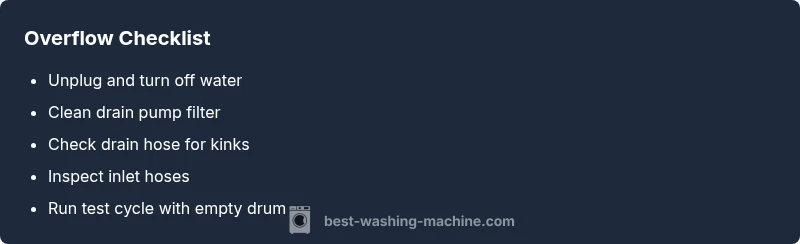
Quick-start troubleshooting checklist
- Unplug the unit and shut off the water supply.
- Inspect and clear the pump filter; rinse and reinstall.
- Straighten and secure the drain hose; check for kinks.
- Inspect inlet hoses for leaks or blockages; replace if damaged.
- Run a short, empty test cycle to observe behavior.
- If overflow persists, consult a professional and document symptoms for faster diagnosis.
Steps
Estimated time: 45-60 minutes
- 1
Power down and secure water supply
Unplug the washer and shut off both the hot and cold water valves. This prevents accidental shock and minimizes water flow during inspection.
Tip: Never reach into a live electrical appliance; ensure the area is completely dry. - 2
Access and clean the drain pump filter
Open the panel at the bottom front (or rear in some models). Place a towel, unscrew the filter, and rinse out lint and debris.
Tip: Have a shallow dish on hand for trapped water and avoid forcing seals. - 3
Inspect drain hose for kinks
Trace the hose from the back of the washer to the drain. Remove any kinks and ensure it is securely connected.
Tip: Do not cut or replace hose without ensuring proper length and routing. - 4
Check inlet hoses and valves
Look for cracks or leaks at the fittings. Tighten connections and replace damaged hoses.
Tip: Avoid overtightening; use hand-tight plus a quarter-turn with pliers. - 5
Test sensor and cycle settings
Set to a small load, select a normal wash, and observe fill level. If the water rises beyond the expected level, the sensor may be faulty.
Tip: Keep a log of observed levels and cycles for service notes. - 6
Run a controlled test cycle
With an empty drum, run a quick cycle to verify if overflow stops after fixes.
Tip: Stand by with towels and a bucket for any residual water. - 7
Evaluate results and document
If overflow persists after steps, prepare for professional assessment and reference maintenance records.
Tip: Provide model number, serial, and up-to-date symptoms to the technician. - 8
Restore and monitor
Reconnect water supply, run a small load, and monitor for any signs of leakage or overflow over 24 hours.
Tip: Schedule preventive maintenance to avoid future issues.
Diagnosis: Washing machine overflows during fill or drain
Possible Causes
- highclogged drain pump filter
- highkinked or blocked drain hose
- mediumfaulty water level sensor
- lowoverloaded drum causing overflow
Fixes
- easyClean the drain pump filter and any accessible debris from the pump
- easyStraighten the drain hose and replace if damaged or crushed
- mediumTest and recalibrate or replace the water level sensor if needed
- easyEvenly distribute laundry and avoid overloading the drum
FAQ
What should I do first if my washing machine overflows?
Unplug the machine, shut off water, and perform quick checks on the drain hose and pump filter. Clear any visible blockages and test with a short cycle. If the overflow continues, follow the diagnostic steps below for a precise fix.
First, unplug the machine and shut off water, then inspect the drain hose and pump filter for blockages. If it still overflows, use our step-by-step guide for a precise fix.
Can a clogged drain pump filter cause overflow?
Yes. A clogged pump filter can prevent proper drainage and cause water to back up and overflow. Clean the filter, reseat it correctly, and run a test cycle to confirm.
Yes. A clogged pump filter can cause overflow. Clean it and test the washer.
Is overflow due to a bad water level sensor?
A faulty water level sensor can misread the tub level and cause overfilling. If basic checks don’t resolve it, the sensor or control system may require professional testing or replacement.
A bad level sensor might overfill. If basic fixes fail, have a pro inspect the sensor.
Will overloading cause overflow?
Overloading can hinder proper drainage and sensor readings. Remove excess items, balance the load, and run a smaller load to see if the issue recurs.
Yes, a too-full drum can cause overflow. Try a smaller, balanced load.
How often should I clean the drain pump filter?
Check and clean the drain pump filter every 1–3 months, depending on usage and debris levels. A clean filter reduces the risk of blockages that cause overflow.
Clean the drain pump filter every 1–3 months to prevent overflow.
Do I need a professional if water leaks after replacing the hose?
If water leaks persist after hose replacement, or if you encounter electrical concerns, contact a licensed technician. Warranties may require professional service for certain failures.
If leaks continue after replacing the hose, call a professional. Your warranty may require it.
Watch Video
The Essentials
- Identify whether overflow is due to drain or sensor first
- Start with safe, simple checks before disassembly
- If in doubt, call a professional to avoid warranty issues
- Regular maintenance reduces overflow risk
- Document symptoms for faster service