What Causes Washing Machine Drain Overflow and How to Fix It
Discover common causes of washing machine drain overflow, safe diagnostics, and practical fixes with step-by-step guidance from Best Washing Machine.


Overflow during a wash cycle is usually triggered by a clogged drain path, a blocked filter or pump, or an overflowing standpipe. Start with the simplest checks: inspect the drain hose for kinks, clear any visible obstruction, and run a short drain/rinse cycle with an empty drum to confirm flow. If water still spills, proceed to a safe, deeper inspection.
What causes washing machine drain to overflow
The phrase what causes washing machine drain to overflow isn’t a mystery when you break it down. Most overflow events come from a few predictable sources: a clogged drain hose or standpipe, a blocked lint filter or pump, excessive suds from too much detergent, or a failing drain pump or control board. The drain path must move water away fast enough for the machine to fill again; if it can’t, water backs up and leaks onto the floor. According to Best Washing Machine, the majority of overflow incidents are linked to clogs or hose issues, not to exotic electrical faults. Being systematic about the search helps you avoid unnecessary disassembly and costly repairs.
If your unit is new or under warranty, consult your manual and the brand’s guidance before taking apart panels. A quick check around the drain hose, the pump area, and the lint filter can often reveal the root cause without tools or professional help. This approach aligns with common troubleshooting practices for washers and emphasizes safety and efficiency.
- Keep a calm, methodical approach: identify the symptom, then test the simplest path first.
- Many overflow cases are solved by clearing a visible blockage or straightening a kink in the hose.
- When in doubt, document what you observe and step back to reassess rather than forcing parts apart.
How drainage design affects overflow risk
Washing machines rely on a specific drainage setup to prevent overflow. The height and routing of the drain hose, the presence of an air gap, and how the standpipe connects to your home’s drain all matter. If the hose is inserted too low, bent, or tightly coiled, water can back up into the drum or beyond the cabinet. A standpipe that’s too short or blocked creates a bottleneck just as the tub fills, increasing the chance of overflow. Air gaps help break the siphon effect, enabling gravity to carry wastewater away smoothly. Best Washing Machine notes that improper drain height and partial blockages are among the leading contributors to overflow events.
To minimize risk, keep the drain hose elevated above the water level in the tub, ensure the standpipe remains clear, and avoid tying the hose in loops that trap water. If you’re renting or in a shared building, ensure the plumbing code requirements for laundry drains are met to reduce the chance of a spill.
- Inspect for kinks or crushed sections in the drain hose.
- Confirm the standpipe is clear and of the correct height for your model.
- Use a firm, anti-siphon connection if your setup requires additional components.
Quick checks you can perform safely (no tools needed)
Before you dismantle major parts, perform a few safe checks. First, unplug the washer and pull the drain hose away from the back of the unit to inspect visually for kinks or blockages. If you see lint, soap scum, or hair, wipe it away and reinsert the hose, ensuring it sits straight and elevated. Check the standpipe or drain inlet for obstructions you can clear without aggressive disassembly. Run a short rinse cycle with the machine empty to observe how quickly water clears through the drain. If the water backflows again, move to the next level of inspection. This staged approach minimizes risk and helps isolate the issue quickly.
- Never put your hands into a live electrical area; unplug first.
- Use a flashlight to spot hair or debris blocking the hose or inlet.
- Re-test with a small amount of water to observe flow dynamics.
Inspect the lint filter, pump, and internal clog risks
Many overflow problems originate inside the drum where lint and debris accumulate, or inside the pump housing where a jam can slow or stop water flow. Find the lint filter (often near the bottom or behind access panels on front-loaders) and remove any buildup. If your machine has an accessible pump filter, remove and rinse it, checking for an obstruction that would slow water movement. When possible, verify the impeller spins freely and there are no obvious signs of wear or damage. If you encounter resistance or the impeller won’t rotate, do not force it—this could indicate a seized pump that requires professional service. Best Washing Machine recommends routine visual checks to prevent surprises during high-demand cycles.
- Remove debris gently; avoid bending plastic parts.
- Spin the impeller by hand to confirm it moves freely.
- If the filter is very dirty, perform a deeper clean as per the manual.
When the foam from detergent becomes a culprit
Detergent choice and quantity play a surprising role in overflow. Excessive suds can back up into the tub and drain, creating the appearance of an overflow even if the drain path is clear. Use the detergent recommended by your washer’s manufacturer and avoid high-suds formulas. If you notice persistent foaming, switch to a lower-suds option and run a rinse cycle to clear residual bubbles. This is particularly important for high-efficiency machines that rely on precise water management. The goal is to keep the foam level manageable while water drains smoothly.
- Use the correct type of detergent for your machine (HE vs. regular).
- Never add detergent directly into the drum after the cycle has started.
- If foam persists, pause the cycle and run a quick rinse with no laundry.
When to consider electrical and pump-related causes
If the overflow continues after you’ve cleaned hoses and filters, the issue might lie with the drain pump or the control system. A failed pump can’t move water away fast enough, causing standing water that sloshes out as the tub fills. An intermittent control board fault can mis-tim water intake and drainage cycles, producing overflow at odd moments. In these cases, diagnosis becomes more technical and requires test equipment or professional expertise. Best Washing Machine emphasizes that electrical-related problems deserve cautious handling, as power components pose safety risks when not properly diagnosed.
- Look for error codes on digital displays; note them for service.
- Listen for the pump’s humming or grinding during draining.
- If the pump won’t start or runs continuously, contact a technician.
The diagnostic flow you can follow (flowchart-style)
The diagnostic flow below combines symptoms, likely causes, and recommended fixes in a practical sequence. Start with the simplest checks and move toward more involved steps only if needed. This approach aligns with standard troubleshooting workflows used by the Best Washing Machine team and helps you avoid unnecessary repairs.
- Symptom: Overflow occurs during drain phase or after filling.
- Check: Drain hose for kinks; ensure standpipe is clear.
- If hose and standpipe are clear, inspect lint filter and pump for debris.
- If there is still overflow, test for foam causes by reducing detergent and running a rinse.
- If none of the above fixes resolve the issue, evaluate the pump and control system for potential replacement.
- If you’re unsure at any point, stop and call a professional to avoid water damage.
- Document findings to assist the technician with faster service.
Prevention: keep overflow from returning in the future
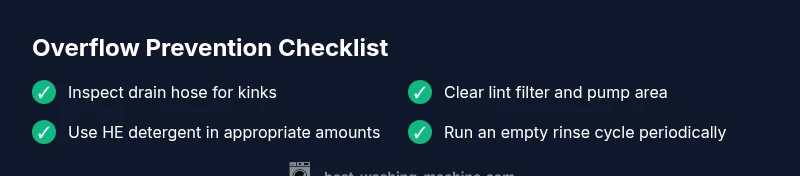
Prevention is the best cure. Establish a simple maintenance routine: clean the lint filter regularly, inspect hoses for wear or kinks, use the correct detergent with HE-compatible washers, and avoid overloading the drum. Periodically run an empty cycle to clear the drain path and monitor for early signs of backup. By keeping the drainage components in good condition, you reduce the chances of a future overflow and extend the life of your machine. Best Washing Machine recommends keeping a quick-check checklist handy near your laundry area for ongoing vigilance.
Steps
Estimated time: 30-60 minutes
- 1
Power down and safety check
Unplug the washer and ensure the area is dry. Gather towels and prepare for possible water spills. This first step prevents shocks and injuries while you inspect the drain system.
Tip: Always conserve safety: power off before poking around the internals. - 2
Inspect the drain hose and standpipe
Visually inspect the hose for kinks, crushing, or blockages. Verify the hose is securely attached and routed above the water level to prevent backflow. Check the standpipe or drain inlet for visible clogs.
Tip: If you suspect a block, gently remove any debris with gloves and a cloth. - 3
Clean lint filter and pump area
Remove the lint filter according to your model’s manual and clean any lint, hair, or soap scum. If accessible, check the pump housing for debris and ensure the impeller spins freely.
Tip: Do not force parts; if you encounter resistance, stop and reassess. - 4
Test a short drain cycle
Run a short empty cycle to observe whether water drains smoothly. Watch for any backflow, unusual noises, or delayed drainage.
Tip: Keep a towel handy for spills and monitor the display for error codes. - 5
Address foam and detergent issues
If foam is present, switch to a low-suds HE detergent and run a rinse with no laundry to clear foam buildup.
Tip: Avoid adding detergent mid-cycle; follow the detergent guideline for your model. - 6
Call a professional if needed
If the overflow recurs after these steps, or you suspect the pump or control board is faulty, schedule professional service.
Tip: Professional help prevents further damage and ensures safe repairs.
Diagnosis: Washing machine drain overflowing during or after a cycle
Possible Causes
- highClogged drain hose or standpipe
- highBlocked lint filter or pump debris
- mediumExcess suds from improper detergent quantities
- lowDrain pump failure or power/electrical issue
- lowVent/air-gap misconfiguration or improper hose routing
Fixes
- easyClear hoses, straighten, and clear any visible blockage
- easyRemove lint filter and clean the pump area; remove debris
- easyReduce detergent and run a rinse to clear suds
- mediumTest pump operation; check electrical connections and codes; replace if needed
FAQ
What causes washing machine drain to overflow?
Overflow is usually caused by a clogged drain path, blocked filter or pump, or a blocked standpipe. Inspect hoses, filters, and the pump first before considering more complex repairs.
Overflow is typically from clogs or hose issues—start with the hose and filter.
How do I stop my washer from overflowing during a cycle?
Ensure the drain hose is clear and properly routed, avoid overloading, and use the correct detergent quantity. Monitor the first minutes of the cycle for unusual behavior.
Clear hoses, avoid overloads, and use the right detergent to prevent overflow.
Is it safe to unplug and check the drain hose?
Yes. Power off, unplug, and inspect the drain hose for kinks or blockages. Reattach securely after cleaning.
Unplug first; then inspect for kinks or blocks in the hose.
Should I call a professional for drain overflow?
If basic checks don’t resolve the overflow or you suspect a pump or control issue, it’s wise to contact a professional.
If simple fixes fail, get a professional to check the pump and electronics.
Can detergent foam cause overflow?
Yes. Excess suds can back up and spill. Use the manufacturer-recommended detergent and run a rinse to clear foam.
Too much foam can cause overflow; use the right detergent and rinse.
How often should I clean the lint filter and pump?
Check the lint filter regularly and clean the pump area periodically, especially after heavy loads. Consider a monthly check based on usage.
Clean the lint filter regularly and inspect the pump each month.
Watch Video
The Essentials
- Check hoses and standpipes first
- Clean filters and inspect the pump
- Avoid overloading or excess detergent
- Use a professional for pump/control issues
- Maintain regular hose/filter maintenance to prevent future overflow