Why Would a Washing Machine Overflow? A Practical Troubleshooting Guide
Discover the top reasons washers overflow, how to diagnose quickly, safe fixes, and preventive steps to protect your home from costly water damage.


Overflow in a washing machine happens when the machine fills beyond its intended level or drains improperly. The fastest path to safety is to unplug, check for obvious issues, and run small tests. This quick guide helps you triage before calling a technician.
Understanding why would a washing machine overflow
Overflow happens when the washer fills beyond its intended level or fails to drain properly. According to Best Washing Machine, the most common overflow causes are hardware faults paired with user errors. If you're wondering why would a washing machine overflow, it’s usually due to a blocked drain path, a faulty water level sensor, or an overstuffed drum. In many homes, an overfilled drum, a blocked drain path, or a misrouted drain hose can push water into unintended places. A simple visual check and a methodical approach can prevent damage. Start with the easy fixes—like clearing a blocked filter or straightening a kinked hose—before assuming you need a part replacement.
Common Causes of Overflow
Water overflows are rarely mysterious. Most often, they come from a few repeat offenders: a clogged drain pump filter, a worn or blocked drain hose, a malfunctioning pressure switch, an overfilled drum, or a misrouted drain hose. The interaction of these elements with normal wash cycles can push water outside the tub or into the floor. Understanding these causes helps you tackle the issue systematically rather than guessing. In addition to mechanical issues, check for detergent residue build‑up, which can affect drainage and sensor readings. Remember, even small faults compound over several cycles, so comprehensive checks beat piecemeal fixes.
Quick Checks You Can Safely Perform
If overflow begins, perform a calm, safe series of checks: unplug the machine, pull the plug from the wall, and shut off the water supply. Inspect the drain pump filter for debris and clean it if accessible. Examine the drain hose for kinks or a siphoning setup that allows water to backflow. Check the load size; redistribute clothes evenly to avoid unbalanced or blocked flow. Finally, run a short test cycle with the drum empty to observe the fill and drain behavior. If water still breaches the basin, the issue likely lies with the sensor or valve and may require professional service.
When to Call a Professional
If you cannot locate a simple cause or if the overflow recurs after performing basic checks, it’s time to call a pro. Electrical smells, flickering lights, or water near electrical components are red flags that require licensed help. A technician can test the pressure sensor, check the inlet valve, and inspect internal hoses without risking personal injury or further damage to your home.
Preventing Future Overflows
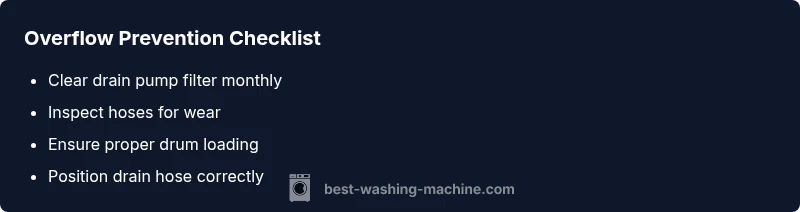
Prevention is easier than repair. Keep the drain pump filter clean and accessible, inspect hoses for wear or kinks every few months, and avoid overloading the drum. Position the drain hose correctly, following your model’s manual; improper height can promote siphoning and spills. Consider a gentle re‑balance and a detergent load following the washer’s guidelines. Regular maintenance reduces the chance of overflow and extends the life of your machine.
Steps
Estimated time: 40-60 minutes
- 1
Unplug the washer and secure the area
For safety, unplug the machine from the wall outlet and shut off the water supply. Move any nearby items and place towels to catch any residual water. Wait 1–2 minutes to let the system discharge before opening access panels.
Tip: Avoid touching metal parts with wet hands. - 2
Access the drain pump and filter
Carefully access the drain pump filter or door to the pump chamber as per your model's manual. Place a shallow tray to catch any remaining water as you remove the cover and debris.
Tip: Have a towel or small bucket handy; this is the messiest step. - 3
Clear debris and inspect the drain hose
Remove hair, lint, coins, and fabric fibers from the pump filter and inner housing. Check the drain hose for kinks, blockages, or detachment; straighten and reattach if needed.
Tip: If you see a loose hose clamp, reseat and tighten it. - 4
Check the drum for overloading
Open the door and feel the drum movement. If it spins freely but feels heavy when loaded, reduce the load size and redistribute items evenly.
Tip: When in doubt, split large loads into two cycles. - 5
Inspect water inlet hoses and valve
Turn off water, disconnect hoses one at a time, and check for kinks or leaks. If you notice a stiff inlet valve or a dripping valve, plan for replacement.
Tip: Replace worn hoses to prevent future leaks. - 6
Test the machine with an empty cycle
Plug back in, select a short wash, and monitor the fill and drain. Stop the cycle if water overflows again and note which stage triggers it.
Tip: Observe both fill and drain phases separately. - 7
Check the pressure sensor/air tube
If the overflow persists, test the pressure sensor by gently blowing air into the sensor line or replacing the sensor if you have the parts and tools.
Tip: A professional can safely test sensors if you’re unsure. - 8
Reassemble and run a final test
Secure panels, reconnect hoses, and run a final test with a small load to confirm the overflow is resolved.
Tip: Keep towels handy during the first few cycles post-fix. - 9
Document and reset maintenance routine
Record the checks you performed and schedule regular maintenance: clean the filter monthly, inspect hoses quarterly, and follow detergent guidelines.
Tip: Set a reminder to prevent future issues.
Diagnosis: Water overflowing from the washing machine during or after fill or spin
Possible Causes
- highClogged drain pump filter or pump debris
- mediumOverloading the drum
- highFaulty water level sensor / pressure switch
- mediumInlet valve or hoses feeding too fast / kinked hoses
- lowImproper drain hose installation (vertical drain or siphoning)
Fixes
- easyClear the drain pump filter and remove debris; perform a pump test
- easyReduce load size and distribute evenly
- mediumTest and replace the pressure sensor/air tube if faulty
- mediumInspect inlet valve and hoses for kinks or drips; replace if needed
- easyEnsure the drain hose height and routing comply with guidelines; fix siphon issues
FAQ
What is the most common cause of a washing machine overflow?
The most common causes are a clogged drain pump filter, a faulty water level sensor, or an overfilled drum. Based on Best Washing Machine analysis, these issues are frequent culprits you can fix safely with basic checks.
Clogs and sensor faults are the usual suspects.
Can overloading the washer cause overflow?
Yes. Overloading can prevent proper draining and fill regulation, leading to overflow. Remove bulky items and split large loads into smaller cycles.
Yes, avoid overloading; split large loads.
Is it safe to unplug and inspect the drain pump myself?
Unplug the machine before any inspection and avoid opening electrical components. You can clean accessible filters and hoses; if you need to touch the pump beyond filters, call a pro.
Unplug first and stick to safe, simple checks.
Why does overflow occur only on certain cycles?
Different cycles control fill time and water level differently. A faulty sensor or valve might misread during higher-fill cycles, causing overflow.
It happens because fill control changes by cycle; sensor or valve faults worsen it.
When should I call a professional?
If basic checks don’t stop the overflow, or you notice electrical smells, unusual noises, or leaks beyond the drum, contact a technician.
Call a professional if the overflow persists or you notice electrical smells.
What maintenance helps prevent future overflows?
Regularly clean the drain pump filter, check hoses for wear, ensure proper drum loading, and keep the drain hose correctly positioned.
Keep filters clean and hoses in good shape to prevent overflows.
Watch Video
The Essentials
- Identify the most likely causes first.
- Check and clean the drain pump filter.
- Verify drain hose height and routing.
- Test the water level sensor before replacing parts.
- Call a professional if fixes don’t stop the overflow.