Washing Machine Overflow: Quick, Safe Troubleshooting Guide
Urgent troubleshooting for a washing machine overflowing with water. Learn immediate safety steps, common causes, and a clear, step-by-step fix to prevent floods.


Water overflowing from a washing machine is usually due to a drainage or inlet issue. Start by cutting power and water, then check the drain hose for kinks, the lint filter, and the pump for clogs. If water continues to rise, unplug and call a professional. Always prioritize safety and avoid operating a leaking machine.
Immediate Risks and What to Do in the Moment
Water overflowing from a washer can quickly lead to slip hazards, floor damage, and potential electrical risks if water contacts outlets or cords. The first action is safety: unplug the machine at the wall, shut off the home water supply if accessible, and keep children and pets away from the area. If you can do so safely, place towels or a bucket to catch drips while you assess the situation. Remember, time is critical when water is actively pooling—speed matters to minimize damage. According to Best Washing Machine, most overflow incidents are preventable or quickly contained with a calm, methodical shutdown and hose inspection. Prioritize shutting off power first to avoid any risk of shock while you work on the drainage components.
Common Causes of Washing Machine Overflow
Overflow is rarely a mystery. The most frequent culprits include a kinked, crushed, or blocked drain hose; a clogged pump filter; a blocked or sloppy standpipe or drain connection; and excessive suds from using the wrong detergent or too much soap. Less common causes include a faulty water inlet valve that won’t shut off, a defective pressure switch, or a cracked hose that leaks while filling. A mis-routed drain hose can siphon water back into the tub, causing an overflow even if the pump is working. Understanding these causes helps you target the right component during diagnosis. The Best Washing Machine analysis shows that drain-related issues account for the majority of overflow events in residential settings.
Safety-First Steps You Can Take Now
Even if you suspect a clogged hose, do not push debris back in or reach into a running machine. If the overflow is ongoing, switch off the breaker or unplug the unit, then turn off the home water valves. Use towels or a mop to contain water on the floor while you inspect exterior hoses. When you inspect the drain setup, avoid pulling the washer away from the wall while it’s still connected to water and drainage lines unless you have a helper. Keep a bucket handy to collect water and prevent spills. If you notice damaged hoses or cracked fittings, refrain from running the machine until you repair or replace them.
Diagnostic Checks You Can Perform (Systematic Approach)
A methodical diagnostic approach saves time and reduces risk. Start with the drain path: is the drain hose kinked, crushed, or connected to a standpipe too high or too low? Next, check the pump filter for clogs and clean it if accessible. Then inspect the water inlet hoses and inlet valve for leaks or signs of damage. If you see visible leaks around the valve or hoses, those parts likely require replacement. Finally, test for suds: excessive soap can cause foaming that looks like overflow; ensure you’re using the correct detergent amount for your washer size and cycle selection. This approach aligns with standard troubleshooting practices and helps you determine whether the problem is drain- or inlet-related.
Step-By-Step: Fixes for the Most Common Overflow (Drain-Hose Related)
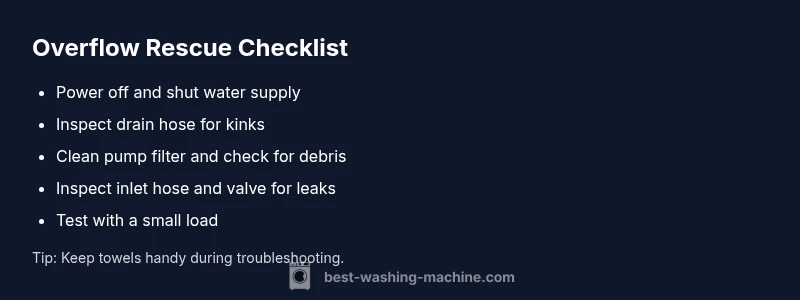
- Power off and unplug the washer; shut off the water supply. 2) Pull the washer away from the wall to access the drain hose and connections. 3) Inspect the drain hose for kinks, cracks, or clogs; straighten any bends and remove any blockages with a flexible brush. 4) Reattach the drain hose securely to the standpipe or outlet box, ensuring the end is fully inserted and clamp is tight. 5) Check the pump area and remove any visible debris from the filter or screen. 6) Plug the unit back in and run a short test load with a small amount of water to confirm the overflow has stopped. If the water level continues to rise, move to the next potential cause. The key is to isolate the hose and pump in this order before moving to the inlet valve.
Preventive Practices to Avoid Future Overflow
- Use the recommended amount of detergent; too much foam can trigger overflow in some models. - Ensure the drain hose is properly routed and secured, not kinked, and positioned at an appropriate height. - Clean the pump filter regularly to prevent clogging from lint, coins, and debris. - Inspect hoses for wear or cracks every few months, replacing any damaged parts promptly. - Run a water-only rinse cycle occasionally to verify the drain and pump are functioning smoothly. These habits reduce the likelihood of future floods and extend the life of your washer.
When to Call a Professional and What to Expect
If overflow persists after you’ve checked the drain hose, pump, and suds sources, or if you notice significant leaks around the inlet valve or hoses, it’s time to contact a professional. A technician can perform pressure tests, inspect the internal impeller and seals, and verify the control board for faults that could cause overfilling. Expect a diagnostic fee and possibly parts replacement if a valve or pump is faulty. Document recent cycles and any unusual noises to help the technician diagnose faster. Protect your floors with a temporary sealant mat or towels during the service window.
Steps
Estimated time: 30-45 minutes
- 1
Power off and shut off water
Unplug the washer and turn off both hot and cold water valves. Move the machine enough to access hoses if safe. Keep towels ready to catch any dripping water.
Tip: If you can, unplug at the wall before touching any metal parts. - 2
Inspect drain hose for kinks
Check that the drain hose is straight, not crushed, and properly affixed to the standpipe or drain. Remove any blockages you can reach from the hose end. Re-seat the hose securely.
Tip: Use a flashlight to inspect the entire hose length for small cracks. - 3
Clean the pump filter
Access the pump filter per your model’s manual and remove any lint, coins, or debris. Rinse thoroughly and reinstall, ensuring a tight seal.
Tip: Wear gloves to avoid sharp edges; have a towel ready for water drips. - 4
Inspect inlet valve and hoses
Look for cracks or leaks at the inlet hoses and valve. If you suspect a defective valve, anticipate replacement and avoid running hot water through a damaged line.
Tip: Take a photo of hose connections before removing to aid reinstallation. - 5
Test run with a small load
Reconnect power and water, then run a short test load with a small amount of water. Observe the transition to confirm overflow has ceased.
Tip: Stand back during test to react quickly if water returns to the tub. - 6
Evaluate results and plan next steps
If overflow persists, move to more advanced checks or call a professional. Document what you checked and the results to speed up service.
Tip: Keep the area dry and safe; mark the issue with a note for future reference.
Diagnosis: Machine overflowing during or after a wash cycle
Possible Causes
- highKinked, crushed, or blocked drain hose
- highClogged pump filter or pump obstruction
- mediumExcessive suds from improper detergent use
- lowFaulty inlet valve or leaking inlet hoses
Fixes
- easyInspect and straighten the drain hose; ensure proper routing and secure connections
- easyRemove debris and clean the pump filter; clear clogs in the drain path
- easyCheck for suds; switch to low-suds detergent and run a rinse cycle
- mediumInspect inlet valve and hoses for leaks or damage and replace if needed
FAQ
What causes a washing machine to overflow?
Overflow is most often caused by a blocked or kinked drain hose or a clogged pump filter. Suds from improper detergent can also trigger overflow. Inspect these areas first before considering more complex components.
Overflow is usually from a blocked drain hose or clogged pump filter. Check detergent suds if needed, and inspect hoses first.
Is overflow always a drain issue?
Not always. While drain blockages are the most common cause, a faulty inlet valve or damaged hoses can cause overfilling. A systematic check helps identify the exact source.
Mostly it’s drain or hose related, but inlet valve issues can also cause overfill. Check methodically.
Can I fix this myself?
Many overflow issues are safe for DIY resolution if you can access and inspect hoses, filters, and hoses. Always unplug the unit and shut off water first. If you’re unsure or see damaged parts, call a professional.
Yes, many parts you can fix yourself, but unplug first and don’t operate damaged components—call a pro if you’re unsure.
What should I do if overflow happens at night?
Turn off power and water, mop up the area, and avoid using electrical outlets near water. Wait until daylight to inspect hoses or call a technician if needed.
Turn everything off, clean up, and wait until morning to check hoses or call for help.
Should I disconnect the power while inspecting?
Yes. Always unplug the washer before inspecting any internal components to reduce the risk of shock.
Yes—unplug before inspecting to stay safe.
How can I prevent overflow in the future?
Use the correct detergent amount, keep hoses in good condition, clean the pump filter regularly, and route the drain hose properly to prevent backflow.
Use the right detergent, check hoses, clean the pump filter, and route the drain hose correctly to prevent future floods.
Watch Video
The Essentials
- Shut off power and water immediately to prevent damage.
- Drain hose and pump are the most common overflow culprits.
- Clean filters and inspect hoses regularly to reduce risk.
- Call a pro if the problem persists after basic checks.