Washing Machine Valve Leak: Fix, Prevent & Inspect
Dealing with a washing machine valve leak? Learn common causes, safety steps, diagnostic flow, and practical fixes to stop leaks fast and prevent home water damage.


The most likely cause of a washing machine valve leak is a faulty or loose water inlet valve or a loose hose connection. Quick fix: turn off the cold and hot water supply, unplug the machine, and tighten or replace the inlet hoses and valve seals. If dripping continues, replace the inlet valve assembly.
Understanding the problem: washing machine valve leak
A valve leak around the water inlet area is a common issue that can cause persistent puddles near your washer or damp cabinets. The leak typically originates at the water inlet valve, hoses, or fittings. Left unchecked, it can lead to mold growth and water damage behind the machine, affecting floors and nearby cabinetry.
According to Best Washing Machine analysis, valve leaks are often caused by worn seals and loose connections. The fix is usually straightforward: shut off the water and power, inspect the inlet valve and hoses, tighten fittings, replace worn washers, or swap the valve assembly if necessary. In many homes, a simple tightening or seal replacement resolves the problem quickly and safely. Understanding the valve area helps you plan a safe repair window and protects your home from unplanned floods.
Common causes of a valve leak in washers
Leaks from the valve are seldom mysterious. The top culprits include:
- Loose or cracked water inlet hoses and fittings, which allow drips at the connection.
- Worn or damaged water inlet valve, especially after years of operation or repeated cold/hot cycles.
- Damaged valve seals or gaskets that fail under pressure.
- Debris or mineral buildup on the valve screen, reducing a secure seal.
- Over-tightening connectors that strip threads or squeeze gaskets, creating micro leaks.
For each cause, the fix ranges from tightening clamps to replacing the valve assembly. Best Washing Machine's recent guidance emphasizes inspecting both hose condition and the valve body before deciding on replacement. In 2026, the analysis confirms that many leaks stem from aging hoses and seals.
Safety first: shut off water and power
Before touching any part of the washer, ensure your safety. Start by turning off both the hot and cold water supply valves, then unplug the unit from the wall outlet. If you notice a steady leak while the machine is on, don't run it; instead, place towels or a basin to catch drips and prevent water damage. Move the washer away from the wall slowly to access the valve area, and keep children and pets clear. With power disconnected, you minimize the risk of electrical shock if water comes into contact with electronics. A careful approach reduces risk while you inspect hoses and the inlet valve. This safety step is essential to prevent personal injury and home flooding.
Diagnostic flow: symptom to fix
A systematic approach helps you identify the true source of the leak. Start by observing where the water appears most (back of the washer, valve area, or hoses). If moisture is concentrated around the inlet connections, you likely have a hose or fitting issue. If dampness is centered on the valve body, the inlet valve or its seals may be failing. If water leaks only when the washer is filling, inspect the valve screen, seals, and coupling. Document any drips and note whether they occur during fill or wash cycles. This process guides you toward the right remedy and prevents unnecessary replacements. Following a clear diagnostic flow reduces guesswork and speeds up a safe repair.
Hands-on inspection: parts to check
- Inspect inlet hoses for cracks, bulges, or kinks. Replace hoses showing wear and ensure the clamps are tight but not overtightened.
- Check hose clamps for corrosion or loose feel; reseat them with a screwdriver or pliers as needed.
- Look at the water inlet valve assembly itself; look for moisture, corrosion, or a cracked valve body.
- Remove and clean the valve screen or filter; mineral buildup can prevent a proper seal.
- If you see staining or discoloration around the valve, or the leaks persist after tightening, the valve seals or the valve body may be compromised and require replacement.
Fix options: tightening, sealing, or replacing components
- Easy fixes: reseat hoses, replace worn washers or ferrules, and tighten clamps to stop small drips.
- Moderate fixes: remove the valve cover if accessible and reseal the valve with high-temperature rated sealant or Teflon tape on threads where appropriate.
- Major fixes: replace the inlet valve assembly or the entire valve body, which may involve replacing mounting hardware and reattaching hoses securely. Always test with the water off and watch for leaks after reassembly. If the inlet valve is cracked or the seals are damaged beyond simple resealing, replacement is typically required.
Maintenance to prevent future leaks
- Perform a quarterly inspection of inlet hoses and clamps.
- Use high-quality hoses rated for your water pressure and avoid plastic hoses that crack easily.
- Keep mineral buildup in check by using the right detergent and occasional descaling.
- If your home has high water pressure, install a pressure regulator to reduce strain on the valve and hoses.
- Replace worn seals and valve parts every few years based on manufacturer recommendations and usage.
When to call a professional
This section explains when DIY isn’t enough. If diagnostic results indicate a failing inlet valve or cracked valve body, or you cannot safely reach the valve area, contact a professional technician. Likewise, if your washer is under warranty, consult the manufacturer guidelines before attempting major repairs, as self-repairs could void coverage. Quick action is essential to prevent water damage and further wear on electrical components.
Steps
Estimated time: 30-60 minutes
- 1
Power down and shut off water
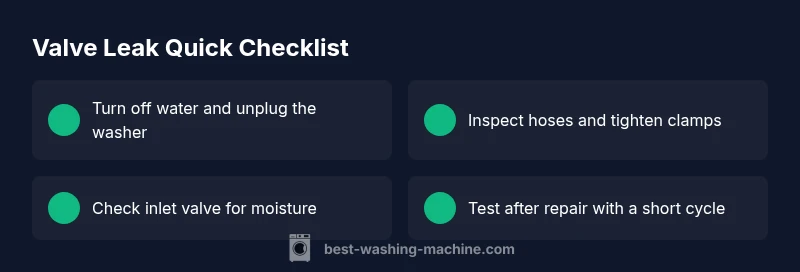
Turn off both hot and cold water supply valves and unplug the washer from the wall outlet. Move the machine away from the wall to access the valve area. This keeps you safe while inspecting hoses.
Tip: Label hoses if you disconnect them to simplify reassembly. - 2
Inspect hoses and clamps
Visually inspect inlet hoses for cracks or bulges. Tighten clamps gently and replace any damaged hoses. Ensure the hose ends are clean before reattaching.
Tip: Don’t overtighten plastic fittings; they can crack. - 3
Check the valve area for moisture
Look for active drips or dampness around the valve body and fittings. If moisture is present, you may have a failing valve seal or a cracked valve body.
Tip: Use a flashlight to spot tiny leaks. - 4
Clean the valve screen
Remove the screen/filter from the inlet valve and rinse out mineral buildup that can cause leaks. Reinstall carefully.
Tip: Be gentle with screens to avoid bending. - 5
Test for leaks after reseating
With water still shut, briefly turn on the water supply and check for new drips at hoses and valve. If leaks persist, proceed to valve replacement.
Tip: Take photos of connections before disassembly. - 6
Restore power and run a test cycle
Reconnect power, turn on water, and run a short wash cycle to verify the leak is resolved. If you still see leakage, call a professional.
Tip: Do not run a full cycle if you see a leak again.
Diagnosis: Water is leaking from the water inlet area behind the washing machine
Possible Causes
- highLoose or cracked water inlet hoses or fittings
- highWorn or damaged water inlet valve
- mediumDamaged valve seals or gaskets
- lowDebris in valve screen or mineral buildup
Fixes
- easyTighten hose connections and clamps; replace worn washers
- hardReplace the water inlet valve assembly
- mediumReplace valve seals or gaskets
- easyClean valve screen and remove mineral buildup
FAQ
What are the common signs of a washing machine valve leak?
Common signs include moisture around the inlet hose area, damp hoses, pooling water near the back of the washer, and an increased water bill if the leak persists. Inspect the valve area and hoses to identify the source.
Look for wetness around the inlet area and damp hoses; a persistent drip usually points to the valve or hose connections.
Can I fix a valve leak myself?
Yes for simple issues such as tightening hoses or replacing worn washers. If the leak comes from the valve body or requires valve replacement, consider calling a professional.
You can handle simple hose tightening, but valve replacement is typically best left to an expert.
How do I know if the inlet valve is failing?
Moisture around the valve, dampness that persists after tightening, or water flowing even when valves are closed indicates the inlet valve may be failing.
If you see moisture at the valve and it leaks even after tightening, the valve is likely failing.
Is it safe to continue using the washer if I notice a valve leak?
No. A valve leak can cause flooding and electrical hazards. Stop using the washer until the leak is fixed or a professional confirms safety.
No—stop using it until a leak is repaired to avoid water damage and shocks.
How much will inlet valve replacement cost?
Prices vary by region and model. Consult a local technician for a quote. Inlet valve replacement is a mid-to-high effort repair that requires proper tools.
Costs vary; get a local quote to understand the total for parts and labor.
Watch Video
The Essentials
- Shut off water and power before inspection
- Prioritize hose and clamp checks first
- Replace worn inlet valve components if leaks persist
- Prevent future leaks with regular maintenance