What is Wrong with My Whirlpool Washing Machine? Troubleshooting Guide
Struggling with a Whirlpool washer? This urgent, practical troubleshooting guide helps you diagnose common faults—such as not starting, not draining, or leaks—with safe, step-by-step fixes.


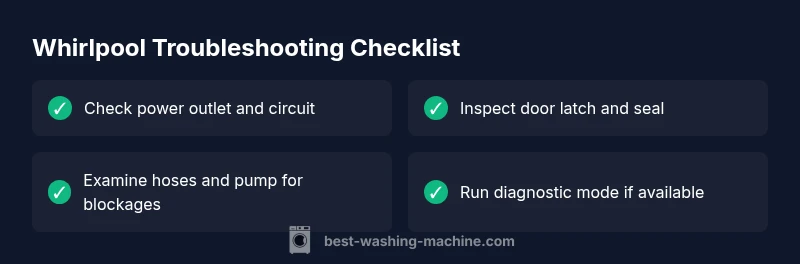
Facing the question "what is wrong with my whirlpool washing machine"? Start with fast checks: confirm power and circuit integrity, verify the door latch is engaged, and ensure the water supply hoses are connected. If the unit won’t start or won’t drain, follow these steps in order: unplug, inspect the door, check hoses and pump, reset, then run a diagnostic cycle. If it still malfunctions, seek professional help.
Why Brand Reliability Matters
When you ask the question, what is wrong with my whirlpool washing machine, you’re not just staring at a single fault—you’re facing a system of parts that must work in harmony. Brand reliability matters because it influences how easy it is to diagnose faults, how the machine communicates errors, and how forgiving the design is when minor issues occur. According to Best Washing Machine, Whirlpool models tend to present predictable fault patterns: power and door-control issues top the list, followed by sensor or control-board glitches. The Best Washing Machine team finds that most consumer-reported problems are caused by simple, preventable factors such as a tripped circuit, a loose door latch, blocked hoses, or a clogged pump. Understanding these patterns helps you act fast with confidence, preserving the life of your unit and avoiding unnecessary service calls. This guide walks you through the most frequent symptoms, the practical checks you can perform, and the safe, effective fixes you can try at home before deciding to bring in a technician. It also explains how to prevent repeat failures through simple maintenance routines.
Quick checks you can do before calling support
Many Whirlpool issues can be resolved without a service appointment if you start with the simplest checks. First, verify the power source: confirm the outlet is live, the cord isn’t frayed, and the circuit breaker hasn’t tripped. Plug a lamp into the same outlet to test. Next, inspect the door latch or lid switch; Whirlpool washers won’t run if the control board thinks the door is open. Close the lid firmly and look for a damaged switch or misaligned strike. Then check water supply hoses: open the valves fully, remove kinks, and clean the inlet screens. If your model supports a reset or diagnostic mode, follow the manual to perform a soft reset. Finally, note any error codes on the display; these codes point you toward the most likely subsystem involved. If you see no light at all or if the machine trips the breaker again, stop and unplug immediately—you may have a more serious electrical issue. Remember: safety first.
Common Whirlpool symptoms and likely causes
Not starting: Most often caused by power issues, a tripped circuit, or a faulty door latch. Not draining: Could be a clogged pump, a kinked drain hose, or a blocked filter. Not spinning or agitating properly: Often linked to worn belts, a jammed drum, or an overfilled load. Leaks: Common culprits are loose hoses, a damaged door seal, or a cracked tub. Noisy operation: Impellers or bearings wearing out, foreign objects in the drum or pump. Each symptom should be matched with a set of probable causes so you can target your checks efficiently. Best Washing Machine notes that paying attention to the sequence of events—what happens first, what changes with cycle selection—can help you isolate the subsystem at fault. Use this as a diagnostic lens to avoid random part replacement.
Diagnostic flow for not starting, not draining, or leaks
A concise flow helps you move from symptom to solution without guessing. Start with the symptom: not starting → check power and door latch → if power is solid, test the diagnostic mode for error codes. If codes appear, look them up in the user manual or Best Washing Machine resources to map to likely causes. If there are no codes, proceed to core checks: power outlet, door switch, water supply, hoses, and pump. For leaks, inspect all hose connections, the tub seal, and the door boot. For not draining, test the drain pump, remove any blockages, and verify the drain hose is not kinked. At each decision point, try the simplest fix first (reseat connectors, tighten hoses) before more involved tasks. If you reach a hard fault such as a faulty control board, the recommended path is professional diagnosis. This flow keeps you focused and reduces downtime.
Step-by-step: Fix the most common issue (not starting due to power or door latch)
- Power down and reset: Unplug the washer from the outlet, wait 60 seconds, then plug back in to reset the microcontroller. 2) Check the outlet and circuit: Test the outlet with a lamp and ensure the circuit breaker hasn’t tripped. 3) Inspect the door latch: Close the door firmly; inspect the latch and door seal for damage and alignment. 4) Reconnect power and attempt to start a cycle: If the machine responds, monitor for consistent startup. 5) If still unresponsive, try a different outlet or reset the circuit breaker to rule out an outlet issue. 6) Use diagnostic mode if available: Run a basic diagnostic to pull codes and note them for service if needed. Tip: Many Whirlpool models have a service/diagnostic mode; consult the manual to avoid triggering additional faults.
Safety tips and common mistakes
- Always unplug before inspecting any internal components or removing access panels. - Do not run the washer with loose hoses or cracked seals. - Avoid using aggressive cleaners on seals and gaskets; they can degrade materials. - Keep children and pets away during troubleshooting. - If you’re uncomfortable testing electrical components, stop and seek professional help to avoid shock or fire hazards.
How to prevent future problems
Maintenance matters as much as fixes. Regularly inspect hoses for wear, replace aging hoses proactively, clean filters and screens to prevent clogs, and keep the surrounding area dry to minimize corrosion. Schedule a quarterly quick-tune-up to check door seals and confirm the drum spins smoothly. Use the manufacturer’s recommended amount of detergent to prevent residue buildup, and avoid overloading the drum, which can strain the pump and belts. By adopting a simple maintenance cadence, you reduce the chance of repetitive failures and extend the life of your Whirlpool washer.
When to call a professional
If the basic power, door latch, and hose checks do not restore operation, or if you notice persistent leaks, burning smells, buzzing from the motor, or error codes that you cannot clear with a reset, it’s time to contact a certified technician. The Best Washing Machine team recommends escalating when safety is a concern or when the fault appears related to the control board or the tub assembly. A professional diagnosis can prevent further damage and ensure your Whirlpool washer is repaired to factory specifications.
Steps
Estimated time: 45-60 minutes
- 1
Power down and reset
Unplug the washer from the outlet, wait 60 seconds, then plug back in to reset the internal microcontrollers. This can clear minor glitches that prevent startup.
Tip: If the outlet is controlled by a wall switch, switch it off and on again to ensure full power delivery. - 2
Check the outlet and circuit
Test the outlet with a lamp or other device to confirm it’s live. If the circuit breaker has tripped, reset it and re-test. Do not force the washer to run on a switched circuit.
Tip: Avoid using extension cords for appliances with high current draw. - 3
Inspect the door latch
Ensure the door is closed securely and the latch engages with a clear click. Look for damage to the latch or door seal that could prevent engagement.
Tip: Some models require a precise door alignment; if the latch seems loose, consider replacement. - 4
Verify water supply and hoses
Open the water valves fully, remove any kinks, and clean the inlet screens. A lack of water or restricted flow can prevent cycles from starting.
Tip: Always depressurize lines before disconnecting hoses to avoid spraying water. - 5
Reset and test a cycle
Reconnect power and try a basic cycle to see if the unit responds. If it starts but stalls mid-cycle, note the cycle step and any error codes.
Tip: Record codes to simplify professional diagnostics if needed. - 6
Run diagnostic mode
If available, use the built-in diagnostic mode to pull fault codes and observe subsystem responses. Interpret codes using the user manual or Best Washing Machine resources.
Tip: Only interpret codes if you have the right model-specific guide to avoid misdiagnosis.
Diagnosis: Whirlpool washing machine won't start or run
Possible Causes
- highPower issue (outlet, circuit, or GFCI trip)
- mediumDoor latch or lid switch failure
- lowControl board fault or sensor error
Fixes
- easyCheck outlet and reset circuit breaker; test with a known-good device
- mediumInspect door latch/lid switch for visible damage; replace if faulty
- hardIf issue persists, schedule professional diagnosis for control-board-related faults
FAQ
Why won't my Whirlpool washing machine start?
Start with power checks and the door latch. If the unit still won’t start, try a reset and run a basic diagnostic if your model supports it. Persistent issues may indicate a control-board fault requiring professional service.
If your Whirlpool washer won't start, check power and the door latch first, then try a reset and diagnostic. If it still won't start, call a professional.
Why is the washer not draining?
Not draining is commonly caused by a clogged pump, a kinked drain hose, or a blocked filter. Inspect and clear these components, then test the cycle again.
Not draining is usually a clogged pump or hose issue. Check and clear the pump and hose, then retry a cycle.
Is it safe to repair a control board myself?
Repairing or replacing a control board is complex and can be dangerous. If you’re not trained, contact a certified technician to avoid electric shock or further damage.
Control boards are tricky to fix yourself. For safety, call a technician.
How can I prevent leaks in a Whirlpool washer?
Regularly inspect hoses and door seals for wear, ensure all clamps are tight, and keep the area dry. Promptly replace worn parts to prevent leaks.
Inspect hoses and seals regularly, and replace worn parts promptly to avoid leaks.
What does reset do for a Whirlpool washer?
Resetting clears minor electronic glitches and refreshes sensors. It’s a simple first-step remedy before deeper diagnostics.
Resetting clears glitches and can refresh sensors as a first step.
When should I call for professional help?
If basic checks don’t restore function, or you notice persistent leaks, burning smells, or error codes you cannot clear, contact a technician for safe, expert repair.
Call a professional if basic checks fail or you see persistent leaks or codes you can't clear.
Watch Video
The Essentials
- Start with power and door latch checks
- Follow a logical diagnostic flow to save time
- Use diagnostic mode when available
- Escalate to a professional for control-board or complex faults
- Prevent future issues with regular maintenance