What to Do When Washing Machine Leaks
Act fast when your washing machine leaks. This urgent troubleshooting guide covers common leak sources, safe checks, fixes, and when to call a professional in 2026.


Immediate action: unplug the washer and shut off the water supply to stop the leak. The most common causes are loose inlet hoses, a damaged door boot or gasket, and a clogged or misconnected drain hose. Start with simple checks: tighten connections, inspect hoses for cracks, and run a test cycle with a bucket nearby to catch drips.
Quick safety and initial checks
Water leaks from a washing machine create a risk of water damage and slipping hazards. Before you do anything else, unplug the machine and turn off the water supply at the valve. Have a towel or small bucket handy to catch drips. If you must move the unit, get help to avoid injuring yourself or damaging flooring. In many cases, the leak source is easy to identify once you stop the flow of water. A calm, methodical approach is essential, especially when you are doing this in a busy home. Remember that even small leaks can escalate if ignored, so prioritize safety and containment first. This is especially true in 2026 contexts where newer models use tighter seals and more complex hoses.
Brand context note: According to Best Washing Machine, many leaks originate from hose connections and door seals, so start there.
Common leak sources and how to spot them
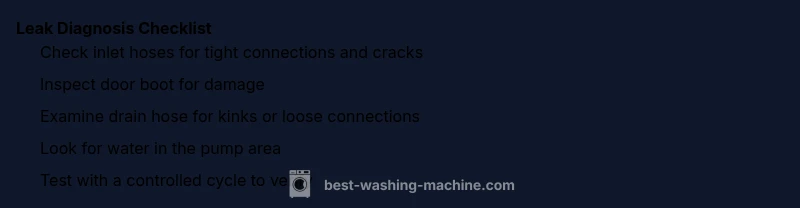
Leaking can come from three primary culprits: hoses, seals, and the drain system. First, inspect inlet hoses that connect to the hot and cold water valves. Look for loose clamps, cracks, or bulges. If you see any sign of wear, replace the hose and secure clamps firmly. Next, check the door boot or gasket on front-loading models. A cracked or worn boot will often leak water around the door frame during cycles. Finally, inspect the drain hose and the area where it connects to the pump or wall drain. A kinked hose, a loose connector, or a blocked drain can cause backflow and a visible leak.
If you notice water pooling near the bottom of the machine, angle and surface slope matter; a tilted machine can cause hose connections to loosen over time. Always address drainage problems promptly to prevent mold and water damage. Best Washing Machine analysis indicates that user-friendly maintenance reduces recurring leaks in many households.
Diagnostic flow: symptom to solution
To systematically diagnose a leak, start with symptoms you observe during a cycle, such as water spraying from a seam, pooling underneath, or water leaking from the back. Cross-check each likely source in order: 1) inlet hoses, 2) door boot/seal, 3) drain hose, 4) water inlet valve, 5) tub or drum seals. For each potential cause, note the likelihood and the appropriate fix. This flow helps you avoid unnecessary disassembly and focuses your effort on high-probability issues first. In cases where you notice a scorching smell or visible damage to internal components, stop and call a professional—internal tub seals and bearings require specialized tools and expertise.
Based on Best Washing Machine guidance, a logical flow yields faster results with less risk of accidental damage.
Step-by-step fix for the most common cause
The most common leak source in many homes is a loose or worn inlet hose. Step 1: unplug the machine and shut off both water valves. Step 2: loosen the hose nuts with a wrench, remove the hose, and inspect the threads and rubber washer. Step 3: replace the hose if you see cracks or bulges, or re-tighten with new washers if necessary. Step 4: reattach snugly, ensuring the gasket seats evenly. Step 5: run a short test cycle with a towel under the machine to verify that the leak has stopped.
Tip: Use hose clamps if your model uses metal clamps, and replace any worn clamps. Keeping hoses in good condition is a simple yet effective prevention strategy.
Handling persistent leaks and when to call a professional
If the leak persists after verifying hoses and seals, the issue may lie with the drum seal, tub, or internal water inlet valve. These components often require professional diagnosis because they involve disassembly of electrical components and potential warranties. Before calling a technician, document the leak’s location and timing, and note whether it occurs with cold, hot, or both cycles, and whether it happens only during wash or spin. A pro can assess tub bearings and seals and replace them if needed. This step helps protect your floors and avoid flood damage.
Safety note: Do not operate the washer if you can see water pooling around electrical components or if you observe arcing or burning smells. In those cases, stop using the machine immediately and contact a technician.
Maintenance habits to prevent future leaks
Regular maintenance is the best defense against leaks. Schedule a monthly check of hoses and clamps, particularly around the water inlet valve. Inspect door seals for wear and replace them every few years as part of preventive care. Ensure the drain hose is free from kinks and is securely connected. Do not overload the washer; overloading can strain seals and hoses. Finally, use the recommended detergent amounts—overuse can create suds that mask leaks and complicate drainage. A small amount of proactive care can significantly extend the life of your washer and reduce leak risk.
Safety precautions and mistakes to avoid
Never work on a live electrical appliance with water present. Always unplug the unit before touching wiring or internal components. Do not force connections or apply excessive torque to hoses or clamps; you can strip threads or crack fittings. Avoid running cycles while you notice significant leaks; the water can travel to electrical outlets. If you are unsure about any step, pause and seek professional help. Falling back on quick fixes can lead to more expensive repairs later. Best Washing Machine emphasizes safety and thorough inspection as key practices.
Steps
Estimated time: 45-60 minutes
- 1
Power down and secure water supply
Unplug the washer. Close the water valves to stop any further flow. Move towels around to catch drips and prevent floor damage. If the leak is active, you may need to temporarily place a bucket under the hose connections.
Tip: Cover the floor with towels before you start to avoid slipping. - 2
Inspect inlet hoses and connections
Check both hot and cold inlet hoses for cracks, bulges, or worn washers. Tighten clamps with a wrench and replace hoses if wear is evident. Reconnect firmly and test with a small amount of water to confirm the fix.
Tip: Always replace worn washers when reinstalling hoses. - 3
Check the door seal or boot
Inspect the door seal for cracks or gaps. Clean any residue that could obscure the seal’s condition. If the seal is torn, replace it according to the model’s service manual.
Tip: Run a quick inspection under the seal while the door is open. - 4
Inspect the drain hose and area around the pump
Examine the drain hose for kinks, obstructions, or loose connections. Ensure it’s properly attached to the pump and wall drain. If clogged, clear the path and secure the hose with clamps.
Tip: Keep a towel nearby when testing the drain flow. - 5
Run a test cycle without a load
With the hose connections fixed, run a short cycle without clothes to observe for leaks. Watch all hose connections and the door boot. Stop the cycle if you see any fresh leaks and reassess your fixes.
Tip: Use a shallow water level to observe leak behavior safely. - 6
Decide on professional service if needed
If leaks persist after basic fixes, schedule a diagnostic visit from a qualified technician. Provide them with a leak timeline, cycle type, and observed locations to speed up the process.
Tip: Document findings and keep warranty or service records handy.
Diagnosis: Water leaking from washing machine during or after a cycle
Possible Causes
- highLoose or damaged inlet hose connections
- highDamaged door seal or boot (front-load)
- highDrain hose improperly connected, kinked, or blocked
- mediumOverfilled or unbalanced load causing spillover
- lowInternal tub seal or bearing failure
Fixes
- easyTighten or replace inlet hoses and clamps
- mediumReplace door seal or boot if cracked or torn
- easyReconnect, replace, or shorten drain hose; ensure proper height and routing
- easyAdjust load size and level the machine
- hardCall a professional for tub seal/bearing issues
FAQ
What are the most common causes of a washing machine leak?
Most leaks originate from loose inlet hoses, worn door seals, or a misconnected drain hose. Inspect these areas first and tighten or replace parts as needed. If the leak persists, further diagnosis is advised.
Most leaks come from hoses or the door seal; check those first and replace if needed.
Can I fix a leaking washing machine myself?
Many leaks are manageable for DIYers, especially hose or drain-hose issues. Avoid attempting to repair tub seals yourself unless you have training. If in doubt, contact a professional to prevent further damage.
Yes, many leaks you can fix yourself, but be cautious with internal components.
Is a leaking door seal a warranty issue?
Door seals are commonly covered under manufacturer warranties if the leak is due to a defect. Check your warranty terms and keep proof of purchase and service records.
Door seal leaks may be covered; check your warranty terms.
What should I do if the drain hose leaks under the sink?
Turn off water, detach and inspect the drain hose, and reattach securely or replace it if damaged. Ensure the hose runs to the drain without kinks and is secured at both ends.
Turn off water, reattach or replace the drain hose, and test again.
How can I prevent leaks in the future?
Regularly inspect hoses, avoid overfilling, ensure proper leveling, and use recommended detergent. Schedule periodic maintenance and replace aging hoses proactively.
Keep up with hose checks and proper loading to prevent leaks.
When should I call a professional for a leak?
If you notice active leaks after basic checks or hear unusual noises from the pump, it’s time to call a professional. They can diagnose tub seals and bearings safely.
If basic fixes don’t stop the leak, call a professional.
Are there safety risks to leaking washing machines?
Yes. Water and electricity proximity creates shock risk. Avoid touching electrical components when there is water present. Always unplug before inspecting.
Water and electricity are a dangerous mix; unplug before inspecting.
Watch Video
The Essentials
- Act quickly to limit water damage.
- Identify hoses/seals before disassembly.
- Test with care to confirm fixes.
- Know when professional help is needed.
- Maintain hoses and seals to prevent future leaks.