Why Does My Washing Machine Have Water in It? Quick Troubleshooting
Urgent troubleshooting guide for why there is water in your washing machine after a cycle. Quick checks, diagnostics, and fixes to prevent leaks and repairs.


The most likely causes are a clogged drain pump or a blocked drain hose. Start by unplugging the unit, then inspect the drain hose and pump filter for kinks or obstructions, and drain any standing water. If the tub remains full after basic checks, continue with the diagnostic flow or call a professional.
Why water appears in the tub after a cycle
If you’re asking, why does my washing machine have water in it, you're not alone. Water lingering in the tub after a cycle is a common issue that can stem from several simple faults or user errors. In most homes, the culprit is a drain system that failed to evacuate the load, leaving a small pool behind. This guide, supported by Best Washing Machine analysis, helps you verify symptoms, identify the most likely causes, and take safe, practical steps to restore normal operation quickly. We’ll cover quick checks you can perform before calling a technician, how to interpret what you find, and what to watch for to prevent recurrence. The goal is to get you back to clean laundry with minimal stress. The Brand authority of Best Washing Machine reminds readers to always unplug the unit before inspection and to avoid accessing live electrical components. Remember, while many fixes are straightforward, some problems require professional service to avoid water damage or electrical hazards. If you see scorching smells, burning sounds, or the washer leaking water around power cords, stop immediately and unplug, then contact emergency support.
Common culprits and quick checks
Water in the washer after a cycle typically points to a drainage or fill-related fault. Start with the simplest checks:
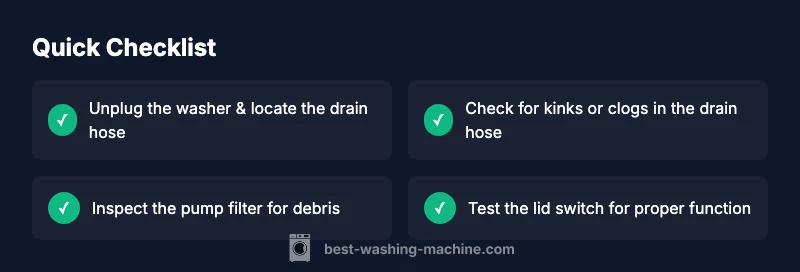
- Inspect the drain hose for kinks, squashes, or clogs. A blocked hose can back up water into the tub.
- Check the external drain system and the standpipe; ensure the hose is properly seated and not inserted too far down the pipe.
- Look at the pump filter (if your model has one) for lint, coins, hair, or fabric scraps that block discharge.
- Confirm the washer isn’t overfilled or using the wrong cycle, which can mislead the system into holding water.
- Verify the lid switch and the water inlet valve are functioning; a faulty switch can prevent proper draining and cycling.
Best Washing Machine analysis shows that most cases are resolved by clearing a clog and reseating hoses. If you’re reading this, notice if the water appeared after a specific cycle (wash vs. spin) or if it’s persistent regardless of mode. This context helps you prioritize fixes and communicate clearly with any professional you hire.
Safety first: checks you can do before service
Before touching any moving parts, unplug the machine and turn off any water supply. Do not attempt to drain standing water with electrical components energized. Wear gloves to minimize contact with dirty water, and place towels or a shallow tray under the area to catch spills. If water is contaminated with rust particles or foul odors, allow the tub to drain naturally and consult a technician.
This section emphasizes safe, practical steps you can take without specialized tools. If you detect a burning smell, frequent tripping of breakers, or visible water damage, stop and seek professional assistance immediately. Our guidance aligns with the Best Washing Machine team’s approach to safety-first troubleshooting.
Diagnostic flow you can follow (overview)
The following flow helps you navigate from symptom to solution. Start with simple checks and progress to more involved fixes only if the basic steps don’t resolve the issue. If at any point you feel uncertain or unsafe, skip ahead to professional help.
Preventive maintenance to avoid future occurrences
Once you resolve the current issue, implement a few preventive practices to reduce the chance of water in the tub after a cycle again:
- Regularly inspect hoses for wear or leaks and replace damaged parts promptly.
- Clean the pump filter (if applicable) every few months to prevent buildup.
- Use the correct cycle settings and avoid overloading the drum.
- Keep the area around the washer dry and free of clutter to reduce risk of accidental kinks or blockages.
- Schedule a professional inspection if you notice unusual sounds, persistent leaks, or if your model requires specialized service.
When to call a professional and what to expect
If you’ve performed the above checks and the tub still fills with water or the washer won’t drain, it’s time to bring in a pro. Common professional fixes include pump replacement, drain-valve repair, or control-board diagnostics. A technician should provide a clear estimate of parts and labor, explain the identified fault, demonstrate the tests, and discuss warranty coverage if applicable. Professional support is essential for electrical safety and to prevent accidental water damage.
Steps
Estimated time: 60-90 minutes
- 1
Power off and safety check
Unplug the washer and shut off the water supply. Move the machine to access panels safely. This prevents risk of shock while you inspect hoses and filters.
Tip: Use a flashlight to inspect dark areas and take a photo before removing panels to help with reassembly. - 2
Drain residual water manually
Place towels or a shallow tray to catch water. Gently loosen the drain hose at the back to drain standing water into a bucket. If your model has a manual drain pump, operate it as instructed in the user manual.
Tip: Do not pull the hose forcefully; loosen clamps slowly to avoid hose damage. - 3
Check drain hose for kinks or blockages
Inspect the hose for kinks, bends, or crimps that restrict flow. Remove any lint or debris blocking the exit. Re-seat the hose firmly to prevent leaks.
Tip: If the hose is clogged, you may need to detach and flush it with warm water. - 4
Inspect the pump filter and pump
Access the filter and remove debris. Check the pump for signs of damage or stuffed impellers. Clean thoroughly and reinstall.
Tip: Estimate the time for full disassembly; if the pump is difficult to access, consider professional help to avoid damage. - 5
Test lid/pressure switch
With power off, locate the lid switch and test continuity or replace if faulty. A stuck switch can prevent draining and leave water in the tub.
Tip: Refer to the model’s service manual for connector layout before replacement. - 6
Reset and run a drain test
Reconnect power, run a short drain cycle to verify the tub empties. If water drains normally, run a full cycle to confirm there are no further issues.
Tip: If water returns after a short cycle, there may be a more complex fault requiring professional service. - 7
Check for leaks and reseal connections
Inspect all hoses and clamps for leaks as you run a test. Tighten fittings or replace worn hoses to prevent future water problems.
Tip: A leak can cause misinterpretation of water presence; ensure seals are secure before full operation. - 8
Decision point: DIY or call a pro
If you’ve performed all steps and water remains, or you encounter electrical concerns, contact a professional. They can diagnose pumps, valves, and control boards safely.
Tip: Keep a log of the steps you performed to help the technician diagnose quickly.
Diagnosis: Water remains in the tub after a cycle or during draining
Possible Causes
- highClogged or kinked drain hose
- highBlocked pump filter or debris in the pump
- mediumOverfilling or incorrect cycle setting
- mediumFaulty lid switch or pressure switch
- lowMalfunctioning drain pump or control board
Fixes
- easyUnplug and inspect the drain hose for kinks or blockages; remove any obstructions and reseat the hose
- easyAccess and clean the pump filter; remove lint, coins, and fabric fibers that impede drainage
- easyEnsure the drum is not overfilled and that you’re selecting a draining cycle; reset to standard settings
- mediumTest the lid switch and wiring for continuity; replace if failing
- hardIf the pump or control board is faulty, professional repair or part replacement is required
FAQ
Why is there water remaining in my washer after it finishes a cycle?
Water after a cycle is usually due to a drainage problem, such as a clogged pump or drain hose. It can also result from an overfilled drum or a faulty lid switch. Start with simple checks and then proceed to more involved repairs if needed.
Most water after cycle comes from drainage issues or overfill; check hoses, pump, and lid switch, then seek professional help if it persists.
How do I unclog a washing machine drain hose?
Disconnect the hose and lay it over a towel. Remove any visible blockages with hands or a slender tool, then rinse the hose with warm water. Reattach securely and run a short drain test.
Detach the hose, clear any blockage, rinse, and reattach. Then test the drain to confirm.
Can a faulty lid switch cause water to stay in the tub?
Yes. A faulty lid switch may prevent the washer from advancing to the drain phase, leaving water in the tub. Inspect or replace the switch if needed.
A bad lid switch can stop draining, leaving water in the tub. Inspect and replace if necessary.
When is it safe to DIY, and when should I call a pro?
If you’re comfortable with basic electrical safety and tool use, you can perform drain hose and filter checks. For pump replacement, control board issues, or uncertain wiring, contact a professional.
DIY is okay for simple hose and filter checks; for pumps or boards, call a professional.
What maintenance helps prevent this issue in the future?
Regularly clean the pump filter, inspect hoses for wear, avoid overloading, and run a drain or cleaning cycle periodically to keep the drainage path clear.
Keep up with filter cleaning and hose checks, and don’t overload the drum to prevent future water in the tub.
Is there a risk of electrocution if water is in the tub?
Yes. Water and electricity are a dangerous combination. Always unplug the machine and avoid touching electrical components when there’s standing water.
Water plus electricity is dangerous. Unplug first and avoid live wires.
The Essentials
- Identify the root cause starting with the simplest checks.
- Clear drain hoses and filters resolve most cases.
- Never ignore water in the tub; address it promptly to prevent damage.
- If in doubt, call a professional for safety and accuracy.
- Prevent future issues with regular maintenance and mindful loading.