What Washing Machine Won’t Drain: Step-by-Step Troubleshooting
Struggling with a washer that won’t drain? This urgent, step-by-step troubleshooting guide covers common causes, quick fixes, and safety tips to restore drainage fast. Learn if a clogged filter, kinked hose, or faulty pump is to blame and how to fix it safely.


Most likely, a washing machine won’t drain because of a clog in the drain path or a kinked drain hose. The fastest fix is to unplug the unit, check and clean the pump filter, then straighten and flush the drain hose. If the water still won’t drain, inspect the pump and lid switch, and consider a professional service for a failed pump.
What washing machine won t drain: practical meaning and quick context
When you see standing water after a cycle, drainage issues are usually the culprit. If you’re asking what washing machine won t drain, the simplest explanation is that something in the discharge path is blocked or not activated. In most homes the path runs from the tub to the drain pump, through the drain hose, and into the standpipe or home plumbing. The top causes are clogs, hose kinks, discharged water backing up, or a failed pump. It’s also worth noting that control issues or a faulty lid switch can prevent draining. This guide from Best Washing Machine is designed for homeowners, renters, and repair novices to identify the fault quickly and safely, with clearly defined steps. Always unplug the machine before you begin any inspection to avoid electrical shock.
Start with the simplest checks: drain hose and pump access
Start with the easiest checks first. A twisted or kinked drain hose can block water flow, and a clogged pump filter will prevent drainage even when the motor runs. Check that the hose runs upward from the back of the washer and is not pressed against the wall or floor. Detach and inspect the drain hose for obstructions at the coupling. Locate the access panel for the pump or the bottom front panel on most models, and look for a trapped lint filter or debris in the pump housing. If you see buildup, remove it with a dry towel or gentle brush. This is also a good moment to confirm the outlet is draining and the standpipe is clear. According to Best Washing Machine, many drainage problems start with simple blockages that are easy to fix.
Inspect the pump and filter for debris
If the hose looks clear, the pump might still be clogged. The pump filter (often found behind a small access panel at the bottom front of the washer) catches coins, screws, buttons, and hair. Turn off power, place a towel to catch water, then unscrew the filter cap and remove any debris. Rinse the filter under running water and check the internal housing for remaining particles. Reassemble securely. A clogged pump can stall drainage and even cause the washer to stop mid-cycle. After cleaning, run a short empty cycle to verify draining works smoothly.
Electrical controls and safety checks that affect draining
Drainage isn’t only mechanical—electrical components control when the pump runs. A faulty lid switch or door interlock can keep the washer from draining even if the pump is clear. Inspect the lid switch for visible damage; if you can hear the pump running without water being pumped out, the switch may be faulty. A malfunctioning timer or control board can also affect drainage timing. If you suspect an electrical fault, do not gamble with live components. Disconnect power and consider professional testing with the right tools.
Quick fixes you can try now (if safe to do so)
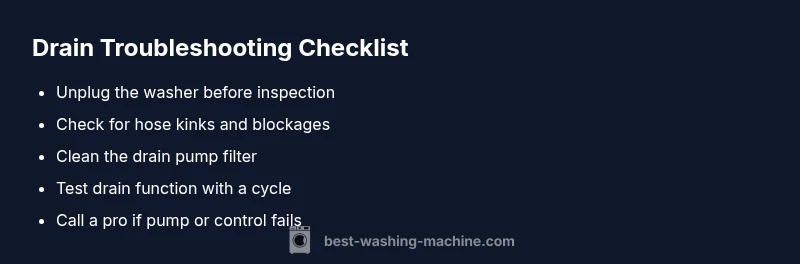
- Unplug the washer and verify the drain path is clear as described above.
- Clean the pump filter and flush the hose with water to remove clogs.
- Straighten the drain hose and ensure it is properly elevated above the water level to prevent siphoning.
- Run a drain or spin-only cycle to see if water exits the tub. If water doesn’t evacuate after these steps, the issue may be a defective drain pump or an internal control problem that requires expert service.
How to prevent future drainage problems
Regular maintenance helps prevent repeats. Clean the pump filter every few months or as recommended by your washer’s manual, especially if you notice coins or debris. Use the correct detergent amount to avoid excessive suds that can impede drainage. Keep the drain hose free of kinks, and ensure the hose elevation is consistent with your model’s design. If you have a standing-water issue after a cycle, consider running a quick wash with hot water to help loosen any buildup in the drain path. A proactive approach reduces the risk of a future clog and extends the life of your washer.
When to call a professional and safe completion steps
If you have completed the basic checks and the washer still won’t drain, a professional technician is recommended to diagnose a potentially failing pump, worn seals, or motor issues. Do not attempt to disassemble the pump beyond your comfort level; an improper repair can create more damage or safety hazards. In the meantime, ensure your home’s drainage system is clear to prevent backflow, and keep a log of symptoms to share with the technician.
Steps
Estimated time: 25-40 minutes
- 1
Power off and unplug the washer
Begin by disconnecting the appliance from power and moving it to access the drain path. This ensures you won’t shock yourself and gives you room to inspect the back and bottom panels. Safety comes first, so keep a dry towel handy for any incidental leaks.
Tip: Wear gloves and keep water away from electrical outlets. - 2
Access and inspect the drain hose
Locate the drain hose at the back of the unit. Check for twists, kinks, or a hose that is pressed against walls or furniture. Detach the hose from the washer and the standpipe if accessible, and flush it with water to clear any visible obstruction.
Tip: Place a bucket under the hose to catch any residual water. - 3
Open and clean the pump filter
Find the pump filter cover on models with a front-access panel. Unscrew the cap slowly to avoid splashing, remove debris, rinse the filter, and reinstall securely. A clogged filter is the #1 reason for poor drainage.
Tip: Check the interior for small objects like coins that could quickly cause blockages. - 4
Test the pump and lid switch
With the hose and filter clear, power on the machine and select a drain or spin cycle. Listen for the pump running and verify water is evacuating. If no drain occurs, the lid switch or interlock could be faulty and require replacement.
Tip: If you’re unsure about testing with live electricity, skip to professional help. - 5
Inspect the drain path and standpipe
Ensure the standpipe is clear and that there are no sewer gas backflows. If you notice slow drainage or standing water in the standpipe, you may have a blockage in the building’s drain line or venting issue that needs a plumber.
Tip: Do not pour chemical drain cleaners into the standpipe; they can damage appliances and pipes. - 6
Reassemble and run a test cycle
Reconnect all panels, plug the unit in, and run a short rinse or drain cycle with nothing inside. Observe whether water drains completely. If it does, you’ve resolved the issue; if not, proceed to professional service.
Tip: Keep notes of any sounds, smells, or error codes to share with a technician.
Diagnosis: Machine won't drain after a wash cycle
Possible Causes
- highClogged pump filter or debris in the pump
- highKinked or blocked drain hose
- mediumBlocked standpipe or drain line in home plumbing
- mediumFaulty lid switch or door interlock
- lowFailing drain pump or motor
Fixes
- easyUnplug the machine, locate and clean the pump filter
- easyInspect drain hose for kinks or obstructions and flush
- easyCheck standpipe and home plumbing for blockages
- mediumTest and replace lid switch if faulty
- hardIf the pump is failing, contact a technician for diagnosis
FAQ
Why won't my washing machine drain even after I clean the filter?
If cleaning the filter didn’t fix it, the issue might be a blocked drain hose or a faulty drain pump. Check the hose for any hidden kinks and test the pump with a drain cycle. If the pump seems dead, professional replacement is advised.
If cleaning the filter didn’t fix the problem, there could be a blocked hose or a bad pump. Check for hose kinks and test the pump. If the pump is bad, call a pro.
How do I locate and clean the pump filter on a front-load washer?
Front-load machines usually have a small access panel at the bottom front. Turn off power, place a towel, and unscrew the filter housing. Remove debris, rinse, and reinstall. Recheck the drain after resealing.
Open the front panel, remove the filter, clean it, and reattach. Then test the drain.
Can a clogged drain hose cause flooding?
Yes, a blocked hose can back up water into the tub or leak onto the floor if not resolved. Inspect for kinks, detach if needed, and flush with water. If flooding persists, stop use and call a plumber.
A clogged hose can back up water and cause flooding. Check, flush, and if needed, call a plumber.
When should I replace the lid switch?
If the lid switch is faulty, the washer may not drain or tumble properly. Test with a multimeter or the manufacturer’s procedure. Replacing the switch is often a straightforward repair for a technician.
A faulty lid switch can stop drainage. Test and replace if needed.
Is it safe to use chemical drain cleaners for washers?
Most manufacturers advise against chemical cleaners in the washer drain, as they can damage components and pipes. Use mechanical cleaning (filter and hose checks) instead and call a pro for persistent blockages.
Avoid chemical drain cleaners inside the washer; they can cause damage. Use manual cleaning instead.
What if water continues to back up after all fixes?
Persistent drainage problems after checks usually indicate a failing pump or major control fault. Stop using the machine and contact a qualified technician for diagnosis and potential part replacement.
If drainage still fails after fixes, call a professional.
Watch Video
The Essentials
- Start with the simplest checks: hose and filter first
- Clogs are the most common drainage cause
- If you’re unsure, call a professional to avoid safety risks
- Regular maintenance prevents future drain problems