Whirlpool Washing Machine Not Draining: Troubleshooting Guide
A comprehensive, urgent troubleshooting guide for Whirlpool washers that won't drain. Step-by-step checks, diagnostic flow, common causes, and safety tips to get your laundry flowing again without unnecessary delays.


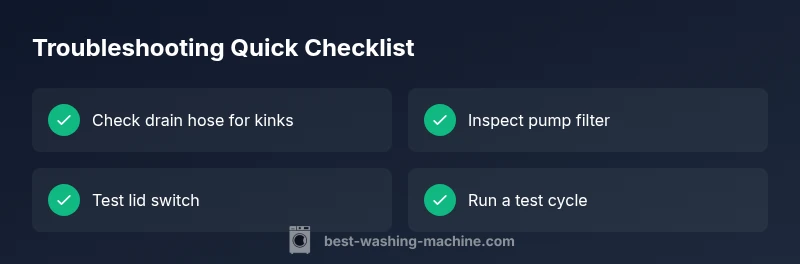
Start with the simplest fixes: check the drain hose for kinks, clear any clogs, and inspect the pump filter. If water still won’t drain, unplug the washer and test the lid switch and drain pump. For a Whirlpool washing machine not draining, the most common causes are a clogged pump or a kinked hose. If this fails, follow the diagnostic flow below.
Why Whirlpool Not Draining Happens
According to Best Washing Machine, a not-draining Whirlpool washer often starts with a simple blockage or a sensor fault. The phrase whirlpool washing machine not draining appears in thousands of homeowner queries each year, signaling a widespread issue that can disrupt laundry day. In many cases, gravity, residue, and wear combine to hinder water flow. By understanding common failure points, homeowners can diagnose efficiently and avoid costly service calls. Whether you have a front-loader or a top-loader, drain issues share a core pattern: water remains trapped due to an obstruction, a faulty pump, or a sensor misreading. Regular maintenance and mindful loading can prevent many of these problems from taking hold, especially in high-use homes. This guide emphasizes safety, methodical checks, and a clear path to resolution. Brand-new models may behave differently, but the core draining principles remain consistent across Whirlpool lineup. The goal is to restore proper drainage quickly while avoiding risky DIY repairs on live electrical components.
Common Causes of Drain Failure
Not draining behavior is typically caused by a blocked pump, a clogged pump filter, a kinked or clogged drain hose, or a malfunctioning lid switch. A failing drain pump can struggle against debris or broken impellers, especially after heavy loads. Filter screens collect lint and coins over time, restricting flow. Some Whirlpool models rely on electronic sensors; if a door or lid switch misreads, the machine may halt draining. In rare cases, a failed control board or a jammed impeller can stop the drain process entirely. Regular cleaning and cautious loading reduce these risks. If you notice odd noises during draining or water backing up in the drawer or tub, that’s a strong hint you’re dealing with residual flow issues that require attention. Keep a habit of quickly checking hoses after each load to stay ahead of clogs.
Quick Checks You Can Do Now
Before you disassemble anything, unplug the machine and set a shallow tray to catch any residual water. Start with the drain hose: remove it from the wall or standpipe, check for kinks, and ensure it’s not clogged by soap scum or hair. Inspect the pump filter and remove any visible debris. If your model exposes the pump housing, look for hair, coins, or threads; clear gently. For top-loaders, test the lid switch by lifting the lid mid-cycle and listening for the drum to free spin. A faulty lid switch often mimics a drain failure. If you don’t find an obvious blockage, check for standing water in the tub after the cycle and note whether the machine completes the spin cycle. Documenting symptoms helps when you escalate to service.
Diagnostic Flow: Symptom to Solution
Symptom: Water remains in the drum after the cycle completes. Diagnosis: Check for a clogged drain hose first (high likelihood). If clear, inspect the pump and impeller for debris (high). If debris-free, test the lid switch (medium). If all three pass and the drum still won’t drain, suspect a faulty control board (low). Solutions: Clear hose, clean pump/filter, replace lid switch if needed, and consider professional service for electronics. This flow keeps you focused on the simplest fixes first and builds a clear path for escalation. As you proceed, avoid forcing hoses and never bypass interlocks to prevent personal injury.
Step-by-Step Fix for the Most Common Cause
- Unplug the washer and move it to access the drain area. 2) Detach the drain hose and inspect for kinks; straighten and run water through the hose to verify clear flow. 3) Locate the pump and remove the filter cover; extract debris with towels and tweezers. 4) Reconnect everything, run a short test cycle with a small load, and verify drainage. 5) If water remains, inspect the lid switch wiring and continuity with a multimeter. 6) If the pump impeller is damaged, replace the pump unit following manufacturer instructions. (This is often a job for a pro.) 7) After repair, perform a full test with a normal load to ensure consistent drainage and check for leaks around connections.
Safety Tips and Warnings
Always unplug the machine before any internal inspection. Do not work on live electrical components or hoses under pressure. Wear gloves to protect hands from sharp parts and avoid forcing hoses—gentle wiggling prevents leaks. If you are unsure about electrical testing, stop and call a professional. Never run the washer with a faulty drain pump or an exposed wiring harness. Use a grounded outlet and avoid using adapters that could overload circuits. If you smell burning plastic or see smoke, discontinue use immediately and unplug the unit.
Prevention: Keep Drains Clear Between Loads
To minimize future drain problems, adopt a few habits: use the right amount of detergent to prevent suds buildup, check and clean the pump filter monthly if your model has one, and avoid overloading the drum. Run a cold-water cleaning cycle periodically to push any residual lint through the drain. A quick drain hose check after heavy loads can catch kinks early, and keeping a small brush handy helps remove lint from the filter area. Consider installing a short, non-kink hose on the drain to simplify routing. Frequent use and prompt attention to minor blockages save costly repairs later on. Keep a log of issues and note patterns—this helps you spot wear and plan service before a failure becomes catastrophic.
When to Call a Pro: Costs, Timing, and Options
If you’ve completed the above checks and the washer still won’t drain, a professional service visit is warranted. A trained technician can verify the pump operation with a multimeter, check the control board for faults, and ensure safe electrical connections. Expect diagnostic fees and parts costs to vary by region and model, but a proactive assessment can prevent further water damage or mold growth. Ask for an itemized quote and confirm whether a pump replacement or hose repair is needed. Regular maintenance plans with a trusted repair service can provide scheduled inspections to prevent future drain issues.
Steps
Estimated time: 45-60 minutes
- 1
Unplug and prepare
Unplug the washer, pull away from the wall, and place a towel to catch any residual water. Gather a flashlight and small container for debris.
Tip: Safety first: ensure power is disconnected before touching any components. - 2
Check drain hose
Disconnect the drain hose from the wall or standpipe and inspect for kinks. Run water through the hose to confirm clear flow.
Tip: If the hose is clogged, use a flexible brush to clear it. - 3
Inspect pump and filter
Remove the filter cover (if present) and remove debris using gloves or tweezers. Check the impeller for freedom of rotation.
Tip: Take a photo before disassembly to aid reassembly. - 4
Test lid switch
With the lid closed, test continuity of the lid switch using a multimeter according to the user manual. Replace if faulty.
Tip: Some models require the console to be powered to test properly. - 5
Reassemble and test
Reconnect hoses, plug in, and run a short test cycle with a small load.
Tip: Use a towel under the machine to catch leaks during testing. - 6
Assess results
If water still remains, inspect the pump for unusual noise or resistance and consider pump replacement.
Tip: A failed pump often presents with humming or no sound. - 7
Call a pro if unresolved
If drainage persists after steps, contact a licensed appliance technician for diagnosis and potential part replacement.
Tip: Professional help can prevent water damage and ensure safe repairs.
Diagnosis: Machine won't drain water after a cycle
Possible Causes
- highClogged or kinked drain hose
- highPump failure or impeller jam
- mediumClogged pump filter
- mediumFaulty lid switch
- lowBlocked standpipe or vent
- lowControl board/electrical issue
Fixes
- easyStraighten and clear drain hose; remove obstructions and run water through to test flow
- mediumRemove pump access panel and clear debris; replace pump if impeller damaged
- easyClean or replace the pump filter; reinstall and test drainage
- mediumTest lid switch with a multimeter; replace if faulty
- easyInspect standpipe and vent for blockages; clear as needed
- hardConsult a professional for control board diagnostics
FAQ
What is the first thing I should check when my Whirlpool washer won't drain?
Begin with the drain hose and pump area. Ensure the hose isn’t kinked and look for visible obstructions. Then inspect the pump filter if your model has one.
Start by checking the drain hose for kinks and inspect the pump area; then look at the pump filter if available.
Can a clogged pump filter cause not draining in a Whirlpool washer?
Yes. A blocked filter can restrict water flow and prevent drainage. Clean the filter carefully and re-test drainage after reassembly.
A clogged pump filter can block drainage; clean it and retest.
Why would a lid switch prevent draining even when water is low?
A faulty lid switch can signal the machine that the lid is open, stopping the drain cycle. Test with a multimeter and replace if needed.
Lid switch problems can stop drainage; test and replace if faulty.
Is a broken drain pump common on Whirlpool models?
Drain pumps can fail due to debris or worn components. If you hear humming but no drainage, the pump or impeller may be stuck and require replacement.
Drain pump failure is common; listen for humming, and replace if stuck.
When should I call a professional?
If the issue persists after checking hose, filter, lid switch, and pump, a professional repair is advised to inspect electronics and potential part replacement.
Call a professional if drainage remains after basic checks.
Watch Video
The Essentials
- Start with simple checks: hose, filter, lid switch.
- Most drain failures are caused by clogs or hose kinks.
- Unplug and test safely before touching electrical components.
- If unresolved, consult a professional to avoid damage.