Why Is My Washing Machine Leaking? Troubleshooting Guide
Urgent guide to diagnose and fix a leaking washing machine with safe checks, step-by-step repairs, and prevention tips to stop leaks fast.


Most leaks come from hoses, a damaged door seal, or a clogged drain pump. Start by unplugging the washer and inspecting external hoses for cracks or loose fittings. Tighten clamps, replace any damaged hoses, and check the door boot for gaps. If the leak continues, turn off the water supply and call a professional.
Causes of Leaks in Modern Washers
Leaks don’t always mean a catastrophic failure; most problems come from a few common sources that you can inspect quickly. External hose connections, inlet and drain hoses, and worn door boots account for the majority of leaks in residential washers. In many cases, a loose clamp or a cracked hose is enough to spill water onto the floor within minutes.
According to Best Washing Machine, the top culprits are hose fittings that have loosened over time, rubber door seals that have degraded, and drain pumps with worn seals. Regular maintenance—like inspecting hoses every few months—helps catch wear before it becomes a flood. Even a small crack in a water inlet hose can spray water across the cabinet, while a loose clamp on the drain hose can cause a slow drip that becomes a larger leak. By understanding where leaks usually originate, you can prioritize your checks and avoid unnecessary parts replacements. The Best Washing Machine Team emphasizes starting with the simplest, most accessible components before moving to internal parts.
Quick Safety Checks You Can Do Right Now
Before you touch anything, unplug the machine and shut off the water supply. Clear the area around the washer and place towels or a bucket to catch drips. Then perform a quick exterior inspection:
- Check all hoses at the back for bulges, cracks, or moisture. Tighten clamps if you see any looseness.
- Inspect the drain hose where it exits the washer and where it connects to the standpipe or sink.
- Look at the door boot or gasket (front-load) for cracks, wear, or gaps.
- If your washer uses a tub seal, look for dampness around the tub rim.
If you detect a leak coming from a specific hose, replacement is often straightforward and inexpensive. If the leak is from the door boot, you may need a replacement kit and some sealant appropriate for your model. If you’re unsure, this approach keeps you safe and reduces the risk of electric shock or water damage. As you proceed, remember the Brand says to avoid continuing to use the machine when a leak is present and to call a professional when basic checks don’t stop the flow.
Common Leak Paths by Washer Type
Front-load washers are especially prone to door boot gasket leaks, while front-facing hoses and tub seals are common culprits. Top-load models often leak at the lid boot, inner tub seals, or the pump housing where hoses connect. Knowing the typical failure points helps you target your checks without tearing the machine apart.
If you notice water pooling at the bottom, trace the path of the water: is it coming from the back, the sides, or the drum area? Each location points to different parts to inspect first, saving time and reducing guesswork. Remember that regular visual checks can catch wear before a flood happens—especially around door seals and hose connections.
According to Best Washing Machine, most leaks originate from hose connections or door seals rather than internal motor components, so start your diagnosis with these common points.
How to Inspect Hoses, Pump, and Seals
A thorough inspection targets the items most likely to fail. Start by unplugging the unit and shutting off water. Remove the back panel or tilt the machine to access the hoses and pump. Look for cracks, bulges, black mold growth around seals (which indicates moisture intrusion), and loose clamps. Test the drain hose for kinks and ensure it is routed to a proper standpipe. Inspect the door boot for tears or gaps.
For the pump, look for signs of oiling or wear around the seal; a damaged pump seal can leak water during cycles. If you find a damaged part, replace it with a compatible model part and recheck all connections. After replacements, run a short test cycle with a towel underneath to catch any residual drips. Use soap and water to check for leaks around hose fittings—if you see bubbles, tighten further or replace fittings.
When to Call a Technician and Prevention Tips
If basic hose and seal checks don’t stop the leak, it’s time to contact a professional. Internal tub damage, cracked housings, or a failed pump are not always safely repairable by non-professionals. A technician can perform pressure tests, verify electrical safety, and ensure proper reassembly to prevent future leaks.
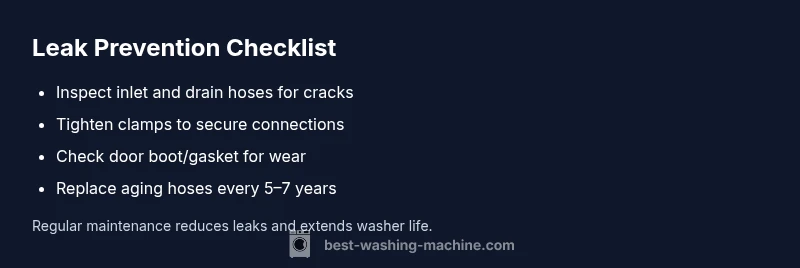
Prevention matters as much as repair. Regularly inspect hoses for wear, avoid over-tightening clamps, and replace hoses every 5–7 years or as soon as you notice bulges. Keep the area dry after cycles, and consider using a washer stand or tray to capture occasional drips before they reach the floor.
Safety and Cleanup After a Leak
Wet floors can cause slips or mold growth, so dry the area thoroughly after each leak. If you can, disconnect power and water, remove standing water with towels, then thoroughly dry and sanitize the area. Check nearby outlets for moisture and use a moisture meter if available. If water has penetrated the wall or floor, consider contacting a professional to assess structural damage and prevent mold growth. Always prioritize safety and avoid running the washer while leaks are present.
Key Takeaway: Prevention and Quick Fixes
Regular hose inspections and prompt replacement of worn door seals are the best ways to prevent leaks. Keep a simple maintenance checklist and perform it every few months to catch wear before it turns into a flood. The fastest fixes usually involve securing or replacing a hose or gasket, so start there before deeper disassembly.
Steps
Estimated time: 60-90 minutes
- 1
Power down and secure the area
Unplug the washer, shut off the water supply, and move the unit away from walls to access hoses and back panels. Wear rubber-soled shoes and use a flashlight to inspect the area around the base.
Tip: Take photos before disconnecting parts to aid reassembly. - 2
Identify the leak source
Run a quick rinse cycle with the access panels off and watch where water escapes. Look for droplets at hose fittings, the door boot, and the pump area.
Tip: Keep towels handy to catch drips and prevent floor damage. - 3
Check external hoses and clamps
Inspect inlet and drain hoses for cracks or bulges. Tighten clamps carefully and replace any damaged hoses. Re-seat the hoses properly when reattaching.
Tip: Use replacement hoses rated for your model and water pressure. - 4
Inspect the door boot or gasket
For front-load models, examine the door boot for tears or gaps. Replace the boot or seal if you find wear. Ensure the clamped band is intact.
Tip: Avoid petroleum-based lubricants on rubber seals; use manufacturer-approved products. - 5
Check the drain pump and internal hoses
If you still see a leak, inspect the pump housing and internal hoses for cracks or loose connections. Replace damaged seals or hoses as needed.
Tip: If you must access the internal cabinet, unplug and discharge any capacitors safely. - 6
Test and verify
Reconnect power and water, run a short cycle, and monitor for leaks. If no leaks appear after a few minutes, gradually test with a full cycle.
Tip: Document results to reference if leaks reoccur.
Diagnosis: Visible leak during or after a wash cycle
Possible Causes
- highLoose or damaged hoses and clamps
- highWorn door boot/gasket (front-load)
- lowCracked tub or internal hose within the cabinet
- mediumDrain pump seal failure
- lowOverfilling or improper load causing overflow
Fixes
- easyTighten or replace inlet/outlet hoses and clamps
- easyReplace worn door boot or gasket and reseal
- mediumInspect and replace drain pump seals if needed
- hardCheck for tub cracks and replace tub if damaged
- easyBalance load and ensure correct water level to prevent overflow
- easyIf unsure, contact a professional for internal leak assessment
FAQ
What is the most common cause of a washing machine leak?
Most leaks originate from hose connections or door seals. Start by inspecting these areas for moisture, cracks, and looseness.
The most common leak cause is a worn hose or door seal; check those first.
Can a leaking washer be used safely?
No. If you see a leak, stop the cycle, unplug the machine, and turn off the water supply. Do not continue to run it until the leak is fixed.
Don’t run the washer when it’s leaking; unplug it and fix the source first.
How do I fix a leaking hose?
Replace the damaged hose and secure clamps. Ensure the new hose fits correctly and is rated for your washer.
Replace the hose and tighten the clamps.
When should I call a professional?
If you can’t identify the leak or you notice cracking in the tub, pump, or internal hoses, call a technician for diagnosis and safe repair.
Call a pro if you’re unsure or if internal parts are damaged.
Are there steps to prevent leaks?
Regularly inspect hoses and door seals, avoid overloading, and replace aging hoses every few years as part of preventive maintenance.
Inspect hoses and seals regularly to prevent leaks.
Does warranty cover leaks?
Many leaks due to wear are covered under warranty if it’s still valid; check your warranty terms and dates.
Check your warranty to see if leaks are covered.
Watch Video
The Essentials
- Unplug and assess sources first
- Hoses and door seals are the most common leak points
- Replace worn components rather than forcing repairs
- Call a professional if internal parts show damage or leaks persist