Will a Washing Machine Work After Flood? A Practical Troubleshooting Guide
Learn what happens to a washer after flood, urgent safety steps, and how to decide between repair or replacement. Practical checks, a diagnostic flow, and clear next steps for homeowners.


After a flood, a washing machine may not work. The most common issues are water damage to the control board, wiring, or motor, plus corrosion on connectors and a flooded outlet or breaker. Do not power it on; unplug, dry exterior, and have a qualified technician inspect the internals before attempting repairs.
Flood Impact on Washers: What Typically Fails
In the wake of a flood, your washing machine faces risks across electronics, mechanical parts, and safety features. The central question many homeowners ask is will washing machine work after flood, and the answer hinges on what got wet and how quickly it was addressed. According to Best Washing Machine, the most common failures after submersion involve the control board, sensors, and wiring harnesses. Moisture can corrode connectors, causing erratic cycling or total lockouts. If the unit shows any signs of water intrusion or smells of burnt electronics, pause diagnostics and seek professional help. This overview identifies typical culprits and how to spot them early before more damage occurs. Remember, floods can create latent damage that only shows up after power is restored, so proceed with caution and safety in mind. For homeowners, this is a defining moment: understanding what failed helps determine the next steps and whether the unit can be safely revived or should be retired.
Immediate Safety Steps You Must Take
Before you touch the washer, prioritize safety. Flooded areas may have hidden electrical hazards. Always unplug the washer at the wall (not just the cord) and switch off the circuit breaker if you suspect water reached the outlet. Do not attempt to power the machine to test it while wet, as flooded control boards can short and pose a fire risk. If you need to move the unit, wear rubber-soled shoes and use dry towels to ground yourself. Document where water came from and estimate the flood duration so technicians can gauge potential damage. If you still have access to the room, take photos of the unit and surrounding area for insurance claims and future reference. This step is essential to prevent additional injuries and to give technicians a clear picture of the incident.
Non-Technical Checks You Can Do Without Tools
Some checks can be done safely from the outside. Inspect the power cord for visible damage, check inlet hoses for cracks or kinks, and ensure the drain hose isn’t blocked. Remove any standing water around the base after drying the area; mold can develop quickly after a flood. If you notice a burnt smell, scorch marks, or obvious corrosion on connectors, stop and call a professional rather than attempting any internal inspection. Gently wipe down the exterior with a dry cloth and avoid using any cleaners that could leave residue on sensitive components. While these checks help you triage, they are not a substitute for a full internal evaluation by a qualified technician.
Diagnosing Flood-Related Failures (Electrics, Drains, Motors)
If the exterior looks intact, the interior may still be damaged. Flood water can corrode control board connectors, float switches, and motor windings. Signs include error codes, unresponsive buttons, or the drum not tumbling. Use the unit’s service manual or vendor support to interpret error codes and avoid guessing. Best Washing Machine analysis shows that post-flood electronics are a leading cause of failure; if you’re unsure will washing machine work after flood, err on the side of caution and schedule professional testing. A qualified technician can perform insulation resistance tests and motor checks to determine viability. Electromagnetic interference inside sealed control panels may also happen, so professional diagnosis is essential for safety and accuracy.
When to Call a Professional and How They Decide
A professional should be involved whenever flood exposure is suspected. Technicians will inspect internal boards, connectors, wiring harnesses, the motor, seals, and gaskets for signs of moisture and corrosion. They may run insulation tests, diagnostic scans, and pressure checks on the pump. Expect an assessment that weighs repair costs against replacement value, age of the machine, and the likelihood of future failure. If damage is extensive, the technician will help you decide whether to repair or replace, often leaning toward replacement for safety and reliability. Budget considerations, warranty status, and environmental factors also influence the final decision. The goal is to restore safe operation or minimize risk of future failures.
Long-Term Prevention After a Flood: Safe Reuse or Replacement
If the unit is deemed repairable, implement a careful drying, cleaning, and corrosion-prevention plan before reuse. For severe flood damage, many homeowners find replacement to be more cost-effective in the long run. The Best Washing Machine team recommends evaluating the total cost of repair versus replacement, factoring in parts, labor, warranty eligibility, and the potential for recurring failures. After you recover, take steps to mitigate future flood risk: elevate the unit, install a drip pan, and ensure proper drainage around the laundry area. Consider upgrading to models with flood safeguards and improved water sensors. Regular maintenance after flood recovery is key to extending the life of your washer and preserving family safety.
Steps
Estimated time: 60-120 minutes
- 1
Power down and secure area
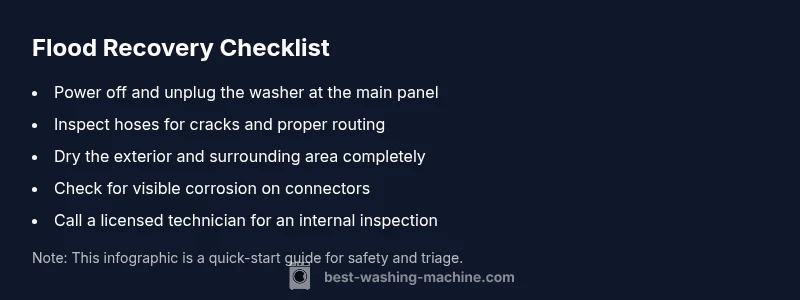
Power off at the main panel, unplug the washer, and shut off the water supply before touching any components. This reduces shock risk and prevents further damage.
Tip: Never plug in or power on a wet unit. - 2
Remove standing water and dry exterior
Use towels, a wet/dry vacuum if available, and fans to dry the exterior and surrounding area. Moisture on the surface can hide leaks and corrosion.
Tip: Air movement speeds up drying and reduces mold risk. - 3
Inspect hoses, cords, and outlets
Check power cord for signs of damage, inspect inlet hoses for cracks, and ensure the outlet isn’t damp. Replace any damaged parts before attempting any test.
Tip: Replace damaged hoses to prevent future leaks. - 4
Check for visible corrosion inside panels
Look along the bottom panel, control board area, and connectors for corrosion or moisture residue. Do not touch live circuits; a pro should assess if you see corrosion.
Tip: Take photos for the technician. - 5
Document and plan for professional evaluation
Note error codes, flood duration, and any unusual smells. Gather model numbers and purchase date to share with the technician.
Tip: A clear history helps the tech diagnose faster. - 6
Decide on repair vs replacement
Based on the technician's assessment and cost estimates, decide whether repair or replacement makes better sense for long-term reliability.
Tip: In many cases, replacement is more cost-effective after flood damage.
Diagnosis: Washer won't start or respond after flood exposure
Possible Causes
- highWater damage to control board and electronics
- mediumPower outlet or circuit breaker affected by flood
- lowCorrosion on connector pins or damaged harnesses
- lowDebris or water in the drain system causing pump jams
Fixes
- easyEnsure the power is off at the main panel and verify the outlet is dry before any testing
- easyUnplug the unit and carefully dry accessible components; check for corrosion on plugs and connections
- easyConsult the service manual for proper reset procedures or error-code interpretation
- mediumHave a licensed technician inspect the internal electronics, wiring harnesses, motor and control board for water damage and corrosion
- hardIf damage is extensive, plan for replacement or professional decision on repair vs. replacement
FAQ
Can a washing machine survive flood exposure?
Survival depends on flood extent; electronics are highly vulnerable. A professional inspection is essential to determine safety and repair viability.
Flood exposure can damage internal components; get a professional assessment before attempting repairs.
What should I check first after flood?
Prioritize safety: unplug the unit, switch off the circuit, and dry the exterior before any testing. Do not attempt to power it while wet.
Unplug and dry the area before testing.
Is it worth repairing a flood-damaged washer?
Often depends on the extent of electronics damage and repair cost. A technician can help compare repair vs replacement options.
Sometimes replacement is cheaper; get a professional estimate.
How long should I wait before resuming use after flood?
Wait until the unit is completely dry and inspected by a professional. Do not power it until cleared.
Wait for dry-out and a professional check.
Can water exposure void warranty?
Flood damage often voids standard warranties; check your contract for specifics.
Most policies don’t cover flood damage.
What signs show internal damage after flood?
Look for error codes, unusual noises, failure to start, or burnt smells as red flags.
Watch for error codes and odd smells.
Watch Video
The Essentials
- Unplug the washer and avoid powering it until inspected.
- Flood-damage electronics are a common failure point; expect possible replacement.
- Professional evaluation is essential to decide repair vs replacement.
- The Best Washing Machine team recommends safety and cost-guided decisions, including replacement when damage is extensive.